Reading Strategies for Elementary School Teachers
Proven, classroom‑tested approaches to help young readers master phonics, build fluency, and deepen comprehension — all while keeping lessons engaging and manageable.
Browse Reading Resources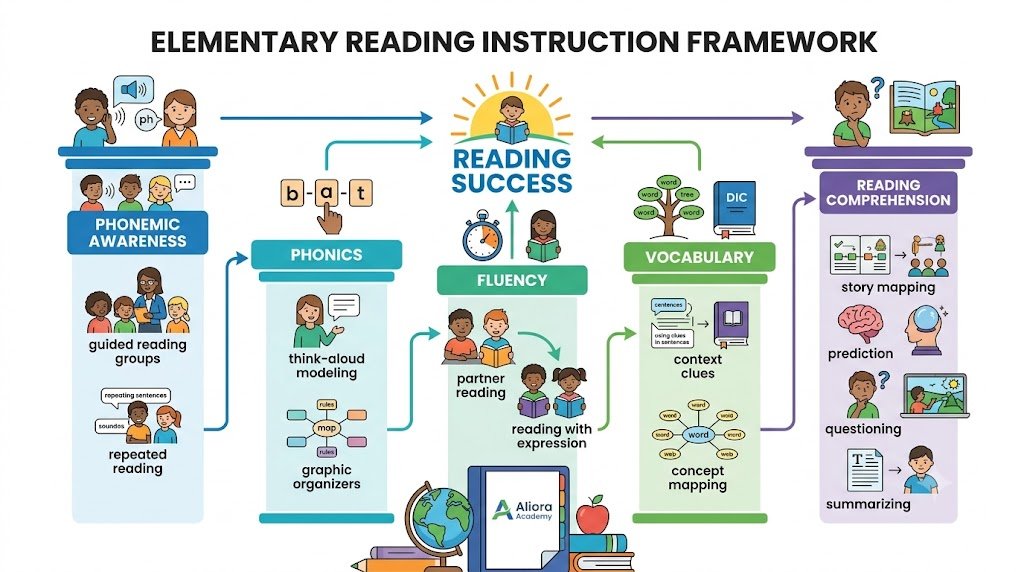
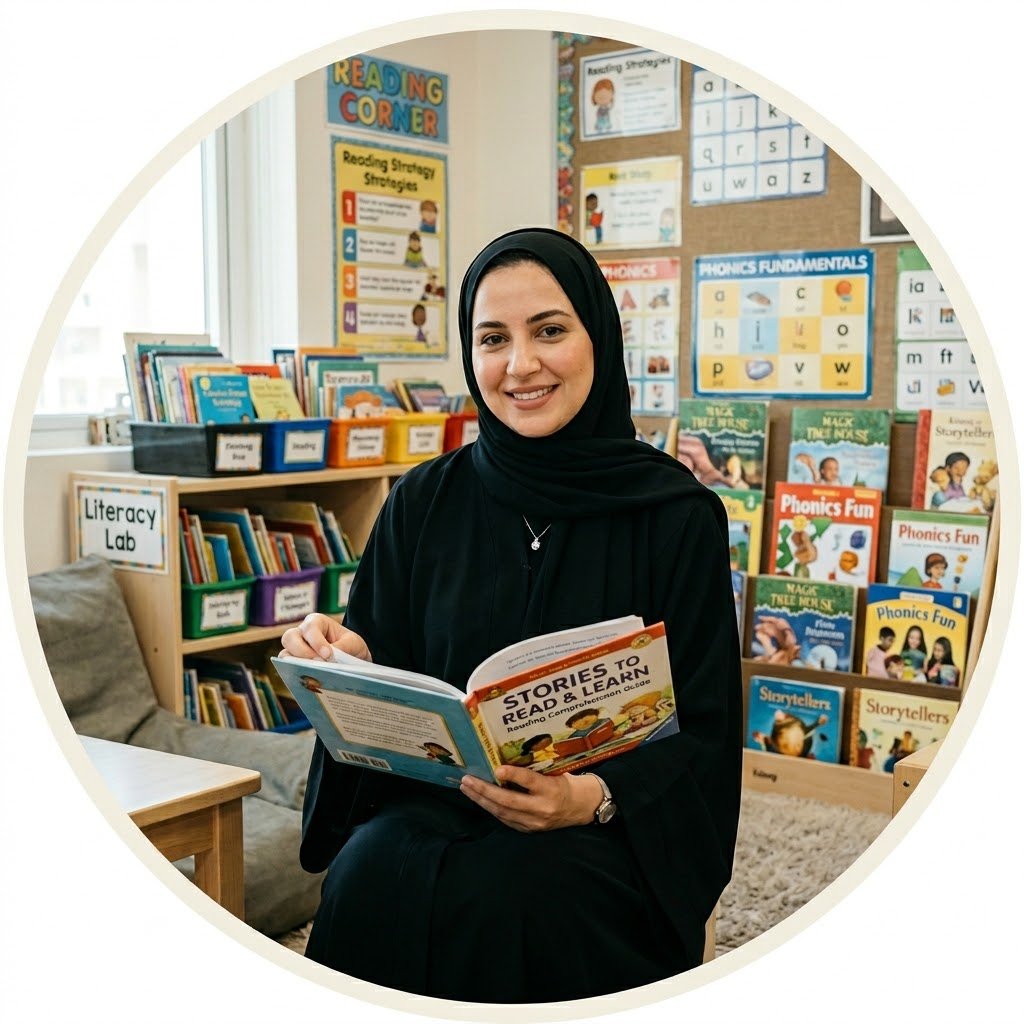
A focused, small‑group setting gives teachers the perfect opportunity to model targeted reading strategies.
Every elementary teacher knows that reading is the doorway to all other learning. A child who reads confidently can explore science, history, and math with greater independence. Yet, helping every student become a skilled reader is one of the most complex tasks in education. Effective reading strategies for elementary teachers are not about following a single program — they’re about having a flexible toolkit that can be adapted to the needs of diverse learners in real classrooms.
In this guide, you’ll find practical techniques that fit into your existing literacy block, support students who need extra help, and challenge those who are ready to move ahead. Whether you teach first grade or fifth, these strategies are designed to work across the elementary grades. For even more background on early reading development, our blog is filled with additional articles and resource spotlights.
Why Are Reading Strategies So Important in the Elementary Classroom?
Elementary school is the window during which children move from “learning to read” to “reading to learn.” Without a solid foundation, students often fall behind in every subject. Thoughtfully chosen reading strategies for elementary teachers do more than improve test scores — they build confidence, foster a love of books, and equip children with skills that last a lifetime.
Strong reading instruction:
- Closes achievement gaps early, before they widen in later grades.
- Gives students the decoding skills to tackle unfamiliar words independently.
- Develops the stamina and focus needed for longer texts.
- Creates a positive classroom culture where all learners feel successful.
When teachers intentionally model and teach reading strategies, students internalize them as habits. The goal is for every child to eventually ask themselves, “What can I do when I get stuck?” and know the answer. For a deeper look at how comprehension fits into this picture, our guide on best reading comprehension workbooks for elementary students is a helpful next read.
What Are the Foundational Reading Strategies Every Elementary Teacher Should Know?
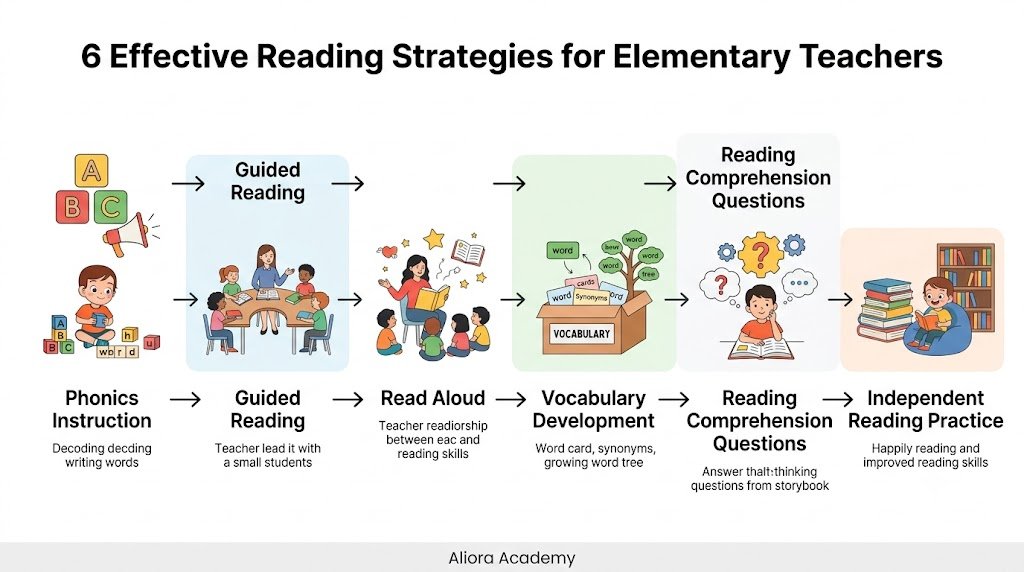
Before diving into advanced comprehension, it’s essential to anchor your instruction in the five pillars of reading: phonemic awareness, phonics, fluency, vocabulary, and comprehension. These are not isolated skills but interconnected threads. Effective reading strategies for elementary teachers weave them together in every lesson.
The Five Pillars at a Glance
- Phonemic Awareness — Recognizing and manipulating individual sounds in spoken words.
- Phonics — Connecting sounds to letters and blending them to form words.
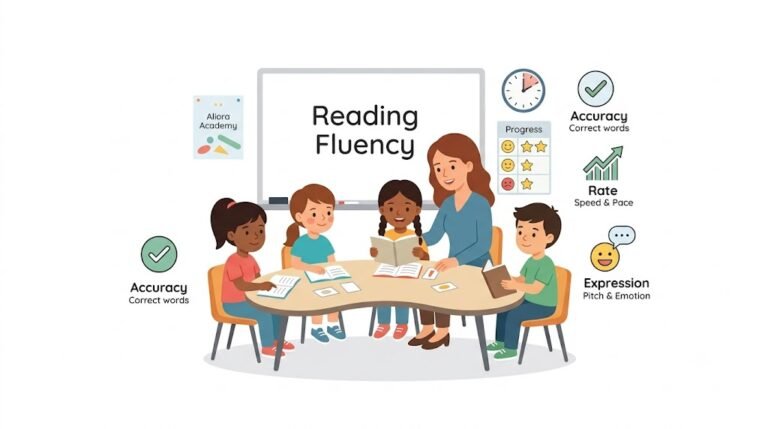
- Fluency — Reading accurately, at an appropriate pace, with expression.
- Vocabulary — Knowing the meaning of words and how to use them.
- Comprehension — Understanding, interpreting, and thinking critically about the text.
The best classroom strategies address multiple pillars simultaneously. For instance, a shared reading lesson might include phonics mini‑lessons, vocabulary discussions, and comprehension questions — all within one authentic text.
How Can Teachers Build Phonemic Awareness and Phonics Skills Effectively?
For beginning readers, mastering the code of written language is non‑negotiable. Many struggling readers simply need more explicit, systematic practice than a standard curriculum provides. Here are classroom‑friendly ways to strengthen these foundational skills without losing the joy of reading.
Incorporate Short, Daily Phonemic Awareness Routines
Spend five to seven minutes each day on oral activities: rhyming, blending, segmenting, and manipulating sounds. Keep these sessions playful — use hand motions, songs, or silly words. The key is consistency, not length.
Use Decodable Texts for Practice, Not Just Instruction
Decodable books align with the phonics patterns you’ve taught, allowing students to apply their skills immediately. They build confidence because children experience success. Rotate decodables into independent reading bins and small‑group work so every student gets ample practice. You’ll find a wide selection of these materials in our reading resources collection.
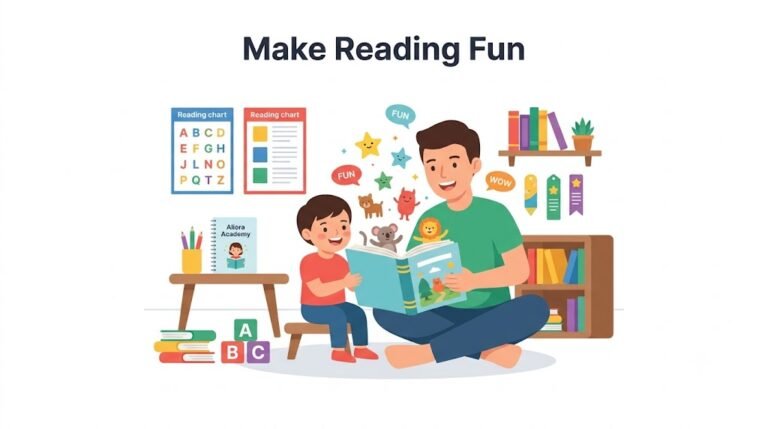
Hands‑on phonics manipulatives make abstract letter‑sound relationships concrete for young learners.
How Can Teachers Improve Reading Fluency in Elementary Students?
Fluency is the bridge between decoding and comprehension. When students read haltingly, their mental energy goes toward figuring out words rather than understanding the story. These strategies will help your students read with more speed, accuracy, and expression.
Model Fluent Reading Every Day
Read aloud to your students — even in the upper elementary grades. Pause to think aloud, show how you change your voice for different characters, and demonstrate how you group words into meaningful phrases. Children internalize what they hear.
Try Repeated Reading with a Purpose
Choose a short poem, paragraph, or reader’s theater script. Have students read it multiple times over a week, each time with a different focus: accuracy, pace, expression, or comprehension. Repeated reading builds automaticity, which frees up cognitive space for understanding. For children who feel anxious about oral reading, paired reading with a supportive partner works wonders.
How Can Teachers Boost Vocabulary and Comprehension in Meaningful Ways?
Vocabulary and comprehension are deeply linked. A child who doesn’t understand enough words will struggle to grasp the message, even if they can decode every syllable. Here’s how to build word knowledge and deep understanding in tandem.
Pre‑Teach Key Vocabulary in Context
Before a new unit or read‑aloud, select five to eight tier‑two words — words that appear across many texts and content areas. Introduce them in kid‑friendly language, show images, and use them in sentences. Then, challenge students to listen for those words during the reading and give a signal when they hear one.
Teach Comprehension Strategies Explicitly
Rather than simply asking questions after reading, show students how to ask their own questions. Model predicting, visualizing, making connections, and summarizing. Anchor charts displayed around the room serve as silent co‑teachers, reminding students of strategies they can use independently. For additional support materials, our comprehension workbook guide can point you to excellent practice resources.
What Are the Best Reading Strategies for Small Group Instruction?
Small group time is where differentiation truly happens. It allows you to meet each reader exactly where they are. Here’s how to make the most of those precious minutes.
| Small Group Activity | Skill Focus | Ideal For |
|---|---|---|
| Guided Reading with Leveled Texts | Decoding, fluency, comprehension | Students needing scaffolded support |
| Strategy Groups | A single strategy (e.g., making inferences) | Students who decode well but need comprehension boost |
| Literature Circles | Discussion, critical thinking | Advanced readers ready for deeper analysis |
| Phonics/Word Work Stations | Decoding, spelling patterns | All early readers, especially those with gaps |
Keep groups flexible and change them often based on formative assessment data. A child who needs decoding support this month might move into a fluency group next month. The key is to avoid permanent labels.
How Can Teachers Support Struggling Readers Without Lowering Expectations?
Every classroom has students who find reading exceptionally difficult. These children need targeted intervention, but they also need to engage with grade‑level content and rich literature. Balancing both is the art of inclusive teaching.
Here are actionable ways to support them:
- Provide audio versions of grade‑level texts so students can access content while building decoding skills separately.
- Use a “double dose” model — extra phonics or fluency practice in addition to, not instead of, the core literacy block.
- Pre‑teach challenging words and concepts before whole‑class lessons so struggling readers experience success during the lesson.
- Celebrate growth, not just proficiency. A child who moves from reading 20 words per minute to 35 has made tremendous progress.
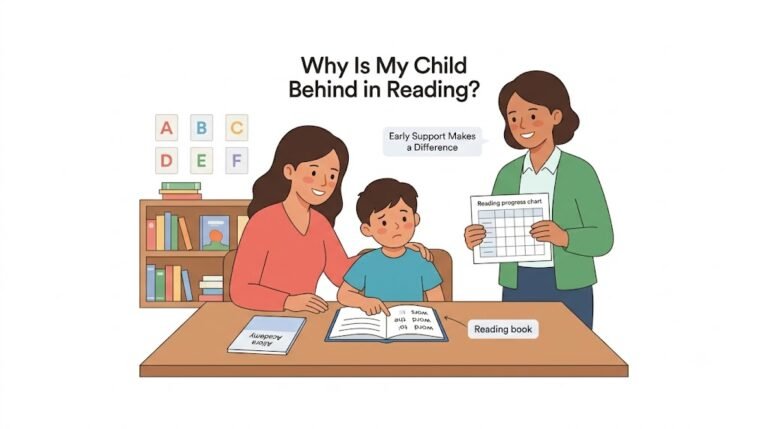
If a student consistently lags despite well‑implemented classroom strategies, it may be time to consider whether an underlying learning difference is present. Our article on signs of a reading disability outlines what to watch for, and our resource on helping a child behind in reading offers additional support strategies for both school and home.
How Do You Choose the Right Reading Resources for Your Classroom?
The market is flooded with workbooks, apps, and boxed programs. As a teacher, you need materials that align with your instructional goals and truly engage children. Here’s a practical framework for evaluating any resource.
Look for:
- Evidence of systematic, explicit skill progression, not random activities.
- High‑interest content that respects your students’ maturity level — even if the reading level is lower.
- Opportunities for multi‑modal learning (visual, auditory, kinesthetic).
- Built‑in assessment or progress monitoring.
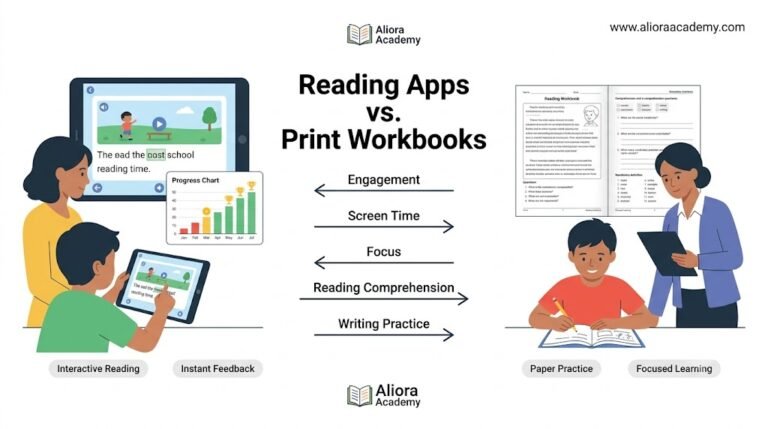
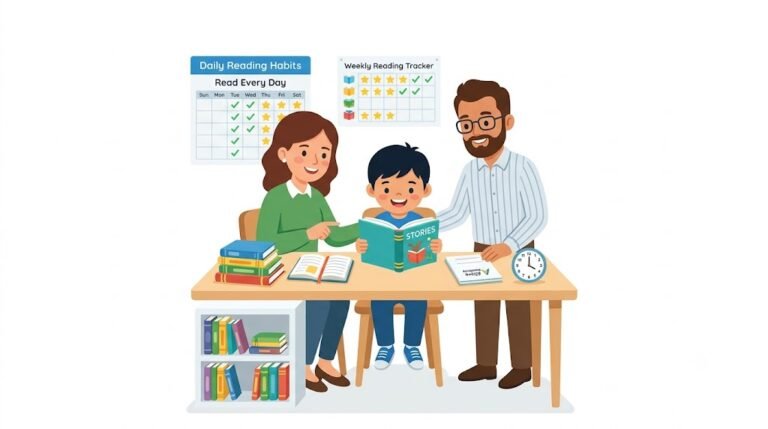
Digital tools can be valuable supplements, but they should never replace the teacher‑student interaction that drives deep learning. For a balanced perspective on when to use screens, our article on reading apps vs. workbooks compares the strengths of each. And if you’re building habits that stick, don’t miss our tips on elementary reading habits.
Common Mistakes to Avoid When Teaching Reading Strategies
Even seasoned educators sometimes fall into patterns that unintentionally hold readers back. Being mindful of these pitfalls can elevate your instruction immediately.
Real‑Life Classroom Examples of Reading Strategies in Action
Example 1: The Phonics Gap in Second Grade
Situation: Mr. Chen’s second‑grade class has a wide range of decoding abilities. Six students still struggle with short vowel sounds, while others are reading chapter books.
Challenge: Whole‑group phonics lessons either leave the struggling students behind or bore the advanced readers.
Solution: Mr. Chen implemented a “Word Work Rotations” model three days a week. While he met with a small decoding group using decodable texts and magnetic letters, other students worked on independent fluency practice, vocabulary games, and reading response journals. The groups changed every two weeks based on quick check‑ins.
Learning Outcome: Within six weeks, four of the six struggling decoders moved up a reading level, and the advanced readers reported enjoying the independence of their stations.
Takeaway: A brief, targeted small‑group session can close gaps without sacrificing whole‑class literacy experiences.
Example 2: The Fourth‑Grade Comprehension Slump
Situation: Ms. Patel noticed that many of her fourth graders could read aloud beautifully but couldn’t retell the main ideas of a nonfiction passage.
Challenge: Students were so focused on reading the words correctly that they weren’t thinking about meaning. They lacked strategies for monitoring their own understanding.
Solution: Ms. Patel introduced the “Read, Cover, Remember, Retell” strategy. Students read a paragraph, covered it with their hand, and said aloud what they remembered. They then checked their retelling against the text. The whole class practiced this routine with short, engaging articles for two weeks before applying it to longer texts.
Learning Outcome: Students began to catch their own comprehension breakdowns and re‑read on their own. Informal assessments showed a marked improvement in their ability to summarize informational text.
Takeaway: Teaching a simple self‑monitoring strategy empowers students to take control of their own comprehension.
Example 3: Reaching the Disengaged Fifth Grader
Situation: Jamal, age 10, could read at grade level but refused to pick up a book during independent reading. He told his teacher, “Books are boring.”
Challenge: Years of assigned reading had disconnected Jamal from the joy of stories. He needed to rediscover that reading could be about his own interests.
Solution: The teacher conducted a quick interest inventory and learned Jamal loved basketball and graphic novels. She curated a small collection of sports biographies, graphic novel adaptations of classics, and nonfiction about athletes. She gave Jamal permission to abandon books he didn’t like and to read graphic novels without apology.
Learning Outcome: Jamal read his first full book in over a year — a graphic memoir about a basketball player. He then asked for more books by the same author. His reading volume increased dramatically, which naturally improved his stamina and vocabulary.
Takeaway: Matching texts to a child’s authentic interests can reignite reading motivation faster than any incentive program. For more on building that internal drive, explore our reading motivation guide.
Frequently Asked Questions About Reading Strategies for Elementary Teachers
What is the most effective reading strategy for elementary students?
There is no single “best” strategy because children’s needs vary. However, explicit, systematic phonics instruction combined with frequent opportunities to read connected text is the most evidence‑based approach for beginning readers. For older students, explicit teaching of comprehension strategies like summarizing and questioning makes the biggest difference.
How much time should be spent on phonics versus comprehension?
The balance shifts as students progress. In kindergarten and first grade, a larger portion of the literacy block should go to phonemic awareness and phonics — perhaps 30–40 minutes. By third grade and beyond, the focus moves toward vocabulary, fluency, and comprehension, though phonics still appears in spelling and word study. A rule of thumb: follow your students’ data.
Can reading strategies be taught through games?
Absolutely. Games like “Phonics Bingo,” “Vocabulary Charades,” or “Comprehension Tic‑Tac‑Toe” lower the stakes and increase engagement. They work particularly well as review activities or as part of literacy centers. Just be sure that the game itself reinforces the skill — not just fun for fun’s sake.
How do I manage a classroom where reading levels range from kindergarten to fourth grade?
This is a real and common challenge. Use a combination of whole‑group lessons with grade‑level text (with supports), small‑group differentiated instruction, and independent work at each child’s instructional level. Centers, technology, and partner reading can help you reach everyone. Don’t hesitate to seek out professional development on differentiation — it’s a skill that grows with practice.
Should I use a scripted reading program or create my own lessons?
Scripted programs can provide a strong structure, especially for new teachers or when the curriculum lacks coherence. However, the most effective teachers adapt any program to meet their students’ needs. Use a program as a spine, not a straitjacket. Supplement with your own read‑alouds, authentic texts, and responsive mini‑lessons.
How can I involve parents in supporting reading strategies at home?
Give parents simple, doable suggestions. Encourage them to read aloud to their child (in any language), ask questions about the story, and let the child see them reading for pleasure. Send home a one‑page list of prompts for before, during, and after reading. For a more detailed guide, share our article on parent reading strategies — it’s written specifically for families.
What should I do if a student still isn’t progressing after trying multiple strategies?
Document the strategies you’ve used and the student’s response to each. Meet with your school’s reading specialist or intervention team. The child may need a more intensive, multisensory approach such as Orton‑Gillingham, or there may be an undiagnosed learning difference. Early, collaborative problem‑solving is key.
Where can I find high‑quality reading resources that don’t require hours of prep?
Look for resources that are ready to use but also flexible. Our reading resources category includes workbooks, decodable books, and activity sets designed with busy teachers in mind. For home reinforcement, our homeschool reading workbooks are equally useful for classroom centers and independent practice.
Bringing It All Together in Your Classroom
Effective reading instruction is both an art and a science. The best reading strategies for elementary teachers are those that you deliver with consistency, adapt with creativity, and ground in a genuine belief that every child can learn to read. Start with the five pillars, build a repertoire of go‑to techniques, and let formative assessment guide your next move.
Remember, you don’t have to implement everything at once. Choose one or two strategies from this guide, try them for a few weeks, and observe the impact. Small, intentional changes accumulate into significant growth over a school year. And when you need fresh ideas or new materials, our blog and homepage are always here to support your teaching journey.
The work you do matters immensely. You’re not just teaching children to read — you’re opening doors to a lifetime of learning, curiosity, and empowerment. Thank you for all you do, and don’t hesitate to contact us if you have questions about finding the right resources for your classroom.