How to Build Reading Confidence in Kids
Practical strategies, encouraging techniques, and trusted resources to help young readers overcome fear, discover their strengths, and fall in love with books.
Explore Reading Resources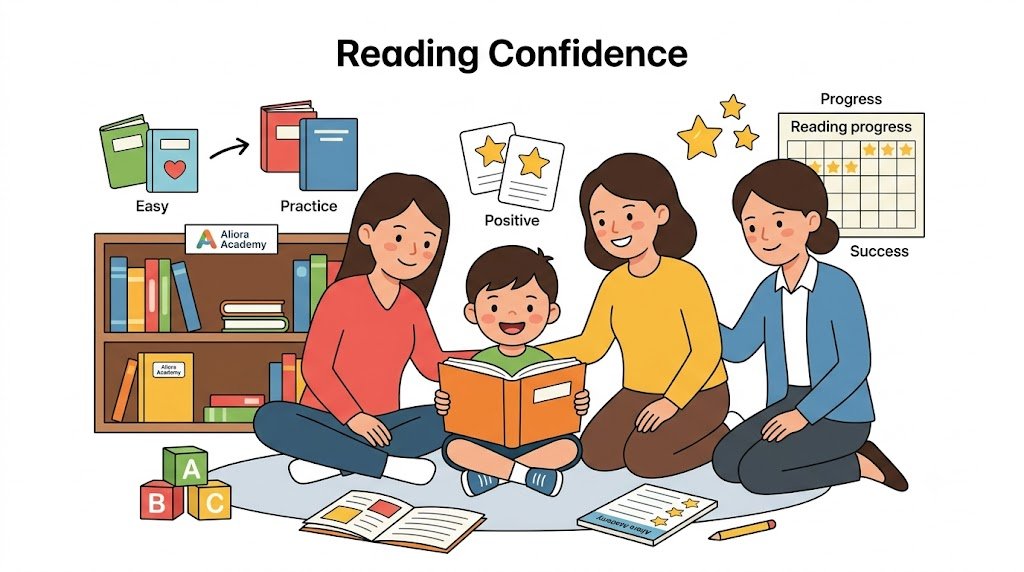
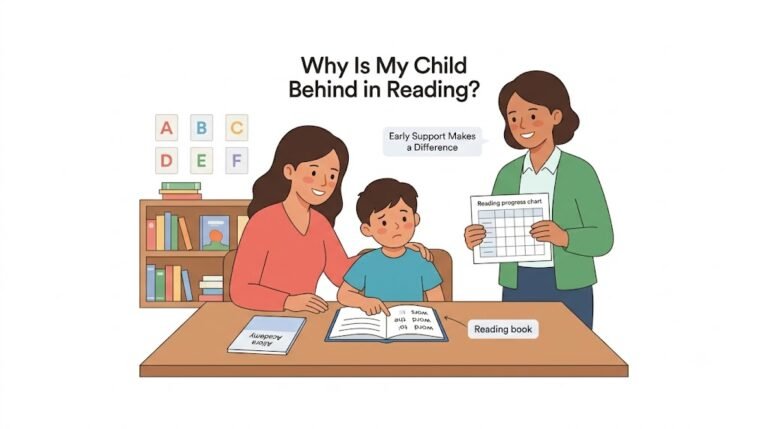
A confident young reader feels proud and capable — this is the goal every parent and teacher can help a child achieve.
There is a quiet magic that happens when a child realizes they can read. The hesitation fades, the shoulders relax, and the words begin to flow. But for many children, that moment feels far away. They stumble, they guess, they avoid. And over time, the struggle stops being about reading itself — it becomes about how they see themselves as learners. Learning how to build reading confidence in kids is one of the most meaningful gifts any parent, teacher, or caregiver can offer.
Reading confidence is not about being the fastest or never making mistakes. It is the quiet inner belief that says, "I can try this, and even if it's hard, I'll be okay." When children possess that belief, they take more risks, practice more willingly, and improve more quickly. Confidence fuels progress, and progress deepens confidence — a virtuous cycle that transforms a hesitant reader into a capable one.
This guide explores why confidence matters, what erodes it, and how you can nurture it at home and in the classroom. Every strategy is practical, grounded in well-established educational principles, and designed to meet children where they are. For more resources on supporting young readers, visit our blog, where we share in-depth articles on early literacy and learning.
Why Is Reading Confidence So Important for Children?
Reading confidence goes far beyond academics. It shapes how children approach challenges in every subject and influences their willingness to participate in class, ask questions, and express their ideas. When a child believes they are a poor reader, that belief can spill into other areas — writing, social studies, even math word problems — creating a domino effect of academic avoidance.
Research and classroom experience consistently show that confident readers:
- Read more often — Children who feel capable voluntarily pick up books, which creates more practice opportunities and faster skill growth.
- Persist through difficulty — When they encounter an unfamiliar word or complex sentence, they problem-solve rather than shut down.
- Develop deeper comprehension — Because they are not expending all their mental energy on decoding, confident readers can focus on meaning, inference, and critical thinking. For strategies on strengthening comprehension, explore our guide on improving 3rd grade reading comprehension.
- Participate actively in classroom discussions — They raise their hands, share opinions, and engage with peers about what they have read.
- Build a lifelong reading habit — Children who associate reading with positive feelings are far more likely to become adults who read for pleasure and knowledge.
What Causes Low Reading Confidence in Children?
Before you can rebuild confidence, it helps to understand what tears it down. Most children do not start out feeling anxious about reading. Their self-doubt develops gradually, often in response to specific experiences that made them feel exposed, inadequate, or judged.
Common triggers that erode reading confidence include:
- Public stumbling — Being asked to read aloud in class before feeling ready and struggling in front of peers.
- Comparisons to siblings or classmates — Hearing "Your brother was reading chapter books by your age" can plant a seed of shame that grows over time.
- Overcorrection — When every mistake is immediately corrected, the child receives the message that errors are unacceptable rather than a natural part of learning.
- Mismatched reading materials — Being assigned books that are far too difficult creates repeated failure experiences that condition a child to expect defeat. If your child is experiencing this, our article on how to help a child struggling with reading offers targeted guidance.
- Limited exposure to books at home — Children who grow up without regular access to books and read-alouds may enter school already feeling behind.
- Undiagnosed learning differences — A child with dyslexia or another processing challenge may be working twice as hard for half the results, leading to exhaustion and self-blame.
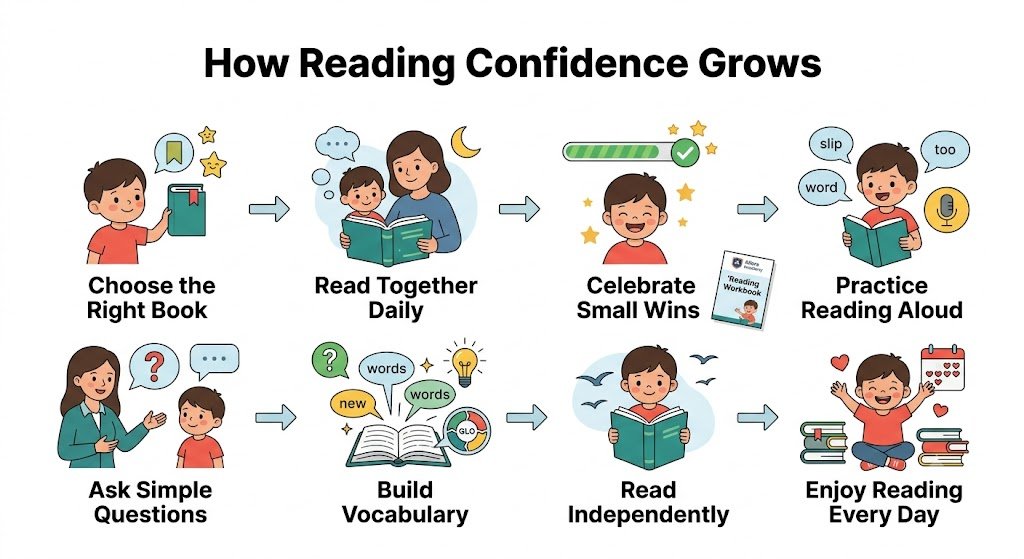
Recognizing the subtle signs of reading anxiety early allows parents and teachers to intervene with encouragement before self-doubt becomes entrenched.
How Can You Tell If a Child Lacks Reading Confidence?
Children rarely announce, "I feel bad about myself as a reader." Instead, they communicate their discomfort through behavior. Knowing what to look for helps you respond with empathy rather than frustration.
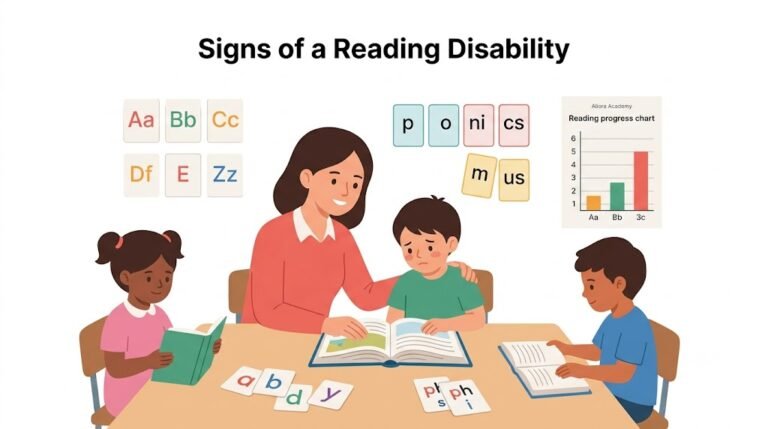
Watch for these behavioral signs:
- Saying "I hate reading" or "books are boring" — often a shield against vulnerability.
- Frequent bathroom breaks, sudden thirst, or complaints of stomachaches when reading time approaches.
- Reading in a barely audible whisper, even when no one else is around.
- Staring at a page without turning it for long stretches.
- Guessing wildly at words based on pictures or the first letter rather than attempting to decode.
- Becoming visibly agitated or tearful when asked to read something new.
- Calling themselves "stupid" or "bad at reading" — language that signals internalized shame.
A single sign on a bad day is not cause for alarm. But when several of these behaviors appear consistently over weeks or months, the child's reading confidence needs deliberate attention. The good news is that confidence can be rebuilt — often more quickly than you might expect — with the right approach.
Understanding the Confidence-Competence Loop
One of the most important concepts in reading development is the relationship between confidence and competence. They feed each other in both directions — for better or for worse.
How the Loop Works
The Positive Cycle: A child feels safe enough to try → they practice → their skills improve → they feel more capable → they try more challenging material → confidence grows → they practice even more.
The Negative Cycle: A child struggles → they feel embarrassed → they avoid reading → their skills stagnate → the gap widens → they feel even worse → avoidance increases.
Breaking the negative cycle does not require fixing every reading skill at once. It starts with interrupting the shame and avoidance pattern — often through small, successful experiences that prove to the child that reading does not have to hurt.
When you build reading confidence in kids, you are essentially shifting them from the negative loop into the positive one. The skill development follows naturally once the emotional block is removed.
How Can Parents Build Reading Confidence at Home?
You do not need a teaching degree or a specialized curriculum to nurture your child's reading confidence. Some of the most effective strategies are also the simplest — and they work because they restore the emotional safety that struggling readers have lost.
Celebrate Effort, Not Just Accuracy
Children who lack confidence often believe that good reading means never making mistakes. Shifting the focus from perfection to effort changes everything. Praise specific attempts: "I noticed you tried three different strategies on that tricky word — that's what strong readers do." This reinforces the behaviors you want to see rather than the outcome you wish had happened.
Let Them Choose What to Read
Choice is a powerful confidence builder. When children select their own books — even if those books seem too easy, too silly, or not "literary" enough — they experience ownership over their reading life. Comics, graphic novels, magazines, and instruction manuals all count. The child who feels in control of what they read is far more likely to keep reading. Browse our reading resources for a range of engaging materials that appeal to different interests and reading levels.
Use Echo and Choral Reading
Two of the gentlest ways to practice reading aloud are echo reading and choral reading. In echo reading, you read a sentence with expression, and your child repeats it back. In choral reading, you both read the same passage simultaneously. Both techniques remove the spotlight from the child while still providing valuable fluency practice. Over time, your voice fades and theirs strengthens — naturally and without pressure.
Build Fluency Without Pressure
Fluency — reading smoothly, accurately, and with expression — is often the bridge between decoding and comprehension. Children who read haltingly expend so much energy on individual words that meaning gets lost. Short, repeated readings of familiar passages build automaticity and, with it, confidence. For more targeted fluency strategies, see our article on how to improve reading fluency.
Read Aloud Together — Every Day
Reading aloud is not just for preschoolers. When you read to your elementary-aged child, you model fluent, expressive reading, expose them to richer vocabulary and more complex ideas than they could access on their own, and — most importantly — you create warm, positive associations with books. This emotional connection is the foundation upon which reading confidence is built.
What Classroom Strategies Help Build Reading Confidence?
Teachers have a unique opportunity to shape how children see themselves as readers. The classroom environment, instructional choices, and the language used around reading all send powerful messages about what matters and who belongs.
Create a Psychologically Safe Reading Environment
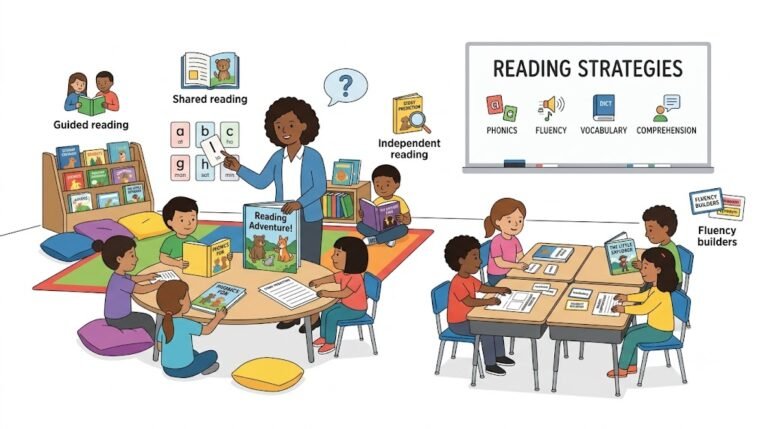
A child who fears humiliation will not take the risks that learning requires. Establish clear norms that mistakes are expected, respected, and treated as learning opportunities. Avoid round-robin reading, where children read aloud in turn while others follow along — this practice is intensely anxiety-producing for struggling readers and provides little instructional benefit. Instead, use partner reading with trusted peers or small-group instruction where the stakes feel lower.
Match Texts to the Reader, Not Just the Grade Level
One of the fastest ways to erode confidence is to assign texts that a child cannot access. Use informal assessments to determine each student's instructional reading level and provide materials that are challenging but manageable. A child reading at a second-grade level in a fourth-grade classroom needs decodable texts and high-interest, lower-reading-level books — not simplified versions of grade-level novels that still feel overwhelming.
Normalize Diverse Reading Journeys
Talk openly about the fact that every reader develops differently. Share stories of well-known people who struggled with reading as children. When students see that reading difficulty is not a permanent identity but a phase that can be worked through, they are more likely to maintain hope and effort.
Teach Self-Advocacy Skills
Confident readers know what to do when they hit a hard word or a confusing passage. Explicitly teach strategies like rereading, using context clues, breaking words into syllables, and — crucially — asking for help. When children have a toolkit of go-to strategies, they feel more in control and less helpless when challenges arise.
Peer support in a safe classroom environment helps hesitant readers build confidence through collaboration rather than competition.
Choosing the Right Resources to Support Reading Confidence
The materials you put in front of a child send a message. A book that is too hard says, "You don't belong here." A book that is just right says, "You can do this." Choosing resources thoughtfully is one of the most direct ways to support a growing reader's self-belief.
| Confidence-Building Resources | Resources That May Undermine Confidence |
|---|---|
| Books with controlled vocabulary at an accessible level | Books labeled by grade level that feel babyish or embarrassing |
| High-interest topics matched to the child's actual age and curiosity | Content written for much younger children that feels patronizing |
| Short, manageable passages that build stamina incrementally | Dense chapter books with no visual support or natural stopping points |
| Materials with built-in success — every few pages feel achievable | Books where every page is a struggle and the child never hits a rhythm |
| Workbooks with clear, simple layouts and achievable exercises | Cluttered pages with overly complex directions that confuse before the child even begins |
| Audio-supported options that allow children to follow along | Resources that demand full independence from a child who is not ready |
If you are looking for high-quality workbooks that reinforce comprehension skills without overwhelming young readers, our guide to the best reading comprehension workbooks for elementary students features carefully selected options organized by skill level and learning style. You can also visit our homepage to explore our full collection of educational materials designed to support every stage of a child's reading journey.
Common Mistakes That Undermine Reading Confidence
Even the most well-intentioned adults can inadvertently make reading harder for a child. Being aware of these common missteps helps you avoid them and replace them with more supportive approaches.
Real-Life Examples of Building Reading Confidence
Example 1: The Silent Avoider
Situation: Ethan, age 8, reads well enough in his head but refuses to read aloud — even to his parents. His teacher reports that he freezes during reading group and sometimes pretends he cannot find his place.
Challenge: An earlier experience of stumbling over a word in front of classmates led to laughter. Ethan now associates reading aloud with humiliation and has developed elaborate avoidance strategies.
Solution: His parents created a private "book club for two" at home. They chose a funny graphic novel series and took turns reading speech bubbles to each other — with no audience, no correction, and no judgment. The focus was entirely on enjoyment and shared laughter. Gradually, they introduced short echo reading sessions with no stakes.
Learning Outcome: Over three months, Ethan began volunteering to read short passages aloud at home. His classroom participation improved more slowly, but the private practice rebuilt his willingness to try.
Takeaway: For a child whose confidence has been shattered by a public experience, rebuilding must happen in private first. Create a sanctuary where reading aloud feels safe before expecting performance in front of others.
Example 2: The Perfectionist Who Wouldn't Try
Situation: Layla, age 6, is bright and verbal but refuses to attempt reading words she does not already know. She erases and rewrites letters repeatedly, distressed by anything less than perfect.
Challenge: Layla has internalized the belief that good readers never make mistakes. Her perfectionism prevents the risk-taking and experimentation that early reading requires.
Solution: Her parents and teacher collaborated to model mistake-making openly. The teacher would deliberately misread a word during read-aloud, laugh gently, and say, "Oops! Even grown-ups mix up words. Let me try that again." At home, her parents played reading games where making mistakes was part of the fun — like purposely swapping words in a familiar story and letting Layla catch them.
Learning Outcome: Layla began to relax. She started attempting unfamiliar words without erasing first, and her reading fluency improved significantly because she was no longer stuck in a cycle of self-correction.
Takeaway: Some children need explicit permission to be imperfect. When the adults around them model error as a normal, even humorous, part of learning, the pressure lifts and genuine progress becomes possible.
Example 3: The Older Reader Who Had Given Up
Situation: Marcus, age 10, reads significantly below grade level and has decided he is "just not a reading person." He avoids books entirely and becomes defensive when the topic comes up.
Challenge: Years of struggle have calcified into a fixed identity. Marcus no longer believes improvement is possible, so he protects himself by rejecting reading altogether.
Solution: His parents shifted tactics completely. They stopped all talk of reading levels, practice requirements, and skill building. Instead, they focused on finding entry points into stories that matched Marcus's genuine interests — sports biographies written at an accessible level, audiobooks paired with print, and a graphic novel series about video game designers. His father started reading the same books so they could talk about them casually, with no quiz-like questioning.
Learning Outcome: Marcus found a biography of a basketball player he admired and read it cover to cover — his first complete book in years. The experience did not instantly close the reading gap, but it cracked open the door of possibility. He began to believe that reading might have something to offer him after all.
Takeaway: For older children whose reading identity is deeply entrenched, skill instruction must take a back seat to re-engagement. Find the right book — the one that speaks to their authentic self — and let it do the persuasive work that no amount of instruction can achieve.
The Role of Mindset in Reading Confidence
One of the most powerful shifts you can facilitate is helping a child move from a fixed mindset about reading to a growth mindset. A child with a fixed mindset believes that reading ability is something you either have or you do not — and that struggling means you lack the gift. A child with a growth mindset understands that reading improves with practice, that difficulty is part of the process, and that their current level is not their final destination.
Language That Shifts Mindset
Instead of: "You're such a good reader!"
Try: "I noticed how you figured out that tricky word by breaking it into parts. That's a smart strategy."
Instead of: "This book is too hard for you."
Try: "This book has some challenging words, but I think you're ready to tackle it with a little support."
Instead of: "You're just not a reading person."
Try: "Reading feels hard right now, and that's okay. Every reader has been where you are at some point."
The words we use around reading shape the stories children tell themselves about who they are as learners. Choose words that open doors rather than close them.
For children who are actively struggling with reading skills, building confidence is an essential parallel track — not something to address after the skills are in place. Our guide on how to help a child struggling with reading offers additional strategies that complement the confidence-building approaches discussed here.
Frequently Asked Questions About Building Reading Confidence in Kids
How long does it take to build reading confidence in a struggling child?
Every child's timeline is different. Some children show a noticeable shift in attitude within a few weeks of consistent, supportive practice. Others, particularly those with deeper anxiety or learning differences, may need several months. The key is consistency and celebrating small milestones along the way. Confidence is built in increments, not in dramatic leaps.
Can a child be a good reader but still lack confidence?
Absolutely. Some children decode accurately and comprehend well but still doubt their abilities. This is especially common among perfectionists and children who compare themselves to highly advanced peers. Their skill may be solid, but their self-perception lags behind. These children benefit from reassurance, opportunities to mentor younger readers, and experiences that let them see their own competence reflected back.
Should I let my child read books that seem too easy?
Yes — and enthusiastically. Easy books build fluency, automaticity, and the sheer pleasure of reading without effort. They remind a child what it feels like to be successful. Far from being a waste of time, reading below level is a confidence-restoring practice that even adult readers enjoy. Think of it as the reading equivalent of a comfortable walk rather than an exhausting sprint.
What if my child refuses to read anything at all?
Start by removing the pressure entirely. Take reading off the table for a short period and focus exclusively on read-alouds, audiobooks, and storytelling. Let your child see you enjoying books without any expectation that they join in. Gradually reintroduce reading through highly engaging, low-commitment formats — a joke book, a comic, a magazine about their favorite hobby. The goal is to rebuild a positive connection before addressing skill gaps.
How do I talk to my child's teacher about reading confidence concerns?
Approach the conversation as a partnership. Share what you are observing at home — specific behaviors, emotional reactions, and any patterns you have noticed. Ask the teacher what they see in the classroom and whether they have suggestions for supporting your child. Together, you can create a consistent approach across home and school. If needed, explore our reading resources for materials that can support both environments.
Do rewards and incentives help build reading confidence?
External rewards like stickers or prizes can provide a short-term boost, but they rarely build lasting confidence. The most powerful motivation comes from within — the satisfaction of finishing a book, the pride of understanding a tricky passage, the joy of getting lost in a story. Focus on helping your child experience those intrinsic rewards. Celebrate the reading itself, not the prize that comes after it.
Is it normal for reading confidence to fluctuate?
Completely normal. Reading confidence is not a straight upward line. A child who feels confident with familiar books may wobble when faced with a new genre or a more challenging text. Setbacks are part of the process. Treat them as opportunities to reinforce that all readers — even adults — encounter difficulty and that the goal is not to avoid challenge but to approach it with curiosity and support.
Helping Every Child Discover the Confident Reader Within
Building reading confidence in kids is not about turning every child into a voracious bookworm or a top-scoring student. It is about ensuring that every child knows, deep in their bones, that they are capable of learning and growing — that reading is not a club they have been excluded from but a door that opens a little wider each time they push on it.
The strategies in this guide share a common thread: they meet children where they are, with compassion and patience, and they prioritize the emotional experience of reading alongside the skills. When a child feels safe, supported, and seen, confidence follows. And when confidence arrives, skill development accelerates — not because the child is being pushed, but because they are finally ready to move forward on their own.
Remember that you are not alone in this journey. Teachers, reading specialists, and a wealth of carefully designed resources are available to support you. Explore our reading collection for materials that build both skill and confidence, visit our blog for ongoing guidance, and reach out through our contact page if you have questions about finding the right tools for your child.
The confident reader your child can become is already there, waiting beneath the worry and the avoidance. With steady support, genuine encouragement, and the right resources, that reader will emerge — not overnight, but over time, one small success at a time.