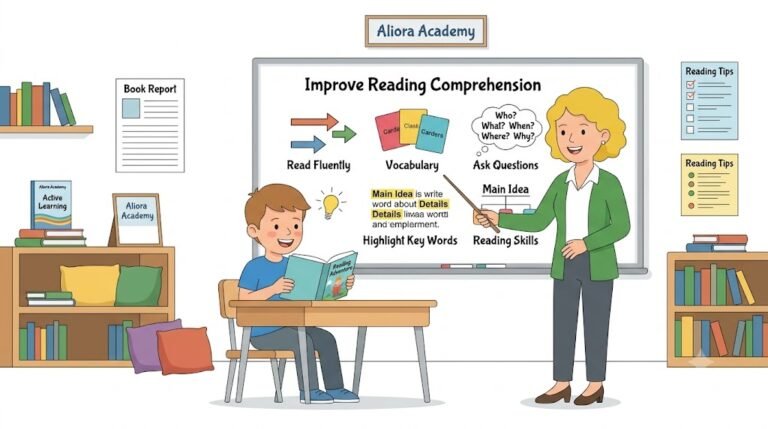
Reading Fluency Strategies Every Teacher Can Use
Practical, evidence-based approaches to help elementary students read with accuracy, appropriate pace, and meaningful expression.
Explore Reading Resources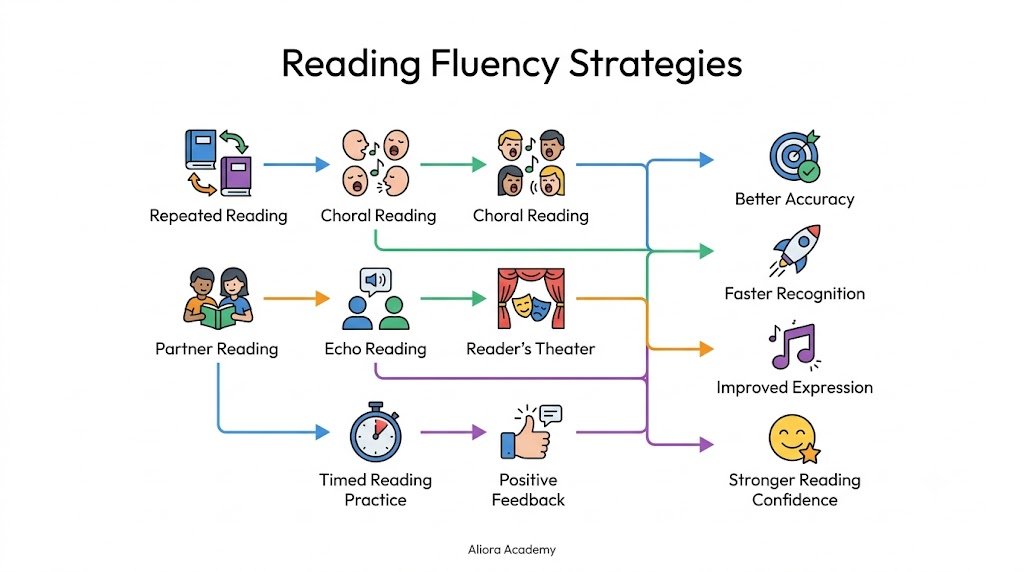
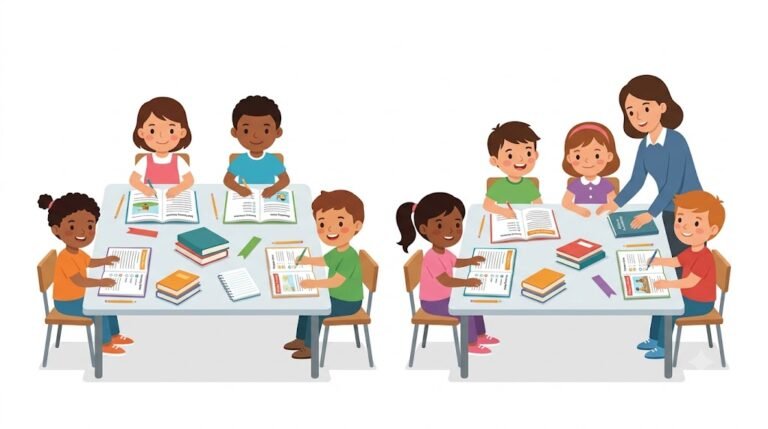
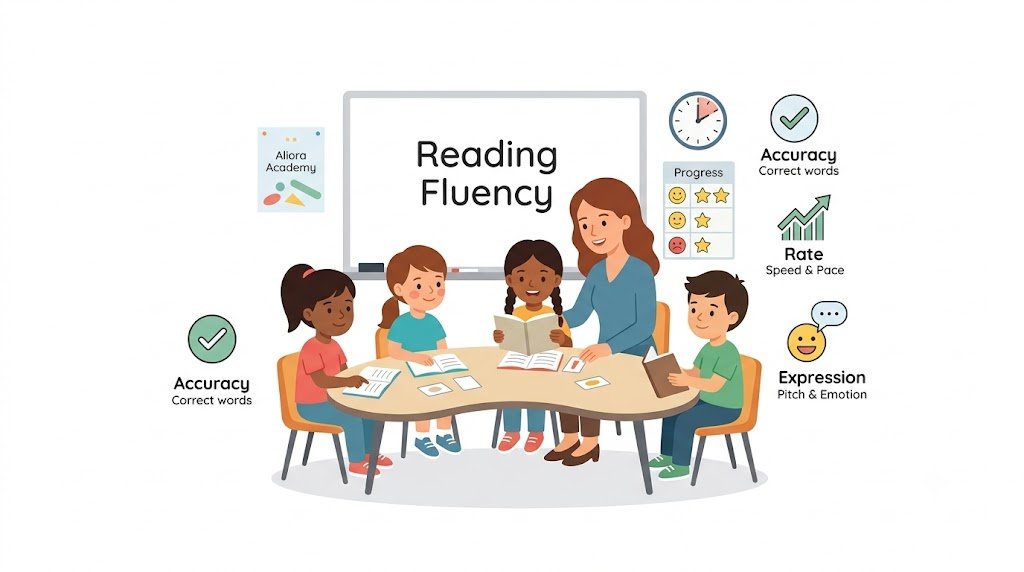
Small-group fluency work gives every child more opportunities to practice reading aloud with teacher support and peer encouragement.
Every elementary teacher has encountered the same scene: a student sits with a book, laboring over each word, reading in a flat monotone with no sense of where one sentence ends and the next begins. By the time they reach the bottom of the page, they have no idea what they just read. The child can decode — but they cannot read fluently. And without fluency, comprehension remains frustratingly out of reach.
Fluency is the bridge between recognizing words and understanding them. When students read fluently, their brains are no longer preoccupied with decoding individual words, freeing up cognitive energy to focus on meaning. That is why reading fluency strategies for teachers are not just a nice addition to literacy instruction — they are essential. When teachers embed fluency practices into daily routines, students gain the automaticity and confidence that unlock deeper comprehension.
This guide walks through what reading fluency really means, why it matters at every elementary grade level, and which practical strategies you can implement tomorrow — whether you teach first grade, fourth grade, or anywhere in between. For more foundational literacy insights, visit our blog, where we cover topics from early phonics to advanced comprehension.
What Is Reading Fluency and Why Does It Matter?
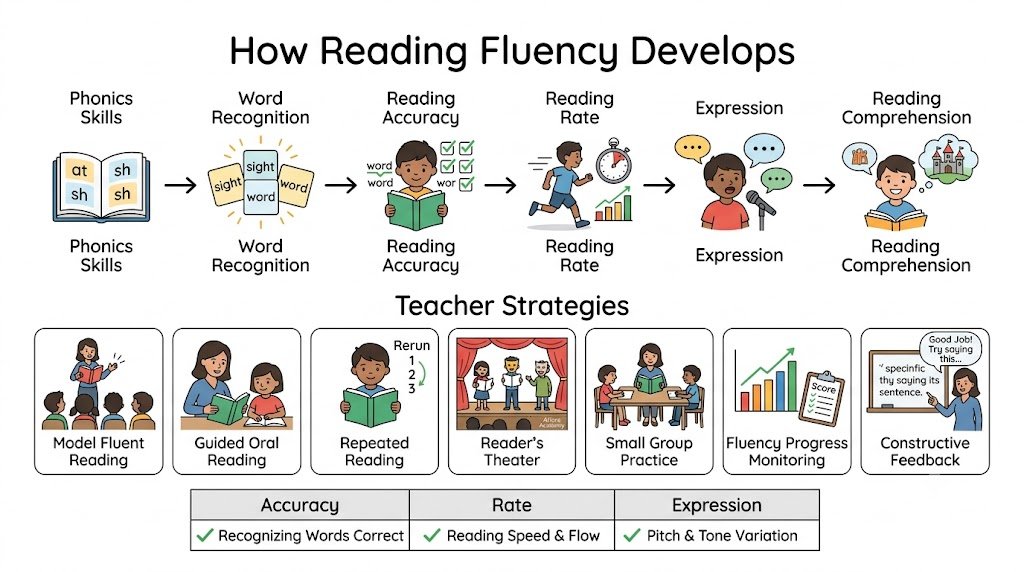
Reading fluency is often misunderstood as simply reading fast. In reality, fluency is a combination of three interconnected components, each equally important for skilled reading.
The three pillars of reading fluency are:
- Accuracy — The ability to read words correctly. Without accurate decoding, every other aspect of reading breaks down.
- Rate — Reading at a pace that mirrors spoken conversation. Not too fast, not too slow — just right for the brain to process meaning.
- Prosody — Reading with appropriate expression, phrasing, and intonation. Prosody reflects the reader's understanding of the text beyond individual words.
When all three elements work together, reading feels smooth and natural. When one component lags, the entire reading experience suffers. A child who reads accurately but painfully slowly, for example, may lose the thread of a sentence before reaching the period. A child who reads quickly but inaccurately may breeze through a passage with little true understanding. Effective reading strategies for elementary students always address fluency alongside decoding and comprehension.
One-on-one fluency practice allows teachers to provide immediate, specific feedback on phrasing and expression.
How Can You Tell If a Student Needs Fluency Support?
Fluency struggles are not always obvious at first glance, especially in busy classrooms where some children become skilled at hiding their difficulties. However, certain patterns tend to appear consistently among students who need additional fluency work.
Watch for these classroom indicators:
- Reading aloud sounds choppy and word-by-word, with no natural phrasing or flow.
- The student ignores punctuation — periods, commas, and question marks all sound the same.
- Reading speed is noticeably slower than grade-level peers, with long pauses between words.
- The student can decode a passage but cannot retell what happened afterward.
- Avoidance behaviors appear — the child volunteers last, asks to use the restroom during reading time, or "forgets" their book.
- Oral reading lacks expression entirely; every sentence is delivered in the same flat tone regardless of content.
A single indicator may not signal a significant problem, but when several appear together across multiple reading sessions, targeted fluency instruction is likely needed. If you are also noticing broader reading difficulties, our guide on signs of a reading disability can help you distinguish between typical developmental lags and more persistent challenges.
Core Reading Fluency Strategies Every Teacher Can Implement
The most effective fluency strategies are not complicated or time-consuming. They are simple, repeatable, and grounded in well-established instructional practices. Below are the approaches that classroom teachers consistently find most impactful across elementary grade levels.
1. Repeated Reading
Repeated reading is exactly what it sounds like: having a student read the same short passage multiple times until they achieve a level of fluency that feels comfortable and natural. This strategy works because it builds automaticity — the ability to recognize words instantly without conscious decoding effort.
Choose a passage of 50 to 200 words at the student's instructional level. Have the child read it aloud while you time them and note errors. Then, over the next several days, have them reread the same passage three to five times, tracking their improvement in speed and accuracy. Most children find this highly motivating because they can see tangible progress.
2. Echo Reading
In echo reading, the teacher reads a sentence or short paragraph aloud with proper fluency, and the student immediately echoes it back, mimicking the same pace, phrasing, and expression. This technique provides a clear model of what fluent reading sounds like and gives the student a risk-free opportunity to practice.
Echo reading is especially effective for students who have never heard what expressive reading sounds like. By hearing you model the rise and fall of a sentence, the pause at a comma, and the lift of an excited phrase, they internalize the patterns of fluent reading.
3. Choral Reading
Choral reading involves the teacher and a group of students reading a passage aloud together, in unison. This strategy removes the anxiety of solo performance — every voice blends together, so individual mistakes are not highlighted. Struggling readers benefit from hearing fluent peers around them while simultaneously practicing the text.
Choral reading works well with poetry, short passages, or portions of a read-aloud book. Keep the text brief and focus on a single fluency goal per session, such as pausing at punctuation or reading dialogue with expression.
4. Paired Reading
Paired reading pairs a more fluent reader with a less fluent partner. The stronger reader begins reading aloud while the partner follows along. At a predetermined signal — a tap on the page or a quiet word — the partner takes over and reads independently until they need support again. This back-and-forth rhythm builds confidence and provides in-the-moment modeling.
Paired reading works well across grade levels. A fourth grader can read with a second grader, or two same-age peers can partner with one serving as the fluent model. For more guidance on pairing older and younger readers, browse our reading motivation resources, which include activities that make reading partnerships engaging for both participants.
5. Reader's Theater
Reader's theater turns a text into a script. Students are assigned different characters or narrator roles and practice reading their parts with appropriate expression and timing. Because reader's theater does not require props, costumes, or memorization, it is a low-prep, high-engagement fluency activity that fits easily into the literacy block.
The beauty of reader's theater is that students want to reread their scripts — they are practicing fluency without realizing it. The natural motivation of performance drives repeated reading in a way that feels purposeful and fun.
- Repeated Reading — Same passage, multiple reads, tracked progress.
- Echo Reading — Teacher models, student echoes.
- Choral Reading — Whole group reads together in unison.
- Paired Reading — Fluent and less fluent partner read together.
- Reader's Theater — Script-based reading with expression for an audience.
Reader's theater transforms fluency practice into an engaging, collaborative activity that students look forward to.
How Do Fluency Strategies Change Across Grade Levels?
Fluency instruction is not one-size-fits-all. A first grader learning to decode needs a different approach than a fourth grader who reads accurately but without expression. Understanding how fluency expectations evolve helps teachers target their instruction appropriately.
| Grade Level | Primary Fluency Focus | Most Effective Strategies |
|---|---|---|
| Kindergarten – 1st Grade | Accuracy and letter-sound automaticity | Echo reading, choral reading, decodable text practice |
| 2nd – 3rd Grade | Rate development and basic phrasing | Repeated reading, paired reading, timed fluency passages |
| 4th – 5th Grade | Prosody, expression, and comprehension-linked fluency | Reader's theater, poetry performance, dialogue-rich texts |
Keep in mind that these are general guidelines. Some fourth graders still need explicit accuracy work, and some first graders are ready to play with expression. The best approach is always to match the strategy to the student, not the label. If you are working with older elementary students who are still decoding slowly, our list of best books for struggling 4th grade readers includes high-interest, accessible texts perfect for fluency practice with older children.
What Types of Texts Work Best for Fluency Practice?
The text itself matters enormously. A passage that is too difficult frustrates the reader and undermines fluency practice. A passage that is too easy provides no growth. Selecting the right material is a skill every teacher develops over time.
Characteristics of Strong Fluency Texts
- Instructional level readability — The student can read approximately 90–95% of the words accurately on the first attempt.
- Short length — Passages of 50 to 200 words allow for multiple rereadings within a single session.
- Natural language patterns — Texts with dialogue, punctuation variety, and sentence-length variation encourage expressive reading.
- High interest — Content that matters to the student sustains motivation through multiple readings.
- Poetry and rhythmic text — Rhyme, meter, and repetition naturally support phrasing and prosody development.
Decodable texts are ideal for early readers still mastering phonics patterns. For older students, short nonfiction articles, poetry, and excerpts from engaging chapter books all make excellent fluency passages. You can find curated materials organized by skill level in our reading resources collection, along with workbooks and activity sets designed specifically for fluency building. If you teach in a homeschool setting, our homeschool reading workbooks guide offers additional options for structured fluency practice at home.
What Are the Most Common Fluency Instruction Mistakes?
Even experienced teachers can fall into habits that unintentionally slow fluency growth. Being aware of these common missteps helps you refine your practice and get better results.
Real Classroom Examples of Fluency Strategy Implementation
Example 1: Building Accuracy in First Grade
Situation: Marcus, age 6, knows most letter sounds but reads haltingly, pausing for several seconds before each word. His teacher notices he is spending all his mental energy on decoding, leaving none for meaning.
Challenge: Marcus needs to build automaticity with high-frequency words and simple CVC patterns so his brain can free up space for comprehension.
Solution: The teacher introduced daily echo reading with decodable sentences. She read a sentence aloud fluently, and Marcus echoed it back immediately. Over three weeks, the sentences grew slightly longer, and she gradually reduced her modeling, letting Marcus take the lead. She also sent home a short fluency passage each week for repeated reading practice with a parent.
Learning Outcome: Marcus's word recognition speed improved noticeably, and he began to self-correct errors without prompting. His reading began to sound more like natural speech, and he started volunteering to read aloud during morning meeting.
Takeaway: For early readers, short, daily echo reading sessions build the automaticity that enables all later fluency growth.
Example 2: Developing Rate in Third Grade
Situation: A group of five third graders reads accurately but well below grade-level rate benchmarks. Their slow pace means they fall behind in content-area reading and avoid independent reading altogether.
Challenge: These students need to increase their reading rate without sacrificing accuracy or comprehension.
Solution: The teacher implemented a four-day repeated reading routine. On Monday, each student read a new passage and recorded their baseline time. Tuesday through Thursday, they practiced the same passage with a partner, focusing on smoothness rather than speed. On Friday, they read the passage one final time and charted their improvement. The teacher framed progress as "becoming a smoother reader," not "reading faster."
Learning Outcome: Every student in the group improved their reading rate over eight weeks while maintaining strong comprehension. More importantly, several students began checking out books from the classroom library voluntarily for the first time.
Takeaway: Structured repeated reading routines, combined with supportive peer partnerships, build rate in a way that feels safe and motivating.
Example 3: Cultivating Prosody in Fifth Grade
Situation: Elena, age 10, reads accurately and at an appropriate rate, but every sentence sounds exactly the same — flat, monotone, with no variation in pitch or pacing. Her comprehension is adequate but shallow; she misses emotional nuance and author's tone.
Challenge: Elena needs explicit instruction in prosody — how to use her voice to reflect meaning, emotion, and punctuation.
Solution: The teacher introduced a weekly reader's theater session. Elena was given character roles with strong emotional arcs — a worried mother, an excited explorer, a grumpy neighbor. Before reading, the class discussed each character's feelings and how those feelings might sound. The teacher also modeled contrast: reading the same sentence in a flat voice versus an expressive voice, and asking the class to identify the difference.
Learning Outcome: Within six weeks, Elena's oral reading showed dramatic improvement. She began to vary her pitch naturally, pause at punctuation, and adjust her voice to match character emotion. Her written responses to reading also grew richer, suggesting deeper comprehension.
Takeaway: Prosody can and should be taught explicitly. Reader's theater and modeling provide a safe, engaging context for students to experiment with expressive reading.
How Do Fluency Strategies Support Struggling Readers Specifically?
Struggling readers often have gaps in multiple areas — decoding, vocabulary, comprehension, and fluency all interlock. Fluency work addresses a critical bottleneck: even if a child can decode, slow and labored reading prevents them from accessing meaning efficiently.
For struggling readers, fluency strategies offer several distinct benefits. Repeated reading builds automaticity with words that previously required conscious decoding effort. Paired and echo reading provide models of what fluent reading sounds like — models that struggling readers may not have internalized from independent reading. And the visible progress that fluency tracking provides is powerfully motivating for children who have experienced reading only as a source of frustration.
If you are supporting a child who is significantly behind grade-level expectations, our guide on helping a child behind in reading offers additional strategies that integrate fluency work into a broader intervention plan. For comprehension-focused support that complements fluency instruction, our best reading comprehension workbooks for elementary students roundup includes materials that work well alongside fluency practice.
Frequently Asked Questions About Reading Fluency Strategies for Teachers
How much time should fluency practice take each day?
Fluency practice does not require a large time commitment. Ten to fifteen minutes of focused, intentional fluency work, three to five times per week, is sufficient for most students. The key is consistency and quality — a short, well-structured session is far more effective than a long, unfocused one.
Can fluency be practiced silently, or must it be aloud?
Oral reading is essential for fluency development because it allows the teacher to hear and assess accuracy, rate, and prosody. Silent reading has its place for comprehension and stamina building, but fluency instruction requires students to read aloud so they receive feedback and modeling.
What is a reasonable fluency goal for a student to work toward?
Goals should be individualized based on baseline data. A reasonable approach is to aim for small, incremental improvements each week — a few additional words per minute, one fewer error, or a noticeable improvement in phrasing. Avoid rigid benchmarks that do not account for the individual child's starting point and learning profile.
How do I assess fluency without making students anxious?
Frame fluency checks as information-gathering, not testing. Use language like "I want to hear how you're growing as a reader" rather than "I'm going to test your reading speed." Conduct assessments one-on-one in a quiet space, keep them brief, and always follow with specific, positive feedback about what the student did well.
Should I correct every error during fluency practice?
No. Constant correction disrupts the flow of reading and increases anxiety. During fluency practice, only correct errors that significantly change meaning. Note patterns of errors and address them during separate decoding or word work instruction. The fluency session itself should feel smooth and supportive.
Can fluency strategies work in a whole-class setting?
Absolutely. Choral reading and reader's theater are excellent whole-class fluency activities. The key is to ensure that every student is actively participating — choral reading works because all voices join together, and reader's theater works because every student has a role. For repeated reading, small groups or pairs are more effective.
What if a student resists reading aloud entirely?
Start with the least threatening format: choral reading where the student's voice blends with others, or echo reading where you model first and they simply repeat. Never force a reluctant reader to perform solo in front of peers. Build trust gradually, and consider whether underlying reading anxiety or a possible reading disability may be contributing to the avoidance.
Where can I find quality fluency passages and resources?
High-quality fluency passages are available in many formats — decodable books for early readers, poetry collections, short nonfiction articles, and dedicated fluency workbooks. Our reading resources page features curated materials for fluency building across grade levels. For additional guidance on selecting resources, visit our homepage or contact us with specific questions.
Bringing Fluency Strategies Into Your Daily Classroom Practice
Reading fluency does not develop by accident. It grows through intentional, consistent instruction — the kind that thoughtful teachers weave into their literacy blocks every day. The strategies outlined in this guide are not radical departures from what you already do. They are refinements: small shifts in emphasis, technique, and text selection that together create the conditions where fluent reading can flourish.
The beauty of fluency work is that progress is visible. When a child moves from choppy, word-by-word reading to smooth, expressive phrasing, you can hear the difference. More importantly, you can see what comes next: deeper comprehension, greater engagement, and a child who no longer dreads opening a book. For many students, fluency is the missing piece that makes everything else click into place.
Whether you choose to start with five minutes of echo reading in your morning routine, a weekly reader's theater session, or a simple repeated reading folder that students use with partners, the most important step is the first one. Pick one strategy, try it consistently for a few weeks, and watch how your students respond. Fluency grows in small increments, but those increments add up to a transformed reading experience.
For more classroom-tested literacy strategies, explore our blog for additional guides. Browse our reading resources for fluency-building materials ready for your classroom, and feel free to contact us if you need help finding the right tools for your students. Every fluent reader starts somewhere — and with the right strategies, every teacher can help them get there.