How to Motivate Kids to Read More
Practical, research-backed strategies to ignite reading motivation for kids — helping parents and teachers turn reluctant readers into lifelong book lovers.
Browse Reading Resources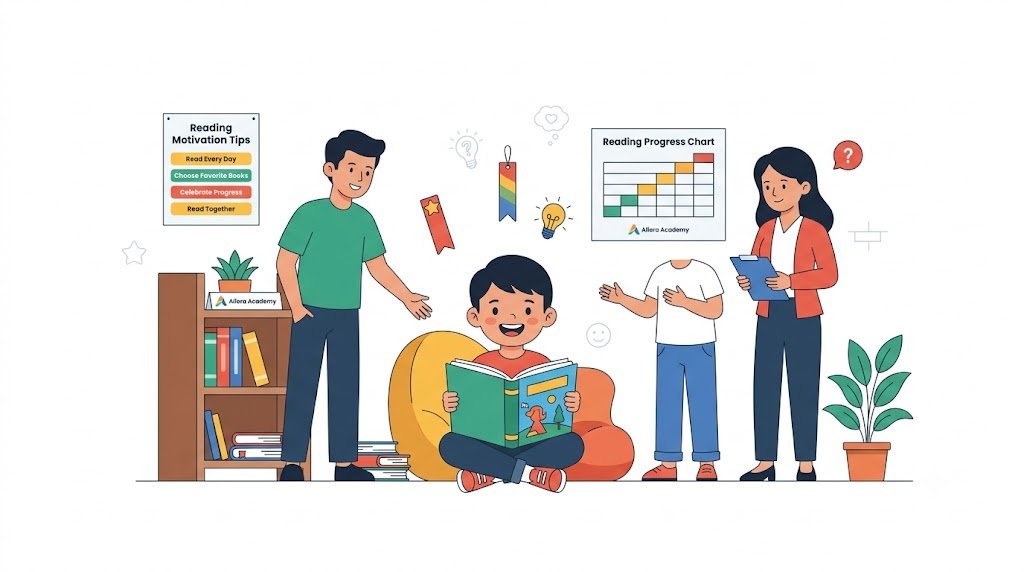
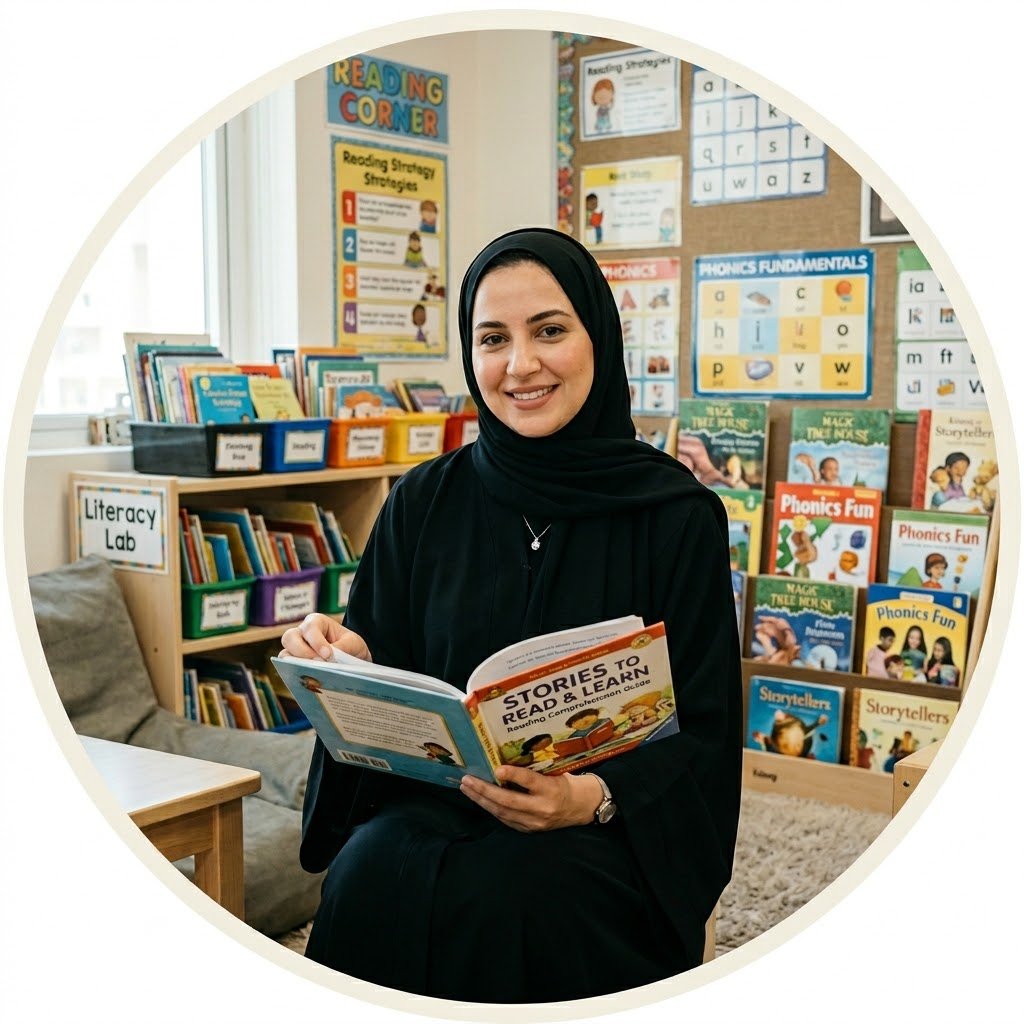
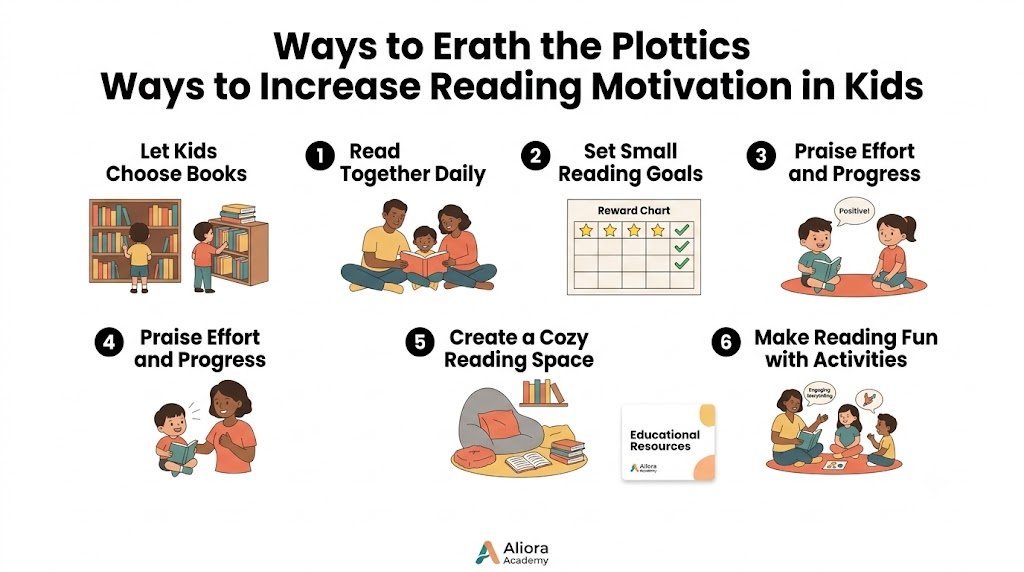
A comfortable, inviting reading space can make a world of difference in how children feel about books.
Every parent and teacher has encountered a child who can read but simply doesn't want to. Maybe they groan when it's time to pick up a book. Maybe they treat reading like a chore — something to rush through and check off the list. This lack of enthusiasm can feel discouraging, but here's the truth: reading motivation for kids is a skill that can be nurtured, not a personality trait that's fixed at birth.
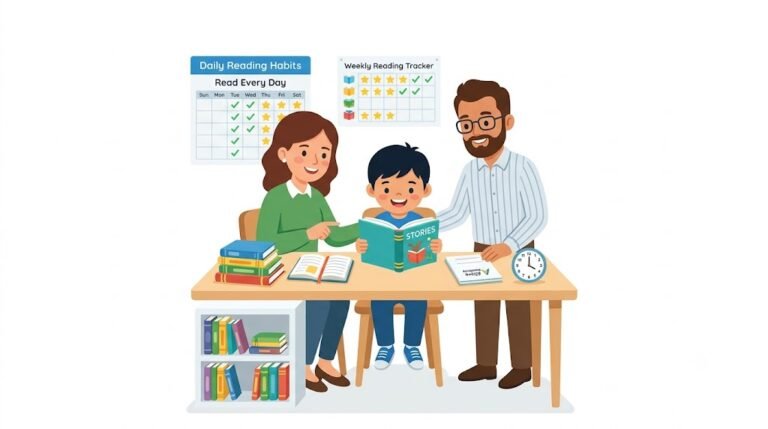
The difference between a child who reads because they have to and a child who reads because they want to often comes down to a handful of key factors: choice, confidence, access to the right materials, and the emotional environment surrounding reading. When these elements align, motivation follows naturally. For a comprehensive look at building consistent reading behaviors, explore our guide on elementary reading habits.
This article walks you through why children lose interest in reading, what motivation looks like at different ages, and the most effective strategies for turning reading from a battle into a beloved activity — all drawn from well-established educational practice and real classroom experience.
Why Do Some Children Lose Interest in Reading?
Understanding why a child has disengaged from reading is the first step toward rekindling their interest. Reading motivation rarely disappears overnight — it erodes gradually, often for reasons that are entirely preventable.
Common reasons children lose reading motivation include:
- Reading feels like a test. When every book comes with a quiz, a worksheet, or a demand to "tell me what you learned," the joy evaporates. Children begin to associate reading with performance rather than pleasure.
- The material doesn't match their interests. A child fascinated by dinosaurs may have zero interest in the assigned realistic fiction novel. Interest is a powerful driver of reading engagement, yet it's often overlooked in favor of prescribed reading lists.
- The reading level is too difficult. Struggling through text that's above a child's independent reading level drains mental energy and confidence. Over time, avoidance becomes a self-protective strategy.
- They haven't found the right book yet. Many reluctant readers simply haven't encountered the story that makes them think, "I want more of this." Finding that book can change everything. If your child needs a confidence boost alongside motivation, read our article on building reading confidence in kids.
- Screens compete for attention. Digital entertainment offers instant gratification. Books require sustained attention and imagination. Without intentional balance, screens often win by default.
- Reading is treated as a solitary activity. Children are social beings. When reading is always done alone and in silence, it can feel isolating rather than enriching.
When children associate reading with boredom or frustration, their motivation naturally declines — but this pattern can be reversed with the right approach.
What Does Reading Motivation Look Like at Different Ages?
A kindergartner's motivation looks very different from a fifth grader's. Understanding these developmental differences helps you set appropriate expectations and choose strategies that actually work for the child in front of you.
| Age Group | What Motivation Looks Like | What Works Best |
|---|---|---|
| Preschool to Kindergarten (Ages 4–6) | Enthusiasm for read-alouds, pretending to read, asking for favorite books repeatedly, excitement about letters and sounds | Interactive read-alouds, rhyming books, books tied to familiar experiences, plenty of praise and cuddling during reading time |
| Early Elementary (Ages 6–8) | Wanting to read independently, pride in finishing a book, interest in series, curiosity about nonfiction topics | Decodable books that build success, early chapter book series, allowing choice within boundaries, celebrating milestones |
| Upper Elementary (Ages 9–11) | Developing genre preferences, reading for information, enjoying discussions about books, gravitating toward peer-recommended titles | Book clubs, graphic novels, nonfiction aligned with hobbies, author visits or virtual author events, respecting reading preferences |
Notice that at every age, the common thread is meaningful connection — to a caring adult, to personal interests, or to a peer community. Motivation grows in relationship, not in isolation. For help finding age-appropriate materials that support this growth, browse our reading resources collection.
How Does Choice Impact Reading Motivation for Kids?
If there's one single factor that predicts reading motivation more reliably than any other, it's choice. When children have a say in what they read, engagement skyrockets. When every book is assigned, motivation plummets. The research on this is remarkably consistent across decades of educational study.
Why Choice Matters So Much
- Autonomy builds intrinsic motivation. When a child selects their own book, reading feels like an act of self-expression rather than compliance.
- Interest drives persistence. A child who cares about the topic will push through challenging vocabulary because the content matters to them personally.
- Choice reduces resistance. Even a small choice — "Which of these three books would you like to read next?" — shifts the dynamic from power struggle to partnership.
This doesn't mean abandoning all structure. A balanced approach offers children freedom within thoughtfully curated options. Teachers might provide a selection of books tied to a unit theme and let students choose among them. Parents can take children to the library and let them fill their own bag, with the only rule being that at least one book should be something they haven't read before.
When children feel ownership over their reading lives, they're far more likely to invest in them. This principle holds true whether you're following specific parent reading strategies at home or managing a full classroom.
What Kind of Environment Encourages Kids to Read More?
The physical and emotional environment surrounding reading matters just as much as the books themselves. A thoughtfully designed reading environment lowers barriers and sends a clear message: reading is valued here.
Make Books Visible and Accessible
Books stored away in closed cabinets or high shelves rarely get picked up. Display books face-out at a child's eye level — on low shelves, in baskets on the floor, or on a dedicated bookshelf in the living room or classroom. Rotate the selections every few weeks to maintain freshness and curiosity. Libraries are wonderful, but a home collection signals that books are worth owning and revisiting.
Create a Cozy Reading Spot
A beanbag chair, a corner with pillows, a small tent with fairy lights — these simple touches turn reading into an experience children look forward to. The goal is to make the reading area feel like a retreat, not a workstation.
Model Reading for Pleasure
Children learn what they live. When they see the adults around them reading — books, not just phones — the message lands deeper than any lecture ever could. Talk about what you're reading. Share a funny passage. Mention that you stayed up too late because you couldn't put a book down. Your genuine enthusiasm is contagious.
For families considering more structured approaches, our guide on homeschool reading workbooks offers additional insights into creating consistent reading routines. And if you're weighing digital versus print options, see our comparison of reading apps vs workbooks to make an informed choice.
A thoughtfully designed reading environment invites children in and makes books feel like treasures waiting to be discovered.
What Are the Most Effective Strategies to Motivate Kids to Read?
Beyond choice and environment, there are specific, actionable strategies that consistently produce results with reluctant readers. The ones below have been used successfully in classrooms and homes for years.
Connect Books to Real-Life Experiences
Reading becomes more meaningful when it connects to something tangible. Planning a trip to the aquarium? Read about sea creatures beforehand. A child curious about baking? Find a cookbook written for kids and read the recipe together before measuring ingredients. These connections show children that reading opens doors to things they already care about. If your child has fallen behind and needs both skill support and motivation, our article on what to do when your child is behind in reading offers compassionate, practical guidance.
Use Series Books to Build Momentum
A beloved series is one of the most powerful motivators in children's reading. Once a child connects with the characters and style of a series, each subsequent book feels like coming home. They don't have to start from scratch with new characters and new worlds. The built-in familiarity reduces the cognitive load and increases the pleasure.
Pair Books with Audiobooks
For children who struggle with decoding or simply find silent reading draining, audiobooks paired with the printed text offer a bridge. The child follows along in the physical book while listening to a fluent narrator. This builds vocabulary, models proper phrasing, and keeps the child engaged with stories that might otherwise feel out of reach. Over time, confidence grows and the audiobook becomes less necessary.
Celebrate Reading Without Excessive Rewards
External rewards like stickers, prizes, or reading logs with incentives can work in the short term, but they risk sending the message that reading is something to endure for a payoff. A more sustainable approach is to celebrate reading in ways that reinforce its intrinsic value — a special trip to the bookstore when a child finishes a challenging book, a family movie night to watch the film adaptation after reading the novel together, or simply genuine verbal acknowledgment of effort and growth.
Make Reading Social
Book clubs for kids, reading buddies with younger students, family book discussions over dinner — these social experiences transform reading from a solitary task into a shared adventure. When children talk about books with peers and trusted adults, comprehension deepens and enthusiasm spreads.
If you're looking for structured materials to support these strategies, our recommendations for the best reading comprehension workbooks for elementary students include options that pair well with motivational approaches at every grade level.
What Are Common Mistakes That Hurt Reading Motivation?
Even the most well-intentioned adults can accidentally undermine a child's desire to read. Being aware of these common missteps can help you avoid them.
Real-Life Examples of Motivating Kids to Read More
Example 1: The Reluctant Second Grader
Situation: Ethan, age 7, could read but refused to do so at home. His parents reported nightly battles over reading homework, and Ethan had started saying he "hated books."
Challenge: Ethan's reading materials were exclusively leveled readers from school — books he found repetitive and uninteresting. Reading had become associated entirely with obligation and assessment.
Solution: His parents took him to the library and let him choose anything he wanted — no restrictions. Ethan picked a graphic novel series about superheroes and a nonfiction book about construction vehicles. They also instituted a nightly read-aloud where the parent read a chapter book Ethan was curious about but not ready to read independently.
Learning Outcome: Within a month, Ethan was voluntarily flipping through his graphic novel during breakfast. The reading battles stopped because reading was no longer exclusively tied to schoolwork. He began to see books as a source of entertainment.
Takeaway: Expanding the definition of what counts as "real reading" — and giving full choice — can break through resistance that leveled readers alone cannot solve.
Example 2: The Older Elementary Student Who Stopped Reading
Situation: Maya, age 10, had been an enthusiastic reader in earlier grades but had gradually stopped reading for pleasure. She said books were "all the same" and preferred spending time on her tablet.
Challenge: Maya had outgrown early chapter books but found many middle-grade novels intimidating. She also hadn't discovered a genre that truly resonated with her current interests. Screens filled the gap easily.
Solution: Her teacher suggested audiobooks paired with print copies of fast-paced adventure novels. Maya's mom also started a small mother-daughter book club with two other families. The social element rekindled Maya's interest — she wanted to have opinions to share at the meetings.
Learning Outcome: Maya discovered a love for mystery novels after listening to one on a family road trip. She began requesting sequels and voluntarily reading before bed again. The book club gave her a community of readers her age.
Takeaway: Social connection and multi-format access (audio plus print) can reignite motivation in children who have drifted away from reading.
Example 3: The Classroom of Mixed-Motivation Readers
Situation: A third-grade teacher noticed that about a third of her students consistently rushed through independent reading time, choosing books at random and staring at pages without engagement.
Challenge: The classroom library was organized strictly by reading level, and students were required to select from their designated level band. Many of the books were old and unappealing. Students had no ownership over their reading lives.
Solution: The teacher reorganized the library by genre and topic rather than level. She added graphic novels, magazines, and high-interest nonfiction. She introduced a "Free Choice Friday" where students could read anything — including books far below or above their level. She also began each reading period with a two-minute book talk from a student volunteer.
Learning Outcome: Within six weeks, off-task behavior during reading time dropped noticeably. Students began recommending books to each other. Several previously unmotivated readers discovered series they loved and asked to take books home.
Takeaway: Reorganizing a reading environment around interest rather than level — and giving students a voice — can transform the culture of reading in a classroom.
How Can Technology Support Reading Motivation Without Replacing Books?
Technology isn't the enemy of reading — but it does need to be used intentionally. When digital tools serve as a bridge to print reading rather than a replacement, they can be genuinely helpful for reluctant readers.
| Technology That Helps | Technology That Hurts |
|---|---|
| Audiobooks that allow children to access stories above their decoding level | Passive video content that replaces reading time entirely |
| E-readers with built-in dictionaries for instant vocabulary support | Apps with excessive gamification that make books feel boring by comparison |
| Reading apps that provide systematic phonics practice with engaging visuals | Unlimited, unrestricted screen time with no reading expectations |
| Digital library platforms that expand access to diverse titles | Using devices as a reward that positions reading as the "non-reward" activity |
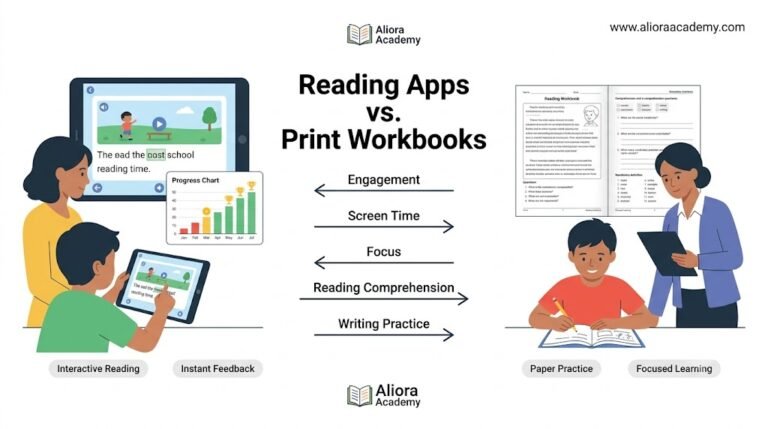
The most effective approach is balanced. A child might listen to an audiobook on a tablet during a car ride and read a physical book before bed. The medium matters less than the habit. For a deeper exploration of this balance, see our article on reading apps vs workbooks, which compares the strengths and limitations of each format.
Frequently Asked Questions About Reading Motivation for Kids
How do I motivate a child who says reading is boring?
"Boring" often means "I haven't found the right book yet" or "reading feels hard for me." Start by asking what they do find interesting — video games, sports, animals, jokes — and find reading material on that exact topic. Graphic novels, magazines, and books with lots of visuals can bridge the gap. Remove the pressure to read "quality" literature and focus on building positive reading experiences first.
Should I reward my child for reading?
Occasional, small celebrations of reading milestones can be encouraging, but heavy reliance on external rewards tends to backfire. The goal is for children to read because they want to, not because they're earning a prize. Instead of a reward chart, try celebrating with experiences tied to reading — a trip to the bookstore, a special bookmark, or watching the movie version of a completed book together.
How long should my child read each day?
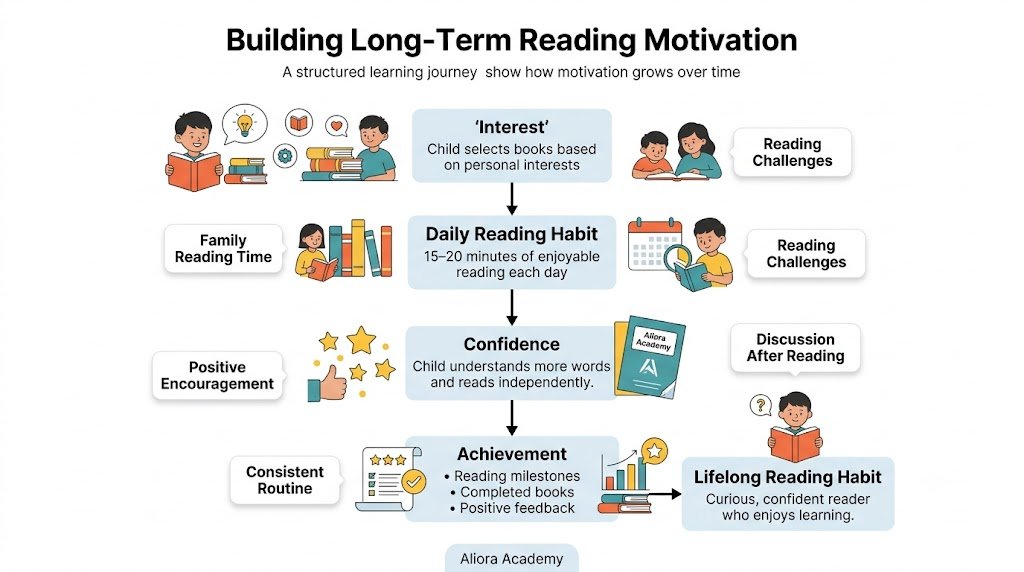
Quality matters far more than quantity. For a motivated reader, 20 to 30 minutes of engaged daily reading is excellent. For a reluctant reader, start with 10 genuinely positive minutes and build from there. A forced 30-minute session filled with frustration does more harm than good. Consistency over time produces results — not marathon sessions.
What if my child only wants to read the same book over and over?
Repeated reading is actually beneficial — it builds fluency, confidence, and deep familiarity with language patterns. If your child is stuck on one book or series, honor that comfort while gently introducing similar titles. You might say, "If you loved that book, I think you might like this one too — it has the same kind of humor." Don't force the transition, but keep offering bridges to new material.
Are graphic novels "real" reading?
Absolutely. Graphic novels require readers to interpret visual and textual information simultaneously, follow narrative structure, make inferences, and engage with character development — all essential literacy skills. For many children, graphic novels are the gateway that leads to a lifelong reading habit. Never dismiss them as lesser reading material.
How do I handle a child who reads well but refuses to read?
When a capable reader avoids reading, the issue is almost always motivational rather than skill-based. Investigate what reading currently represents for the child — obligation, isolation, boredom, or a chore. Then work to shift that association. Offer choice, reduce pressure, model enthusiasm, and connect reading to the child's existing interests. Sometimes a break from all reading requirements is the best reset.
What role do schools play in reading motivation?
Schools influence reading motivation through curriculum choices, classroom libraries, reading culture, and the messages teachers send about books. A classroom that celebrates reading for pleasure — not just reading for assessment — tends to produce more motivated readers. If you're concerned about your child's school reading experience, a conversation with the teacher about balancing skill instruction with joyful reading can be productive. Our homepage features resources that support both classroom and home reading environments.
How can I tell if my child's lack of motivation is actually a reading difficulty in disguise?
If your child consistently avoids reading, becomes visibly frustrated or anxious when asked to read, or shows a significant gap between their verbal abilities and their reading performance, consider whether an underlying skill deficit might be present. Watch for signs like guessing wildly at words, reading extremely slowly, or being unable to remember what they just read. Our article on the signs of a reading disability provides a more detailed overview, and a conversation with your child's teacher or a reading specialist can offer clarity.
Helping Every Child Discover the Joy of Reading
Reading motivation for kids isn't about finding one magic trick that works for every child. It's about paying close attention to the child in front of you — their interests, their frustrations, their personality — and creating conditions where reading feels like a gift rather than a demand.
The strategies that work are remarkably consistent across research and practice: give children choice, fill their environment with appealing books, model a genuine love of reading, connect books to real-life passions, and remove the pressure that turns reading into a performance. When these elements come together, motivation grows organically — not because children are told to read, but because they genuinely want to.
Remember that every child's reading journey is unique. Some will fall in love with books early and never look back. Others will take a winding path, finding their way through a particular series, a special teacher, or a book that finally speaks to something inside them. Both journeys are valid. Both can lead to a lifetime of reading.
If you're looking for resources to support your child or classroom, explore our reading resources collection for materials organized by skill level and interest area. Visit our blog for more articles on literacy development and learning strategies. And if you have questions about finding the right tools for a specific child, please contact us — we're here to help.
The child who groans at the sight of a book today can become the teenager who stays up too late reading under the covers. It happens every day. With patience, compassion, and the right approach, you can help make that transformation possible.