How to Improve Reading Fluency in Elementary Students
Build the accuracy, speed, and expression that turn hesitant readers into confident, comprehending book lovers.
Explore Fluency‑Focused Resources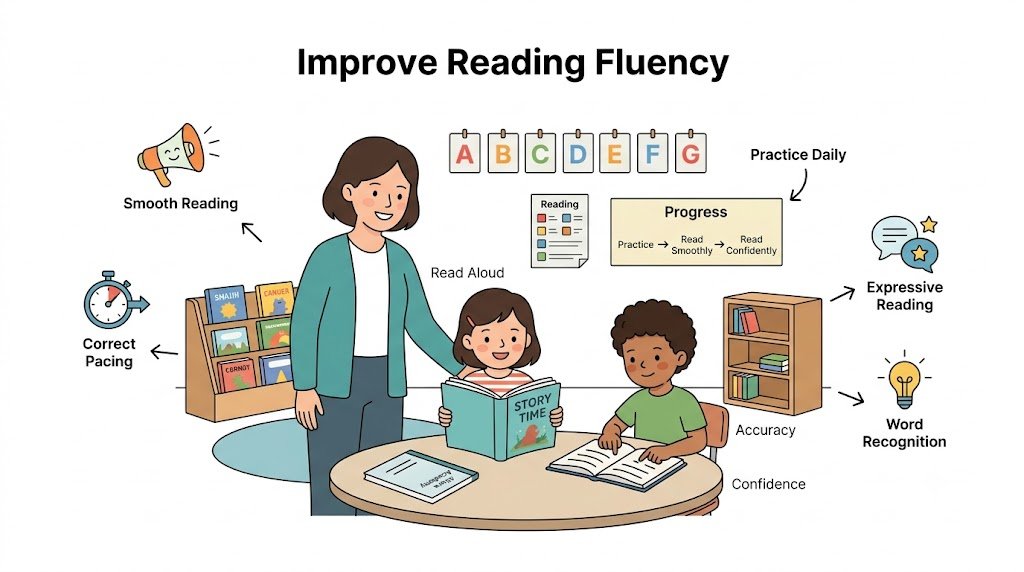
Fluency isn’t about racing through words — it’s about reading smoothly, accurately, and with understanding.
A child who reads word by word, stops at every unfamiliar syllable, or reads in a flat monotone is sending a clear message: they are spending all their mental energy on decoding, not on understanding. That’s the fluency gap. To improve reading fluency in elementary students is to unlock comprehension, build confidence, and finally make reading feel effortless instead of exhausting.
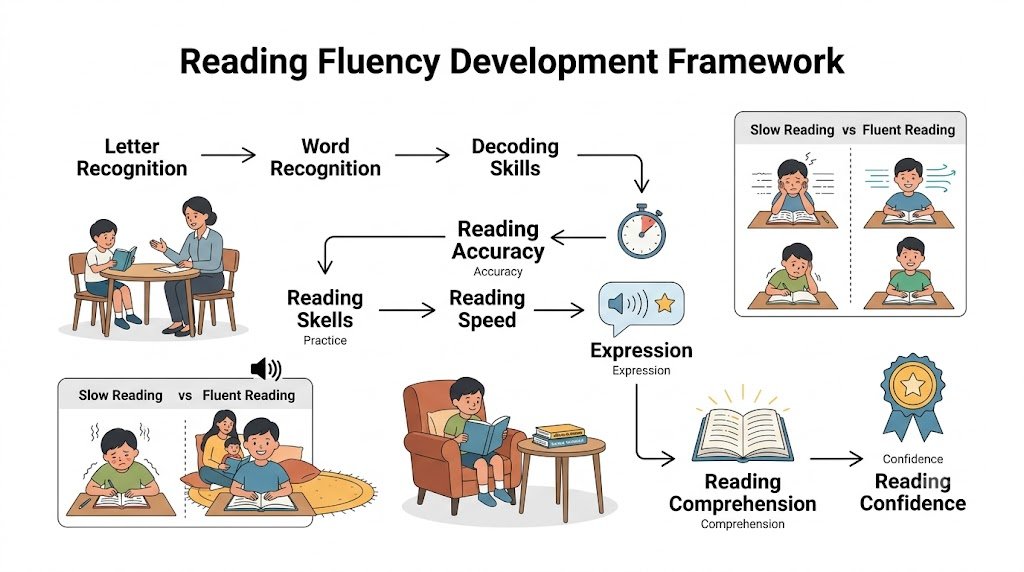
Fluency is not simply reading fast. It is a balanced combination of accuracy, appropriate pace, and meaningful expression. When these three elements come together, a child can move from “learning to read” to “reading to learn.” Whether you’re a parent sitting at the kitchen table or a teacher guiding a whole classroom, you have the power to make fluency practice both effective and enjoyable.
In this guide, you’ll learn what fluency really means, why it matters so much, and how to use proven strategies to strengthen it. For more on the connection between fluency and understanding, see our guide on improving 3rd grade reading comprehension. And if your child is facing broader challenges, our article on how to help a child struggling with reading provides a supportive starting point.
What Is Reading Fluency and Why Does It Matter for Elementary Students?
Reading fluency sits at the crossroads of word recognition and comprehension. When a child reads fluently, they recognize words automatically and group them into meaningful phrases. This frees up cognitive space so they can focus on what the text actually means.
Fluency is built on three key components:
- Accuracy — Reading words correctly without frequent miscues.
- Rate — Reading at a conversational pace that mirrors spoken language.
- Prosody — Reading with appropriate expression, phrasing, and intonation that conveys meaning.
Research in reading development consistently shows that fluency is a bridge. Without it, even strong decoders struggle to hold onto the thread of a story. That’s why elementary classrooms place such heavy emphasis on fluency in grades 1–4, and why home practice can make an enormous difference.
What Are the Signs That an Elementary Student Needs Fluency Support?
Fluency struggles don’t always announce themselves loudly. Sometimes they hide behind a child who seems to read accurately but remembers nothing. Other times they show up as avoidance behaviors that look like a lack of motivation.
Watch for these common indicators:
- Reading in a choppy, word‑by‑word manner without natural pauses.
- Ignoring punctuation — periods, commas, and question marks all sound the same.
- Reading at an unusually slow pace that makes it hard to follow the meaning.
- Lack of expression — the voice stays flat, like reading a list rather than a story.
- Frequent, long hesitations even on familiar sight words.
- Poor retelling — after reading a passage, the child cannot summarize what happened.
- Expressing that reading is boring or too hard, even when they can decode most words.
One sign alone isn’t a red flag, but a cluster of these over time suggests fluency needs targeted attention. The good news is that fluency responds beautifully to short, consistent practice — and it’s one of the most rewarding skills to watch improve.
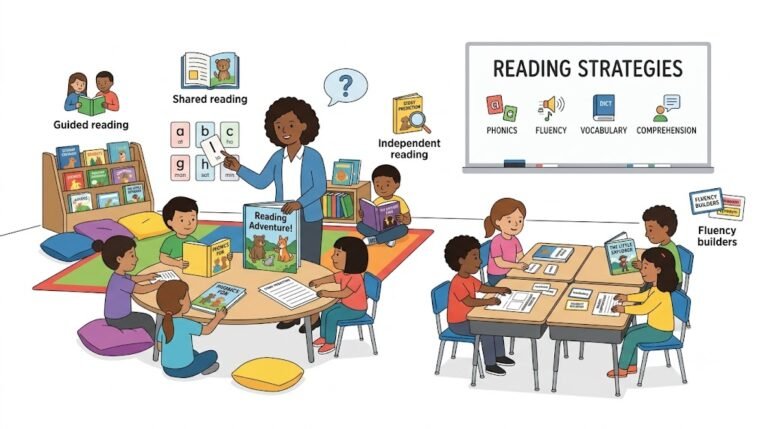
Small group fluency work gives students a safe space to practice without the pressure of whole‑class reading.
How Can You Improve Reading Fluency in Elementary Students? Proven Strategies That Work
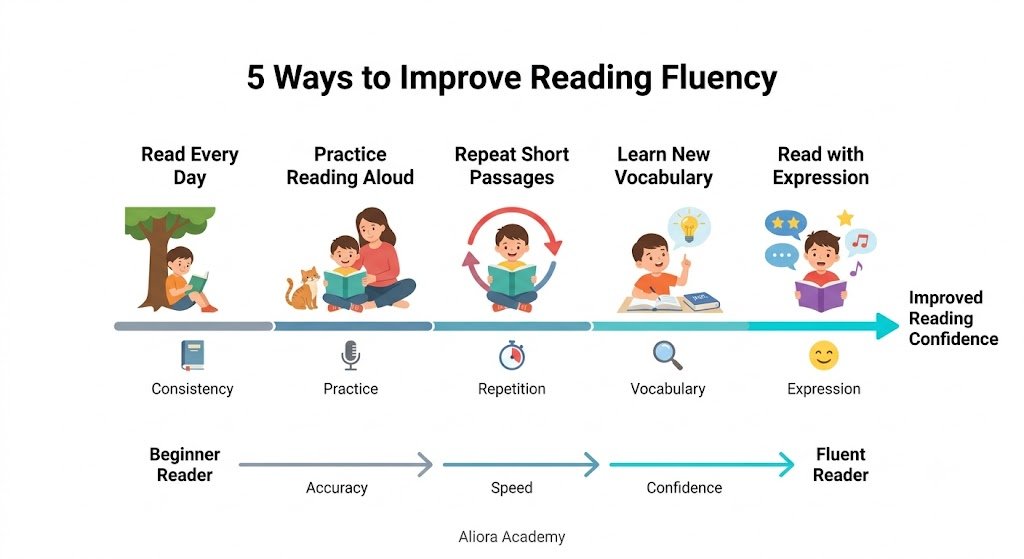
The most effective fluency strategies are grounded in repeated practice, expert modeling, and gradual release of responsibility. Below are classroom‑tested methods that can be adapted for school, tutoring, or home.
Model Fluent Reading Every Day
Children need to hear what fluent reading sounds like. Read aloud to them — even older elementary students — using expressive voices, dramatic pauses, and clear phrasing. This is not just a cozy activity; it’s a powerful instructional tool. After listening, ask your child or students to describe what they noticed about your reading. Then invite them to try just a sentence or two with the same expression.
Use Repeated Reading to Build Automaticity
Repeated reading means having a student read the same short passage several times over multiple days. This isn’t mindless drilling — it’s deliberate practice that helps the brain shift from sounding out every word to recognizing words instantly. Choose a passage of about 50–200 words at the child’s instructional level. Track their words per minute and accuracy, and celebrate improvement. Even three to four repetitions can lead to noticeable gains.
Practice Phrased Reading, Not Word‑by‑Word
Many struggling readers fixate on individual words. Use phrasing cues to help them group words together naturally. Draw slashes between phrases in a photocopied passage, or have them scoop phrases with their fingers. This physical reminder trains the eyes and voice to move in meaningful chunks.
Incorporate Echo Reading and Choral Reading
Echo reading: you read a sentence with expressive phrasing, and the child echoes it back, mirroring your pace and tone. Choral reading: you both read aloud simultaneously. Both techniques provide a scaffold, allowing the child to experience fluent reading without the cognitive load of doing it alone. Gradually, you fade your voice, and the child takes over.
Leverage Reader’s Theater and Poetry
Reader’s theater transforms fluency practice into performance. Students read scripts repeatedly, focusing on expression rather than memorization. Because there’s no pressure to act out movements or worry about props, all energy goes into making the reading sound authentic. Poetry, with its natural rhythm and rhyme, is another fluency goldmine. Short poems invite repeated readings and playful expression.
Which Fluency Strategy Should You Use First? A Quick Comparison
| Strategy | How It Works | Best For | Key Benefit |
|---|---|---|---|
| Repeated Reading | Same passage read multiple times over days | Building automaticity and rate | Quick, measurable progress |
| Echo Reading | Adult models a sentence, child repeats | Struggling readers who need phrasing support | Immediate, low‑risk practice |
| Choral Reading | Adult and child read together aloud | Anxious or hesitant readers | Reduces performance pressure |
| Reader’s Theater | Script read expressively, no memorization needed | Building prosody and engagement | Makes fluency social and fun |
| Phrased Reading | Text marked with phrase boundaries | Children who read robotically | Directly teaches natural grouping |
| Audiobook Pairing | Listen to a fluent recording while following text | Independent practice at home | Provides a consistent fluent model |
You don’t need to use all of these at once. Start with one strategy that matches your child’s biggest need — rate, expression, or confidence — and stay consistent. Our reading resources collection includes materials specifically designed to support repeated reading, phrasing, and expressive practice.
How Can Parents Help Build Reading Fluency at Home?
A few minutes of intentional practice at home can accelerate what’s happening in the classroom. The key is to keep it short, positive, and part of a predictable routine.
- Establish a five‑minute fluency warm‑up before any other reading activity. Reread a familiar paragraph from the night before.
- Use audiobooks paired with the physical book. Encourage your child to follow along with their finger, matching the narrator’s pace and expression.
- Record and listen. Have your child read a short passage while you record it. Play it back and ask them what they notice. Most children quickly self‑correct expression when they hear themselves.
- Turn fluency into a game. Time how many words they can read smoothly in one minute, then try to beat their own score — but never between children. Self‑competition is motivating; comparison is not.
- Keep a fluency log. A simple notebook where they graph their words‑per‑minute progress creates a visible record of growth.
For a broader look at supporting reading development, visit our blog, where you’ll find articles on everything from phonics to comprehension.
What Are the Common Mistakes When Trying to Improve Reading Fluency?
Even with the best intentions, some approaches can backfire. Avoid these pitfalls to keep fluency practice productive.
Real‑Life Examples of Improving Reading Fluency in Elementary Students
Example 1: The Robotic Reader
Situation: Marcus, age 8, reads accurately but with no expression — every word is flat and staccato. He finishes a page and can’t tell you what happened.
Challenge: Marcus had never been explicitly taught to read in phrases. He saw reading as a word‑by‑word decoding task, not a meaning‑making activity.
Solution: His teacher introduced phrase‑cued text, marking short passages with slashes to show natural breaks. They also started using echo reading, with the teacher modeling dramatic expression for the same sentence. Marcus then repeated it, trying to match her voice.
Learning Outcome: Within three weeks, Marcus began to pause at commas and lift his voice at question marks without being reminded. His retelling scores improved because he was finally hearing the meaning as he read.
Takeaway: Prosody doesn’t develop automatically. It must be modeled and practiced as a concrete skill.
Example 2: The Slow, Labored Reader
Situation: Sofia, age 7, reads so slowly that by the time she reaches the end of a sentence, she has forgotten the beginning. Her decoding is accurate, but her rate is half the grade‑level expectation.
Challenge: Sofia needed to build automaticity with high‑frequency words and common phonics patterns so that her brain could free up space for meaning.
Solution: Her parents started a daily five‑minute repeated reading routine using short, decodable passages. They graphed her words‑per‑minute each Friday. The focus was always on beating her own previous score, not a class benchmark. They also paired audiobooks with the physical book so Sofia could hear the pace she was working toward.
Learning Outcome: Over two months, Sofia’s reading rate increased enough that she could follow along with a story without losing the thread. She started volunteering to read aloud in class — something she had never done before.
Takeaway: Brief, consistent repeated reading at the right level can dramatically improve rate and confidence, especially when progress is made visible.
Example 3: The Older Student Who Avoids Reading
Situation: Ethan, age 10, can read but avoids it at all costs. He complains that books are boring, but his teacher notes his oral reading is hesitant and expressionless.
Challenge: Years of slow, effortful reading had convinced Ethan that books simply weren’t for him. He had never experienced the flow of getting lost in a story.
Solution: His tutor introduced high‑interest, lower‑reading‑level graphic novels and short nonfiction articles on subjects Ethan loved — space, gaming, and animals. They used reader’s theater scripts based on these topics, and Ethan got to choose which character to perform. Fluency practice felt like messing around with voices, not skill‑drilling.
Learning Outcome: Within a month, Ethan was reading graphic novels independently. His fluency improved because he wanted to perform the voices, and the texts were genuinely interesting to him.
Takeaway: Engagement is a fluency tool. When a child cares about the content, the desire to read expressively takes care of itself.
The right book can turn fluency practice from a chore into a choice.
What Resources Help Improve Reading Fluency in Elementary Students?
The best fluency materials are designed for repeated use, provide appropriate challenge levels, and keep children engaged. When selecting books, workbooks, or digital tools, look for:
- Passages that are short enough to reread in a single sitting (50–250 words).
- Content that includes natural dialogue and punctuation to practice expression.
- High‑interest topics written at a lower reading level, so the child’s focus stays on fluency, not decoding.
- Audio support that models fluent, expressive reading.
- Tools to track progress, like simple timing charts or fluency graphs.
At our online shop, you’ll find fluency‑building resources specifically selected for elementary learners. From decodable fluency passages to reader’s theater script collections, we help you match the right tool to your child’s needs. For more guidance, visit our reading resources category or read our related article on helping a child struggling with reading, which offers broader support for reading difficulties.
Frequently Asked Questions About Improving Reading Fluency
What is a good words‑per‑minute goal for elementary students?
General benchmarks vary by grade and time of year, but the focus should always be on steady improvement rather than a fixed number. A child’s own baseline is the best comparison. Tracking growth over time is more motivating and informative than comparing against a national norm.
How long should fluency practice last each day?
As little as five to ten focused minutes per day can yield significant results. Short, consistent sessions are far more effective than long, sporadic ones. The goal is to make fluency practice a predictable, low‑stress part of the daily routine.
Can reading silently improve fluency?
Silent reading builds stamina and vocabulary, but fluency — especially prosody and rate — requires oral practice. Children need to hear their own voice and receive feedback on expression. A mix of silent and oral reading is ideal.
My child finds repeated reading boring. What can I do?
Turn it into a performance. Use funny voices, record a “radio show,” read to a pet, or set a personal challenge to beat yesterday’s time. Changing the audience — reading to a younger sibling, a grandparent via video call, or even a favorite stuffed animal — can renew motivation instantly.
Does fluency work differently for children with dyslexia?
Yes. Learners with dyslexia often need more intensive, multisensory instruction alongside fluency practice. Repeated reading is still helpful, but it should be paired with explicit phonics instruction. A structured literacy approach, like Orton‑Gillingham, is often recommended. Always work with a qualified professional if dyslexia is suspected.
Can older elementary students still improve fluency?
Absolutely. Fluency develops throughout the elementary years and beyond. Older students who have compensated with strong decoding may still benefit from fluency work, particularly around phrasing and expression. High‑interest materials at their independent level keep practice engaging and age‑appropriate.
How do I know which fluency strategy to start with?
Let the child’s most pressing need guide you. If accuracy is the issue, prioritize repeated reading at an easier level. If expression is missing, use echo reading and reader’s theater. If rate is the concern, timed repeated readings and audiobook pairing work well. Our reading resources are organized to help you find materials aligned with each fluency component.
Moving Forward with Fluent, Confident Readers
Fluency is not an extra skill to squeeze into an already crowded day — it’s the thread that ties decoding to meaning and transforms reading from a chore into a natural, enjoyable act. When you improve reading fluency in elementary students, you give them the gift of a reading life that extends far beyond the classroom.
The strategies in this guide — repeated reading, echo and choral practice, reader’s theater, and a focus on prosody — are not quick fixes, but they are reliably effective. They work because they honor the way young brains learn: through modeling, practice, and gradual independence.
Whether you’re a parent creating a calm reading nook at home, a teacher designing small‑group rotations, or a tutor working one‑on‑one, the most powerful ingredient is your own enthusiasm. Children who see that reading matters to you are far more likely to invest themselves in the process.
Take a moment to browse our fluency‑focused reading resources, explore more strategies on our blog, or contact us for personalized guidance. Every child deserves to know what it feels like to open a book and simply enjoy the ride.