Reading Fluency Practice Activities for Struggling Readers
Proven activities, expert strategies, and trusted resources to help children build the speed, accuracy, and expression they need to become confident readers.
Browse Fluency Resources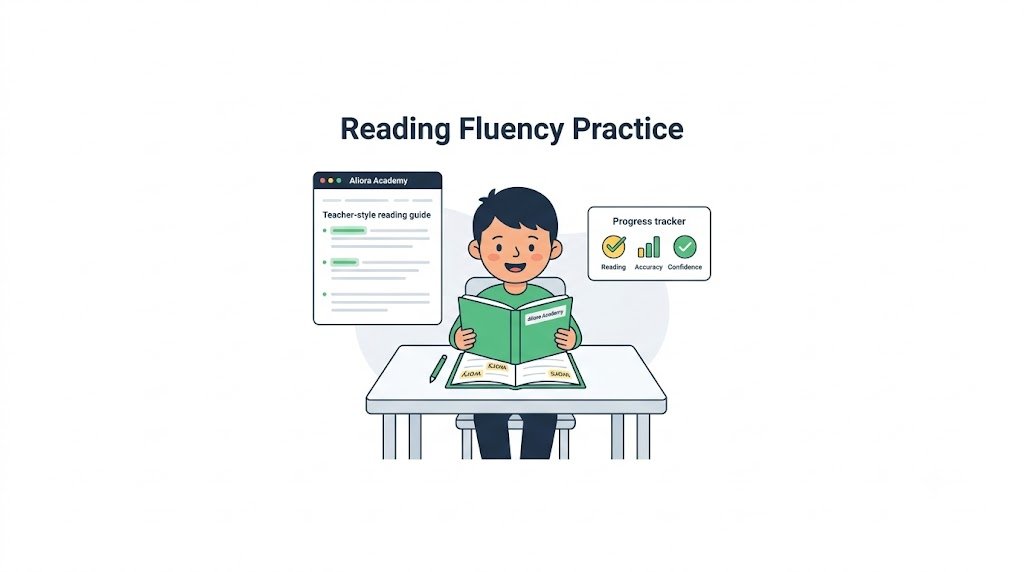
Consistent, focused reading fluency practice transforms hesitant readers into confident ones — one passage at a time.
When a child reads slowly, stumbles over words, or sounds robotic and choppy, comprehension suffers. All the mental energy that should go toward understanding the story is instead consumed by the effort of decoding individual words. This is the reality for many struggling readers, and it's why reading fluency practice for struggling readers is one of the most impactful interventions parents and teachers can provide.
Fluency is the bridge between decoding and comprehension. Without it, reading remains laborious and discouraging. With it, reading becomes smooth, expressive, and — most importantly — meaningful. The good news is that fluency is highly teachable. With the right activities, consistent practice, and a supportive environment, struggling readers can make remarkable progress.
This guide explains what reading fluency really is, why it matters, and which practice activities work best for children who need extra support. You'll find practical strategies you can use at home or in the classroom, guidance on choosing the right resources, and real-life examples of fluency intervention in action. For more foundational reading strategies, visit our blog for a growing library of expert-written articles.
What Is Reading Fluency and Why Does It Matter So Much?
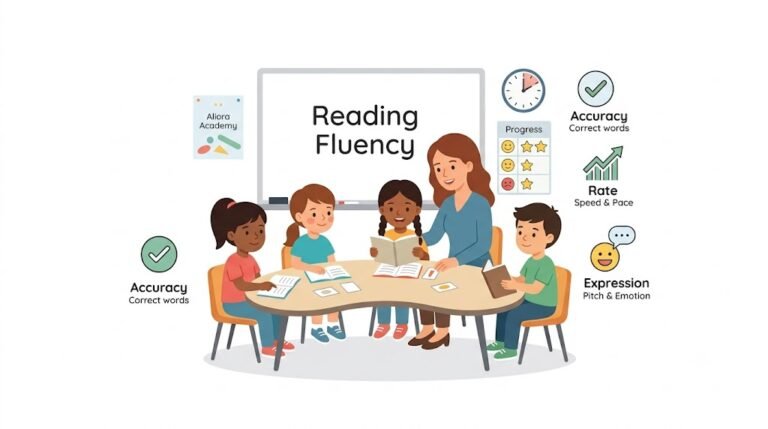
Reading fluency is often misunderstood as simply "reading fast." In reality, fluency is a combination of three interconnected skills, each equally important for a struggling reader's development.
The Three Pillars of Reading Fluency
- Accuracy — The ability to recognize and decode words correctly. Without accuracy, fluency cannot exist. Every misread word disrupts the flow of meaning.
- Rate — The speed at which a child reads. A fluent reader reads at a conversational pace — not racing, but not laboriously slow either. Rate should never be prioritized at the expense of accuracy or expression.
- Prosody — The rhythm, intonation, and expression a reader brings to the text. Prosody reflects comprehension. A child who reads with appropriate phrasing and emotion is demonstrating that they understand what the words mean.
When any one of these pillars is weak, the entire reading experience becomes harder. A child who reads accurately but painfully slowly will struggle to remember what they read because their working memory is overloaded. A child who reads quickly but inaccurately may miss key details entirely. Effective reading fluency practice for struggling readers addresses all three components in balance.
Research consistently shows that fluency is a strong predictor of overall reading comprehension. For a deeper understanding of how fluency connects to broader literacy skills, explore our guide on reading fluency strategies, which covers evidence-based approaches in detail.
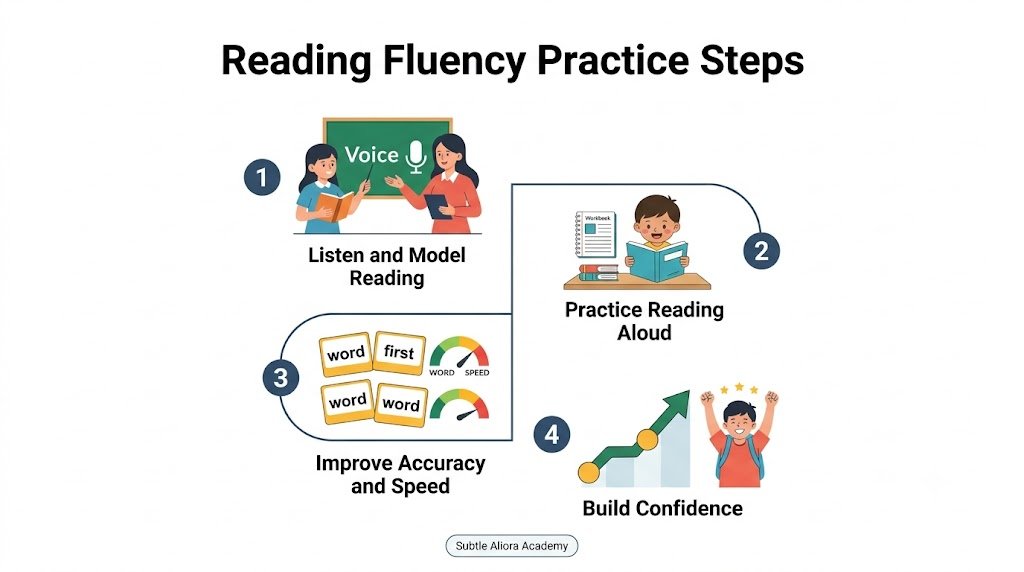
One-on-one fluency practice with a supportive adult is one of the most effective ways to build accuracy, rate, and expression.
How Can You Tell If a Child Needs Reading Fluency Practice?
Struggling readers don't always announce their difficulties. Instead, they show them through behavior, avoidance, and the way they interact with text. Recognizing these signs early allows you to intervene before frustration becomes entrenched.
Watch for these common indicators that a child may need targeted fluency support:
- Choppy, word-by-word reading — The child reads as if each word stands alone, with no connection to the words around it.
- Monotone delivery — No change in pitch, pace, or volume regardless of punctuation, dialogue, or emotional content.
- Ignoring punctuation — Periods, commas, and question marks are skipped over, resulting in run-on sentences with no natural pauses.
- Frequent hesitations and false starts — The child stops repeatedly to sound out words, loses their place, or starts a sentence over multiple times.
- Poor comprehension despite accurate word reading — The child can read the words but cannot retell what happened because all their cognitive energy went into decoding.
- Avoidance of reading aloud — The child makes excuses, becomes anxious, or acts out when asked to read in front of others.
What Are the Most Effective Reading Fluency Practice Activities for Struggling Readers?
The activities below are not quick tricks or gimmicks. They are well-established, classroom-tested methods that have helped countless struggling readers build fluency. Each one can be adapted for different ages and skill levels.
Repeated Reading
Repeated reading is the single most researched and validated fluency intervention. The concept is simple: a child reads the same short passage multiple times until they can read it accurately, at an appropriate pace, and with expression. Each repetition builds automaticity, freeing up mental energy for comprehension.
Choose a passage of 50 to 200 words at the child's instructional level — not too easy, not frustrating. Have the child read it aloud three to five times over several days. Track progress with a simple chart so the child can see their improvement. This visible evidence of growth is highly motivating for struggling readers. For guidance on selecting appropriate texts, browse our reading resources collection.
Echo Reading
In echo reading, you read a sentence or short phrase with proper fluency, and the child echoes it back immediately, trying to match your pace, phrasing, and expression. This technique provides a fluent model for the child to imitate, which is especially helpful for children who have rarely heard what fluent reading sounds like.
Echo reading works beautifully with poetry, dialogue-heavy passages, and any text with natural rhythm. Keep sessions short — five to ten minutes — to maintain focus and prevent fatigue.
Choral Reading
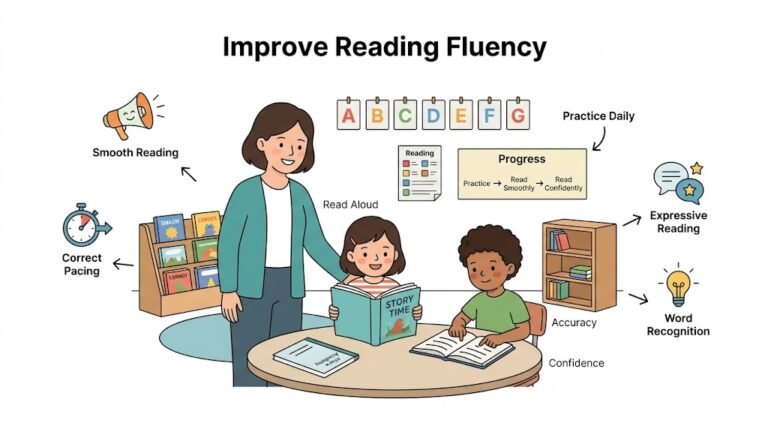
Choral reading involves reading aloud together in unison. The adult's voice carries the flow while the child joins in at their comfort level. This technique reduces the pressure on the struggling reader because they are never reading alone. It's particularly effective in small groups or whole-class settings, but it works equally well one-on-one at home.
Phrase-Cued Reading
Many struggling readers don't naturally group words into meaningful phrases. They read word by word. Phrase-cued reading teaches them to chunk text by marking natural pauses with slash marks. For example: "The tall boy / ran quickly / to the corner store / to buy some bread." Over time, the child internalizes this phrasing and applies it to unmarked text.
Reader's Theater
Reader's theater transforms fluency practice into performance. Children are assigned roles in a script and read their parts aloud with appropriate expression — no costumes, props, or memorization required. The focus is entirely on vocal delivery. Because the child has a specific character to portray, prosody practice feels purposeful rather than forced.
Reader's theater scripts are widely available for a range of reading levels. The collaborative, low-pressure nature of this activity makes it especially appealing for children who resist traditional fluency drills. For more engaging comprehension activities that pair well with fluency work, see our guide on how to teach main idea and details.
Paired Reading with a More Skilled Partner
Paired reading pairs a struggling reader with a more fluent peer, older student, or adult. The pair reads aloud together, with the stronger reader setting the pace. When the struggling reader feels confident, they signal to read solo. If they stumble, the partner joins back in. This flexible support system builds independence gradually.
Audio-Assisted Reading
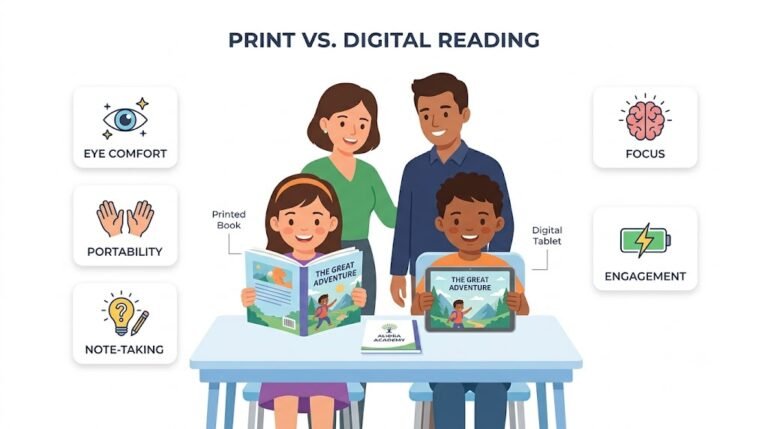
Listening to an audiobook while following along in the printed text provides a rich fluency model. The child hears proper pacing, phrasing, and expression while visually tracking the words. This technique is particularly valuable for older struggling readers who can comprehend material well above their decoding level — it allows them to access age-appropriate content while building fluency subconsciously. For a balanced perspective on different reading formats, read our comparison of print vs. digital reading for kids.
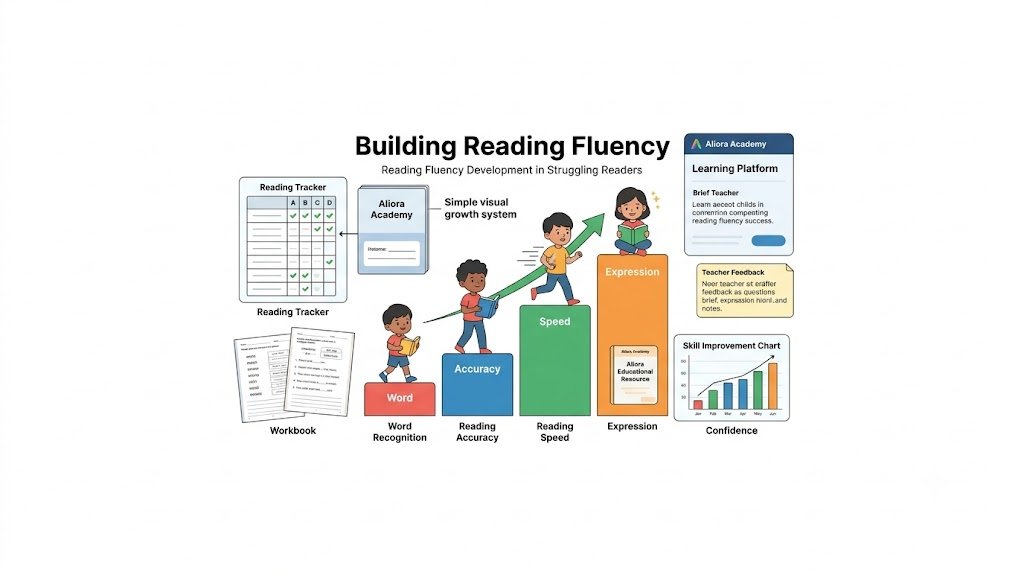
Audio-assisted reading provides a fluent model while allowing the child to follow along visually with the printed text.
How Can Parents Support Reading Fluency Practice at Home?
You don't need specialized training to make a meaningful difference in your child's reading fluency. What you need is consistency, patience, and a few simple routines that fit naturally into your family's life.
Build a Short Daily Routine
Ten to fifteen minutes of focused fluency practice each day is far more effective than an hour once a week. Short, successful sessions build momentum and prevent the frustration that comes with fatigue. Choose a consistent time — after breakfast, before bedtime, or right after school — and protect that window.
Model Fluent Reading Every Day
Read aloud to your child daily, even after they begin reading independently. Choose books slightly above their current reading level so they hear vocabulary and sentence structures they can't yet decode on their own. Your voice becomes their internal model of what fluent reading sounds like. Hearing fluent reading regularly is one of the most underrated forms of reading fluency practice for struggling readers.
Celebrate Progress, Not Perfection
Fluency develops gradually. Celebrate every small win — a sentence read smoothly, a punctuation mark noticed, a character's voice attempted. These celebrations teach your child that reading growth is a series of small victories, not a single pass-or-fail event.
If you're looking for comprehensive guidance on evidence-based reading instruction at home, our article on science of reading resources for parents is an excellent next read.
What Should You Look for When Choosing Fluency Practice Resources?
Not all fluency materials are created equal. A struggling reader needs resources that match their instructional level and provide structured, systematic practice. Here's what to prioritize when selecting books, workbooks, or digital tools for fluency work.
| Prioritize These Features | Avoid These Pitfalls |
|---|---|
| Short, manageable passages of 50–200 words | Long, dense texts that overwhelm before practice begins |
| Text at the child's instructional level (90–95% accuracy) | Grade-level text that is far too difficult for independent practice |
| Built-in tracking tools for words correct per minute | Resources with no way to measure or celebrate progress |
| High-interest topics that match the child's age | Babyish content that embarrasses older struggling readers |
| Poetry, dialogue, and scripts rich with natural expression cues | Dry, monotonous passages with no prosody opportunities |
| Audio recordings that model fluent reading | Materials that assume the child already knows what fluency sounds like |
If your struggling reader is in upper elementary grades, finding age-appropriate material at their reading level is especially important. Our curated list of the best books for struggling 4th grade readers includes high-interest, accessible titles that respect older children's maturity while supporting their reading growth. You can also explore our homepage for a full overview of our educational resources.
What Are the Most Common Mistakes in Fluency Practice?
Even with the best intentions, it's easy to fall into patterns that undermine fluency growth. Being aware of these common mistakes can save you time, frustration, and setbacks.
Real-Life Examples of Reading Fluency Practice in Action
Example 1: Building Automaticity Through Repeated Reading
Situation: Daniel, age 8, reads accurately but painfully slowly — about 35 words per minute when his grade-level peers average 70. He avoids reading aloud and says reading makes him tired.
Challenge: Daniel's decoding is solid, but every word still requires conscious effort. He has not yet developed automaticity, so his reading rate drains his mental energy before comprehension can happen.
Solution: His teacher introduced repeated reading with short, high-interest passages about animals — Daniel's favorite topic. Each day for a week, Daniel read the same 80-word passage three times. He charted his words-per-minute on a simple graph and watched his line go up each day. By Friday, he read the passage at 68 words per minute with natural expression.
Learning Outcome: After two months of daily repeated reading, Daniel's average reading rate on new passages increased to 55 words per minute. More importantly, he began volunteering to read aloud in small groups — something he had never done before.
Takeaway: Repeated reading builds automaticity and confidence simultaneously. The visible progress chart was as important as the practice itself.
Example 2: Using Reader's Theater to Unlock Prosody
Situation: Amara, age 10, reads accurately and at an appropriate pace, but her voice is completely flat. She ignores punctuation, dialogue tags, and any hint of emotion in the text. Her comprehension scores are lower than expected given her decoding ability.
Challenge: Amara has never connected reading with meaning. To her, reading is a mechanical task — say the words correctly and move on. She doesn't realize that expression is part of understanding.
Solution: Her tutor introduced reader's theater using funny, dialogue-heavy scripts with distinct characters. Amara was assigned the role of a dramatic, over-the-top character — one that demanded exaggerated expression. At first, she felt silly. But after hearing her tutor model the part with full theatrical commitment, she began to experiment with her own voice. The laughter that followed was genuine and motivating.
Learning Outcome: Within weeks, Amara's prosody improved noticeably — not just during reader's theater but in all her reading. She began to pause at commas, lift her voice at question marks, and adjust her tone for different characters. Her comprehension scores rose because she was finally reading for meaning.
Takeaway: For children who lack prosody, performance-based activities like reader's theater provide a safe, playful context to practice expression. For more comprehension-building techniques, our guide on the best reading comprehension workbooks for elementary students offers additional support.
Example 3: Phrase-Cued Reading for a Word-by-Word Reader
Situation: Leo, age 7, reads every word as if it stands alone. His reading sounds robotic: "The. Cat. Sat. On. The. Mat." He comprehends very little because no words are grouped into meaningful chunks.
Challenge: Leo has not internalized the concept of phrasing. He sees words as isolated units rather than parts of larger meaning groups. Traditional fluency activities haven't helped because they assume he naturally knows how to chunk text.
Solution: His parents began phrase-cued reading. They took simple sentences and marked phrase boundaries with light pencil slashes: "The little cat / sat quietly / on the warm mat." They modeled reading each phrase as a unit, then had Leo echo. Within a week, Leo began to notice natural phrase boundaries even in unmarked text.
Learning Outcome: Leo's phrasing improved dramatically over a month of consistent practice. His comprehension also improved because he was finally processing groups of words together rather than one at a time. His teacher noted the difference in class and asked about the strategy his parents were using.
Takeaway: Some children need explicit instruction in phrasing. Phrase-cued reading makes an invisible skill visible and teachable.
When Should You Seek Additional Professional Support for Fluency?
While many children respond well to consistent home and classroom fluency practice, some need more intensive intervention. Knowing when to seek additional help can prevent years of frustration.
Consider reaching out to a reading specialist or educational professional if:
- Your child has received targeted fluency practice for several months with little measurable progress.
- The gap between your child's reading fluency and grade-level expectations continues to widen despite consistent support.
- Your child shows signs of significant reading anxiety, avoidance, or emotional distress around reading.
- Fluency difficulties are accompanied by persistent decoding or comprehension challenges that don't improve with intervention.
- A teacher has recommended further evaluation based on classroom observations and benchmark assessments.
Professional support may include a diagnostic reading assessment, structured literacy intervention, or specialized fluency programs tailored to your child's specific needs. Early and targeted intervention leads to the best outcomes. If you have questions about finding the right resources or next steps, feel free to contact us — we're here to help guide you toward the support your child deserves.
Frequently Asked Questions About Reading Fluency Practice
How long should a fluency practice session last?
For struggling readers, shorter is almost always better. Aim for ten to fifteen focused minutes per day rather than longer, less frequent sessions. Quality and consistency matter far more than duration. If your child is becoming fatigued or frustrated, stop and resume the next day.
What is a good words-per-minute goal for my child?
Oral reading fluency norms vary by grade level and time of year, but the goal is not to hit a specific number — it's to read at a conversational pace that supports comprehension. As a rough guide, by the end of first grade many children read around 60 words correct per minute, increasing by roughly 20 to 30 words per year. Focus on growth over time rather than a fixed target.
Can reading fluency practice help with comprehension?
Yes — and this connection is well-established. When a child reads fluently, they no longer expend all their cognitive energy on decoding individual words. That freed-up mental capacity can be directed toward understanding the text, making inferences, and connecting ideas. Fluency is not separate from comprehension; it is the pathway to it.
Should I correct my child during fluency practice?
During the reading itself, only correct errors that change the meaning of the text. Constant correction disrupts the flow that fluency practice is designed to build. Instead, keep a mental note of error patterns and address them briefly after the reading session. The goal during practice is to maintain momentum and build confidence.
What if my child hates reading aloud?
This is common among struggling readers. Start with echo reading or choral reading where you read together — the child never reads alone. Use highly engaging material like jokes, riddles, or short poems. Keep sessions brief and stop before frustration builds. Over time, as skill and confidence grow, resistance often fades. Never force a child to read aloud in front of an audience before they are ready.
Are digital fluency apps effective?
Some digital tools can be useful supplements, particularly those that provide audio models, track words-per-minute, or offer engaging repeated reading activities. However, apps work best as part of a broader approach that includes human interaction, discussion, and modeling. No app can replace the encouragement and responsiveness of a supportive adult.
How do I know if my child needs fluency practice or phonics instruction?
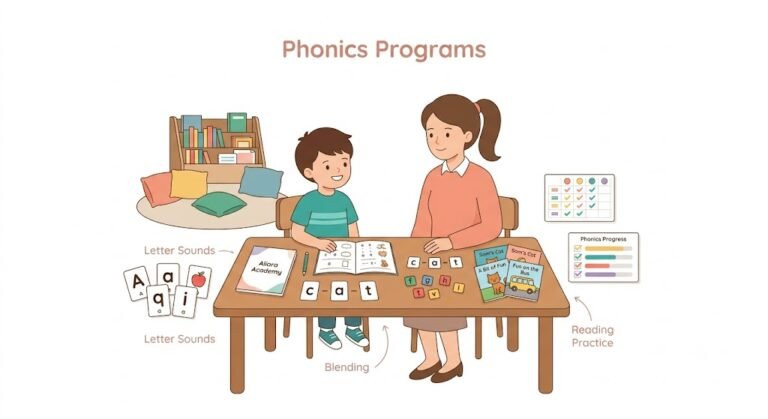
If your child struggles to sound out unfamiliar words and makes frequent decoding errors, phonics may be the more urgent need. If they decode accurately but read slowly, monotonously, or word-by-word, fluency practice is the priority. Many children need both. Observing your child's reading patterns — or consulting with their teacher — can help you determine the best starting point. Our reading resources include materials for both skill areas.
Can older struggling readers still benefit from fluency practice?
Absolutely. Fluency can be improved at any age with appropriate materials and consistent practice. For older readers, the key is using age-respectful, high-interest texts at their instructional level. Avoid materials that feel babyish. Poetry, song lyrics, graphic novels, and short nonfiction articles often work well. Our recommendations for the best books for struggling 4th grade readers include options specifically chosen for older children reading below grade level.
Moving Forward: Fluency as a Gateway to Confident Reading
Reading fluency practice for struggling readers is not about drilling speed or achieving a perfect score on a timed test. It's about freeing children from the mechanical burden of decoding so they can experience what reading is meant to be — a doorway to stories, knowledge, and ideas. When fluency improves, everything else follows: comprehension deepens, confidence grows, and reading begins to feel less like work and more like discovery.
The activities in this guide — repeated reading, echo reading, choral reading, phrase-cued reading, reader's theater, paired reading, and audio-assisted reading — are not quick fixes. They are reliable, research-backed methods that reward consistency and patience. Choose one or two that feel manageable, integrate them into a short daily routine, and trust the process.
Remember that every child's fluency journey is unique. Some will make rapid gains; others will improve more gradually. Neither path is wrong. What matters is that the child experiences reading practice as safe, supportive, and successful. When a struggling reader begins to hear their own voice reading smoothly and expressively, something shifts — not just in their skill level, but in their identity as a reader.
You are not alone in this work. Teachers, reading specialists, and fellow parents are part of your support network. Explore our reading resources for fluency-building materials, visit our blog for more expert guidance, and reach out through our contact page if you need help finding the right tools for your child. Every step forward — no matter how small — is a step toward a more confident, capable reader.