Reading Intervention Programs for Struggling Readers
A comprehensive guide to understanding, selecting, and implementing effective reading intervention programs that help children build foundational skills and regain confidence.
Explore Reading Resources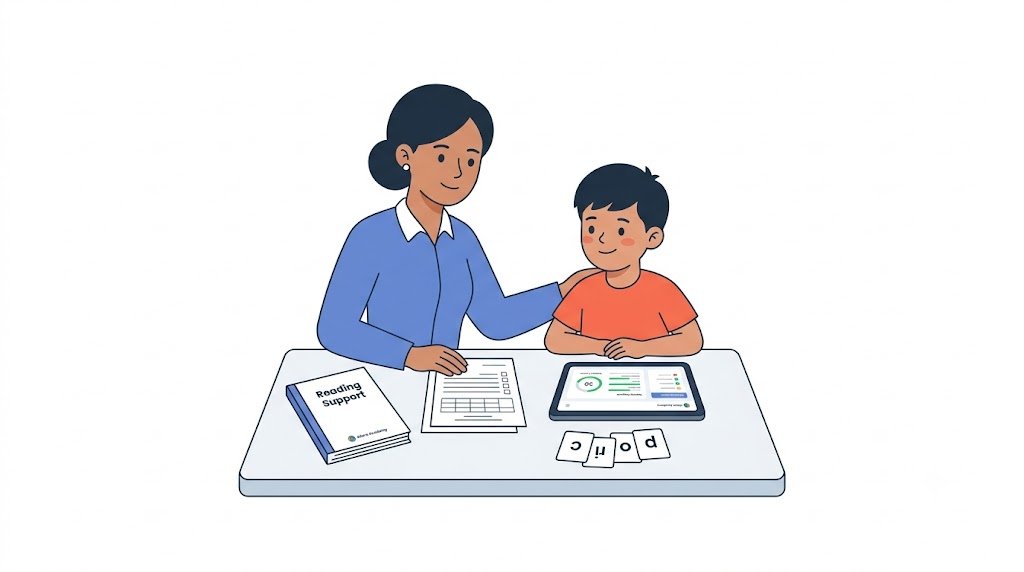
A focused, supportive intervention session can transform a child's relationship with reading.
Every classroom has children who find reading difficult. Some stumble over simple words while their peers race ahead. Others can read aloud but retain almost nothing. When a child falls behind, the gap doesn't fix itself — it widens. That's where reading intervention programs come in. These structured, targeted approaches are designed to close skill gaps before they become lifelong barriers.
But not all intervention programs are created equal. Some focus intensively on phonics and decoding. Others prioritize fluency or comprehension. A few combine multiple approaches into a comprehensive system. Knowing which type matches your child's needs — and understanding what makes a program truly effective — can mean the difference between frustration and real progress.
This guide walks you through everything you need to know about reading intervention programs: the different types available, how to evaluate them, common mistakes to avoid, and practical examples of what success looks like. Whether you're a parent searching for answers, a teacher building a support plan, or a homeschool educator looking for structured tools, you'll find clear, actionable guidance here. For more literacy insights, explore our blog for in-depth articles on early reading development.
What Exactly Are Reading Intervention Programs?
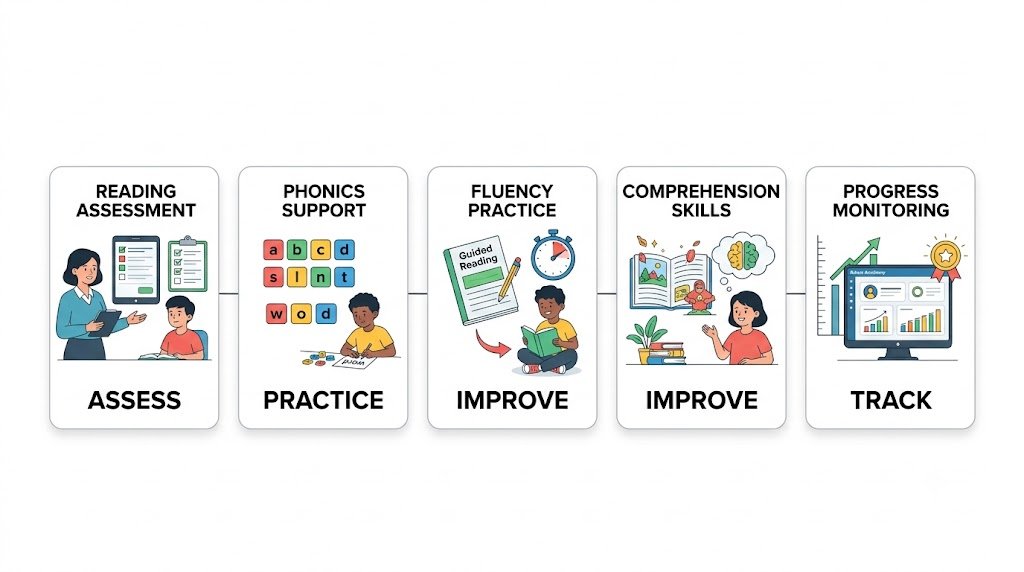
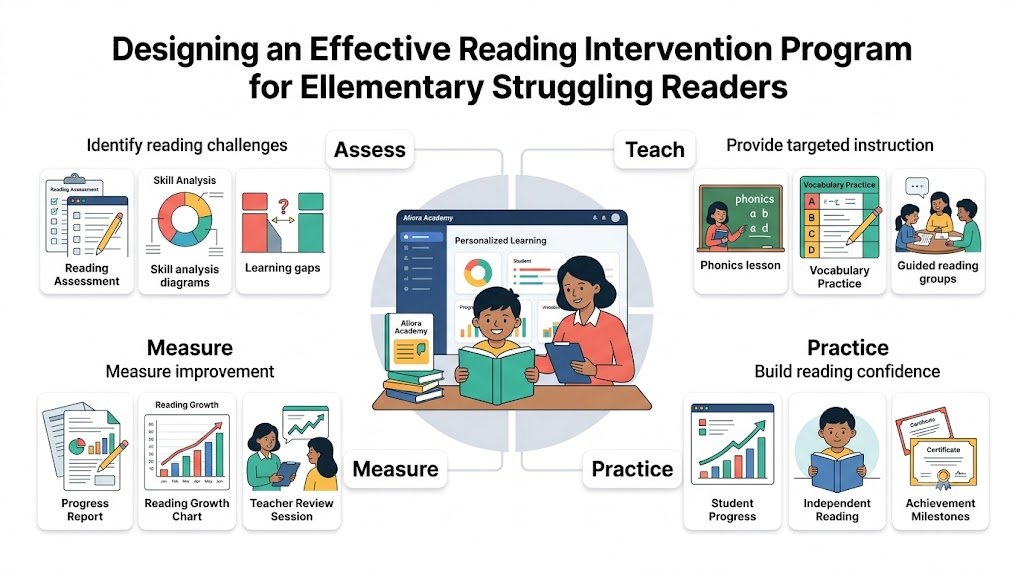
A reading intervention program is a structured, systematic approach to teaching reading skills to children who are performing below grade-level expectations. Unlike general classroom instruction — which moves at a pace designed for the average learner — intervention programs are intensive, targeted, and designed to close specific skill gaps.
Think of it this way: if classroom reading instruction is a group hiking trail where everyone follows the same path, an intervention program is a skilled guide who pulls a struggling hiker aside, identifies exactly where they lost their footing, and gives them the tools and practice to navigate that section before rejoining the group.
Core Characteristics of Effective Reading Intervention Programs
- Diagnostic — Begins with assessment to pinpoint exact skill gaps, not assumptions about grade level.
- Systematic — Follows a logical sequence, building from simple to complex skills without skipping steps.
- Explicit — Teaches skills directly rather than hoping children absorb them through exposure.
- Intensive — Provides more instructional time, smaller group sizes, and more practice opportunities than typical classroom instruction.
- Progress-Monitored — Includes regular check-ins to track growth and adjust instruction accordingly.
The most respected reading intervention programs are grounded in the science of reading — a vast body of research on how children learn to read. For a deeper understanding of this research base, see our guide on science of reading resources for parents, which explains the evidence behind effective literacy instruction.
Why Do Some Children Need Reading Intervention?
Reading struggles rarely mean a child isn't intelligent or isn't trying hard enough. More often, they reflect gaps in foundational skills that were never fully mastered. Understanding these root causes helps match the right intervention to the right need.
Common reasons children require intervention include:
- Phonemic awareness deficits — Difficulty hearing and manipulating individual sounds within words, which is the earliest predictor of reading success.
- Decoding gaps — Trouble connecting letters to sounds and blending them into recognizable words, often due to incomplete or inconsistent phonics instruction.
- Fluency lags — Reading that is slow, labored, and choppy, which drains cognitive energy away from understanding meaning. For strategies to address this, explore our article on reading fluency strategies.
- Vocabulary limitations — Not knowing enough words to comprehend grade-level text, which compounds over time as texts grow more complex.
- Comprehension breakdowns — Being able to decode words but struggling to construct meaning, make inferences, or retain information.
- Learning differences — Conditions such as dyslexia that affect how the brain processes written language and require specialized instructional approaches.
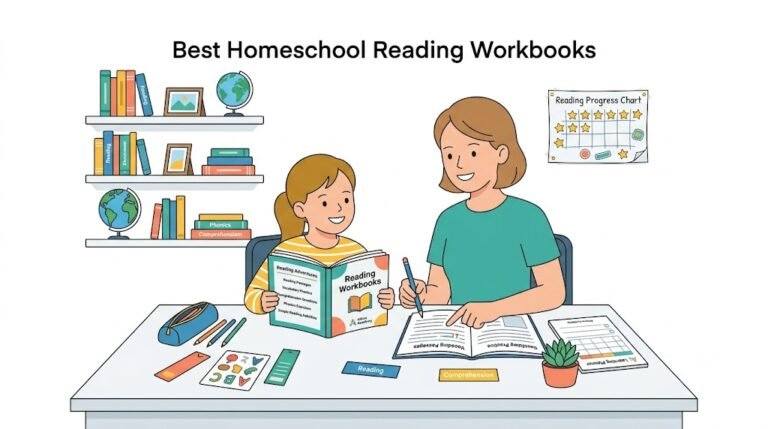
Hands-on, multisensory materials are a hallmark of many effective reading intervention approaches.
What Are the Different Types of Reading Intervention Programs?
Not all intervention programs target the same skills. Understanding the major categories helps you identify what a particular child actually needs.
Phonics-Based Intervention Programs
These programs focus intensively on the relationship between letters and sounds. They teach children to decode words systematically rather than guessing from context or pictures. Phonics-based intervention is particularly effective for children with decoding weaknesses, including many with dyslexia. If you're looking specifically for phonics support, our guide on the best phonics program for struggling readers provides a detailed comparison of available options.
Key features of strong phonics-based programs include a clear scope and sequence, decodable texts that align with taught skills, and multisensory activities that engage visual, auditory, and kinesthetic pathways.
Fluency-Focused Intervention Programs
Some children can decode accurately but read so slowly that they lose the thread of meaning. Fluency programs use techniques like repeated reading, choral reading, and timed practice to build automaticity. When word recognition becomes effortless, the brain can focus on comprehension rather than laboring over individual words.
Comprehension Intervention Programs
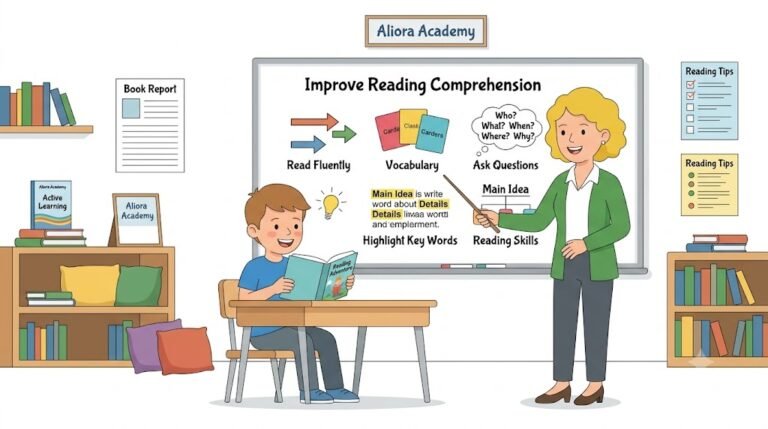
These programs target the thinking work of reading: making inferences, identifying main ideas, summarizing, asking questions, and monitoring understanding. They're most appropriate for children who can read the words but struggle to grasp and retain meaning. For a deeper look at building comprehension, see our article on how to teach main idea and details, a foundational comprehension skill.
Comprehensive Intervention Programs
Some programs address multiple skill areas — phonics, fluency, vocabulary, and comprehension — within a single structured system. These are often used in school settings where a child needs broad support across several domains. They tend to be more time-intensive but can produce deeper, more integrated learning.
| Program Type | Best For | Primary Focus | Typical Setting |
|---|---|---|---|
| Phonics-Based | Decoding difficulties, dyslexia | Letter-sound connections, blending, segmenting | Small group, one-on-one tutoring |
| Fluency-Focused | Slow, labored reading | Reading rate, accuracy, expression | Classroom, small group, home practice |
| Comprehension-Based | Understanding and retention issues | Inferencing, summarizing, main idea | Small group, whole class |
| Comprehensive | Multiple skill gaps | All five pillars of reading | School-based, intensive support |
Many families also supplement school-based intervention with at-home practice materials. Our best reading comprehension workbooks for elementary students guide highlights resources that reinforce classroom learning in a structured, accessible format.
How Do You Evaluate a Reading Intervention Program?
With so many programs available, it's essential to know what separates effective intervention from well-marketed busywork. Here are the key criteria to consider when evaluating any program.
- Is the program grounded in the science of reading, or does it rely on outdated methods like three-cueing?
- Does it include diagnostic assessment to place the child at the right starting point?
- Are lessons explicit and systematic, or does the program assume children will pick up skills through exposure?
- Does it provide enough practice and review for skills to become automatic?
- Is there a progress monitoring component so you can see whether the intervention is actually working?
A program that can't answer these questions clearly may not deliver the results you're hoping for. Look for transparency about methodology, a clear scope and sequence, and evidence that the approach has been used successfully with children similar to yours.
Should You Choose a Print-Based or Digital Intervention Program?
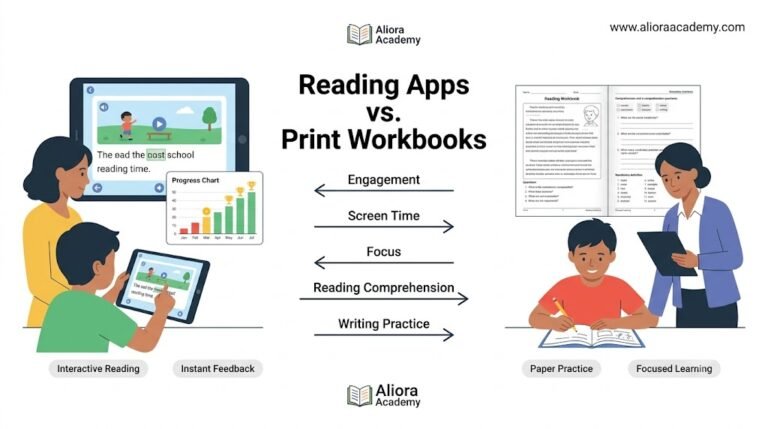
Both print and digital formats have legitimate places in reading intervention, and many effective approaches blend the two. The right choice depends on the child's needs, the setting, and practical considerations like access to technology.
Print-based programs offer tactile engagement — children can touch letter tiles, write in workbooks, and physically manipulate materials. This multisensory element is valuable for many struggling readers. Print also eliminates screen fatigue and potential distractions.
Digital programs, on the other hand, can provide immediate feedback, adaptive pacing, and engaging multimedia elements. They're often easier to implement consistently at home and can track progress automatically. However, they require a device and reliable internet access.
For a more detailed comparison of the two formats, read our guide on print vs. digital reading for kids, which examines the research and practical considerations behind each approach.
Real-Life Examples of Reading Intervention in Action
Example 1: Closing a Phonics Gap in Second Grade
Situation: Ethan, age 7, was falling behind his second-grade classmates. He guessed at words based on their first letter and couldn't sound out unfamiliar words. His teacher noted that he had missed crucial phonics instruction during a disrupted kindergarten year.
Challenge: Ethan's decoding skills were at a late-kindergarten level. He needed systematic phonics instruction but also needed materials that didn't feel babyish to a second grader.
Solution: His school placed him in a small-group phonics intervention program four days a week for 30 minutes each session. The program used decodable texts written for older beginners — high-interest stories that only contained phonics patterns Ethan had been explicitly taught. His parents reinforced the same skills at home using materials from a structured phonics workbook.
Learning Outcome: Within five months, Ethan's decoding accuracy improved from 62% to 89% on grade-level passages. He began to approach unfamiliar words with strategies rather than guesses, and his reading confidence grew noticeably.
Takeaway: Systematic phonics intervention works best when school and home efforts are aligned and when materials respect the child's age and interests.
Example 2: Building Fluency in a Fourth Grader
Situation: Maya, age 9, could decode accurately but read in a slow, robotic monotone. By the time she finished a paragraph, she had no idea what it said. Her comprehension scores were low, but the root cause was fluency, not understanding.
Challenge: Maya needed to build automatic word recognition so her brain could allocate energy to comprehension rather than decoding. She also needed to hear what fluent reading sounded like.
Solution: Her teacher implemented a repeated reading routine using short, engaging passages at Maya's instructional level. Each passage was read three times over several days. Maya also listened to audiobooks while following along in the printed text, a technique that models proper pacing and expression. For book recommendations at her level, her parents consulted our guide on the best books for struggling 4th grade readers.
Learning Outcome: Over three months, Maya's reading rate increased from 52 to 84 words per minute on grade-level text. More importantly, she began to read with natural expression and could accurately retell what she had read.
Takeaway: Fluency is the bridge between decoding and comprehension. When it's weak, both sides suffer. Targeted fluency practice yields significant gains in a relatively short time.
Example 3: Supporting an Older Student with a Comprehensive Program
Situation: Daniel, age 12, had struggled with reading since early elementary school. Multiple interventions had been tried but none had stuck. He read far below grade level and had developed a deep aversion to anything school-related.
Challenge: Daniel's needs spanned multiple areas — decoding, fluency, vocabulary, and comprehension — and his emotional resistance to reading was as significant as his skill gaps. Any intervention had to address both the academic and the emotional dimensions.
Solution: His parents found a reading specialist who used a comprehensive, Orton-Gillingham-based program. Sessions were one-on-one, multisensory, and started at a level where Daniel could experience immediate success. The specialist also incorporated Daniel's interests — automotive repair and baseball — into custom reading passages, making the content genuinely engaging. Progress was tracked weekly and shared openly with Daniel so he could see his own growth.
Learning Outcome: After a full school year of twice-weekly sessions plus daily home practice, Daniel gained more than two grade levels in reading ability. More importantly, he stopped saying "I'm just not a reader" and started checking out books from the school library.
Takeaway: For older struggling readers, emotional rehabilitation is just as important as skill instruction. Success breeds motivation, and motivation fuels the practice that drives further success.
What Are the Most Common Mistakes When Choosing or Implementing Intervention?
Even with the best intentions, it's easy to misstep when setting up reading intervention. Being aware of these common pitfalls can save months of wasted effort.
Frequently Asked Questions About Reading Intervention Programs
How do I know if my child needs a reading intervention program?
Look for persistent patterns: avoiding reading, guessing at words instead of sounding them out, being unable to retell what they just read, or showing significant anxiety around reading tasks. A conversation with your child's teacher is the best starting point — they can compare your child's performance to grade-level benchmarks and recommend next steps.
What is the difference between classroom reading instruction and intervention?
Classroom instruction is designed for the average learner and follows a set curriculum. Intervention is more intensive, more targeted, and delivered in smaller groups or one-on-one. It addresses specific skill gaps rather than covering the full grade-level curriculum. Think of intervention as a surgical repair versus routine maintenance.
Can a reading intervention program be done at home?
Yes, many programs are designed for or can be adapted to home use. The key factors are consistency, a quiet environment, and the adult's willingness to learn the program's methodology. Some programs require training, while others are designed to be parent-friendly right out of the box. Browse our reading resources for materials suitable for home implementation.
How long does a typical reading intervention program take to show results?
Meaningful progress typically appears within three to six months of consistent, well-implemented intervention. However, the timeline varies based on the severity of the gap, the intensity of the program, and the child's individual response. Regular progress monitoring helps you see small wins even before grade-level benchmarks are reached.
Are reading intervention programs only for children with diagnosed learning disabilities?
Not at all. While children with diagnosed conditions like dyslexia certainly benefit from specialized intervention, many children who struggle with reading simply have gaps in instruction or need more practice than the classroom provides. Intervention is appropriate for any child performing below their potential, regardless of whether a formal diagnosis exists.
What role do parents play during a reading intervention program?
Parental involvement significantly boosts intervention outcomes. Even if the program is school-based, parents can support by reading aloud to their child daily, providing a calm space for home practice, celebrating small victories, and communicating regularly with the intervention provider. Your attitude toward reading — calm, encouraging, and patient — sets the emotional tone for the entire process.
How do I choose between a phonics-focused program and a comprehension-focused one?
Start with assessment. If your child cannot accurately read the words on the page, phonics and decoding should be the priority — comprehension is impossible without accurate word reading. If your child reads accurately but doesn't understand, focus on comprehension strategies. Many children need work in both areas, but effective intervention prioritizes the most foundational gap first.
What if the intervention program isn't working?
First, ensure fidelity — is the program being implemented exactly as designed, with sufficient frequency and duration? If yes, and progress is still stagnant after several months, consider whether the program matches the child's actual needs. A different approach or a more intensive delivery model may be warranted. Consulting a reading specialist for a fresh assessment can provide clarity. Feel free to contact us if you need help thinking through your options.
At-home practice that reinforces intervention sessions helps skills transfer to real-world reading situations.
Moving Forward: Choosing the Right Path for Your Struggling Reader
Selecting a reading intervention program is one of the most consequential educational decisions you can make for a struggling reader. The right program, implemented with consistency and compassion, can close skill gaps, rebuild confidence, and open doors that frustration had closed. The wrong program — or the right program implemented poorly — can deepen a child's sense of failure.
The most important takeaway is this: reading struggles are solvable. They are not a permanent verdict on a child's intelligence or potential. With accurate assessment, a well-matched intervention, and patient, persistent support, the vast majority of struggling readers become capable, confident readers.
Start by understanding your child's specific needs. Observe their reading. Talk with their teacher. Consider a formal assessment if the picture remains unclear. Then explore programs that target those needs directly, using the evaluation criteria outlined in this guide. Our reading resources collection is organized to help you find materials aligned with specific skill areas, and our homepage offers a broader view of the educational tools available.
Remember that behind every struggling reader is a child who wants to succeed. They may not say it. They may even act like they don't care. But every child wants to feel competent, and reading competence is one of the most empowering gifts you can help them achieve. With the right intervention program and a supportive adult by their side, that goal is entirely within reach.
If you have questions about selecting the right resources for your situation, don't hesitate to reach out to us. We're here to help you navigate this journey with clarity and confidence.