Best Phonics Programs for Struggling Readers
A comprehensive guide to choosing the right phonics curriculum, workbook, or program that truly supports children who need extra help mastering reading fundamentals.
Browse Reading Resources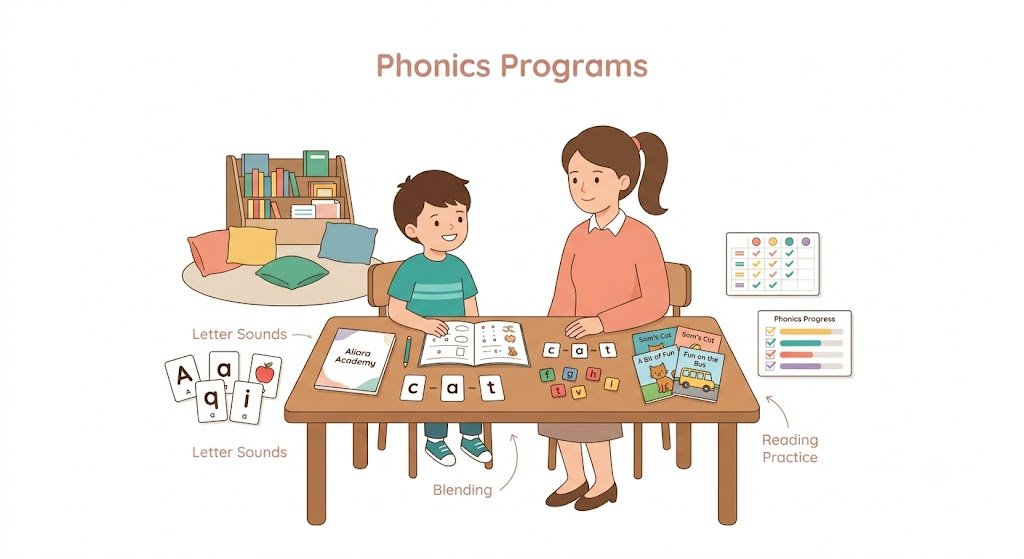
A thoughtfully selected phonics program can transform a struggling reader's relationship with written language.
Finding the right phonics program for a child who is falling behind in reading can feel like searching for a needle in a haystack. The market is crowded with options — workbooks, digital apps, full curricula, and intervention kits — each claiming to be the solution. Yet not all phonics programs are created equal, and what works beautifully for one child may fall flat for another.
This guide is designed to help parents, teachers, and homeschool families cut through the noise. We have evaluated some of the most widely used and respected phonics resources available, focusing on what matters most: evidence-based instruction, ease of use, engagement level, and real results for children who need extra support. Whether you are searching for the best phonics programs for struggling readers to use at home or in a classroom setting, this article provides the clarity you need to make an informed decision.
For additional reading support beyond phonics, explore our blog, which offers guidance on comprehension, fluency, and independent reading activities.
Why Is Phonics Instruction Critical for Struggling Readers?
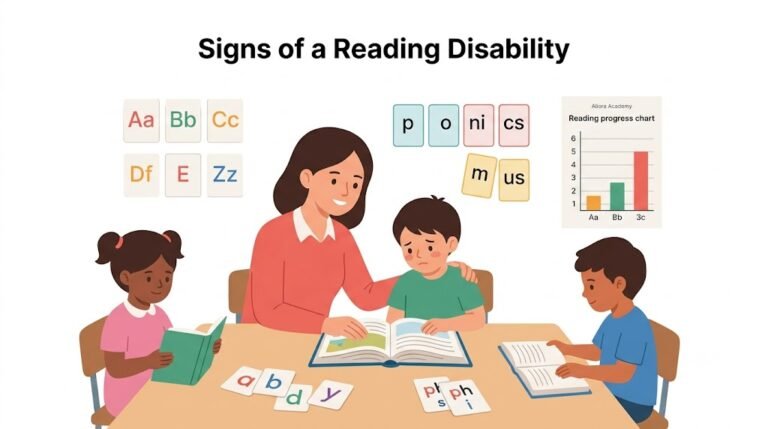
Phonics is the bridge between spoken language and written text. It teaches children the predictable relationship between letters and sounds, giving them a reliable system for decoding unfamiliar words. For most struggling readers, weak phonics skills lie at the very heart of their difficulty.
Research consistently shows that explicit, systematic phonics instruction is the most effective approach for children who are not progressing as expected. Key reasons include:
- It removes the guesswork. Instead of memorizing words by sight or guessing from pictures, children learn a decoding process they can apply to any word.
- It builds automaticity. With practice, letter-sound connections become instant, freeing mental energy for comprehension.
- It closes gaps efficiently. A structured phonics program identifies and fills specific skill gaps rather than offering scattered, unfocused practice.
- It boosts confidence. When a child realizes they can figure out unfamiliar words on their own, their entire attitude toward reading often shifts.
If your child is struggling, strengthening their phonics foundation should be a top priority. For a broader look at intervention strategies, our guide on reading intervention programs provides additional context and options.
What Makes a Phonics Program Effective for Struggling Readers?
Not every program labeled "phonics" delivers what a struggling reader actually needs. Some are too fast-paced, others rely on incidental phonics rather than direct instruction, and many fail to provide the repetition and review that children with reading difficulties require.
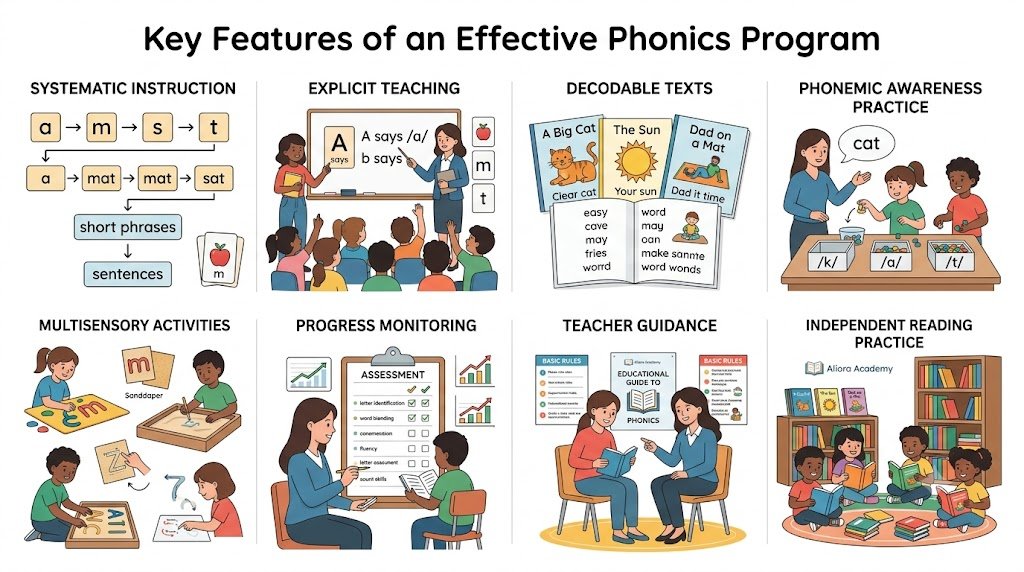
An effective phonics program for struggling readers typically includes these essential elements:
Core Features of High-Quality Phonics Programs
- Systematic Scope and Sequence — Skills are introduced in a logical order, from simple to complex, with each lesson building on the previous one.
- Explicit Instruction — The teacher or parent directly models each skill rather than hoping the child will discover patterns on their own.
- Cumulative Review — Previously taught skills are revisited regularly to ensure mastery before moving forward.
- Multisensory Practice — Lessons engage visual, auditory, and kinesthetic pathways to strengthen memory and retention.
- Decodable Text — Reading practice uses words that match the phonics patterns the child has already learned, preventing frustration and guesswork.
- Diagnostic Assessment — The program helps identify exactly where the child is struggling so instruction can be targeted.
When evaluating any program, ask yourself: Does this resource teach explicitly, or does it just provide practice? Struggling readers need teaching first and practice second. For a deeper dive into reading intervention resources that complement phonics work, browse our reading intervention resources for elementary students.
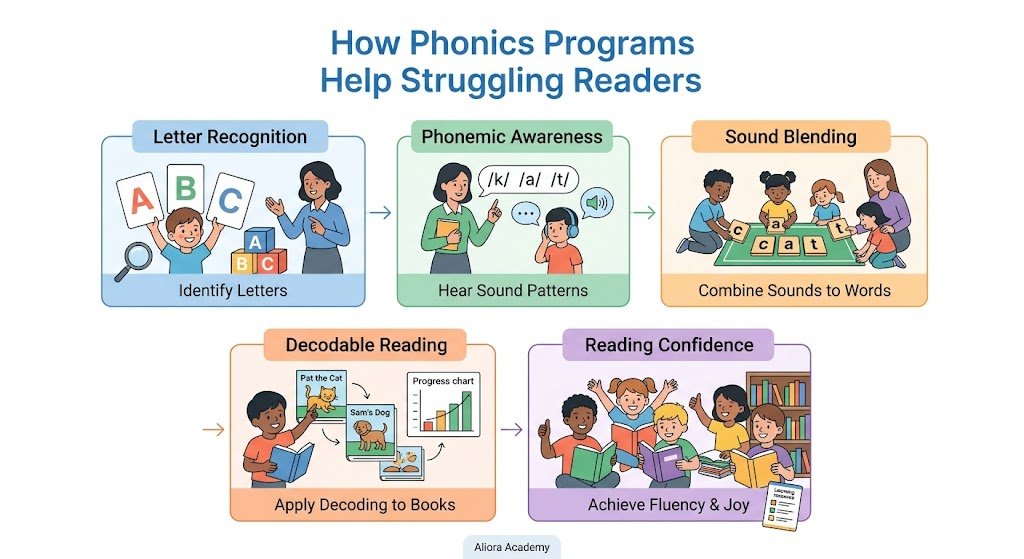
Consistent, structured practice with the right materials builds the decoding automaticity that struggling readers need most.
What Should You Look for Before Choosing a Phonics Program?
Before purchasing any resource, take a few moments to consider your specific situation. A program perfect for a classroom teacher may be overwhelming for a parent working one-on-one at home. Likewise, a workbook designed for independent practice won't replace the need for direct instruction.
| Consideration | Questions to Ask |
|---|---|
| Child's Age and Grade | Is the content age-appropriate? Will an older child feel embarrassed by materials designed for younger learners? |
| Skill Gaps | Does the child need basic letter sounds, vowel patterns, multisyllable decoding, or all of the above? |
| Setting | Will this be used at home, in a classroom, or in a tutoring session? Does it require training to implement? |
| Time Commitment | How many minutes per day does the program require? Is that realistic for your schedule? |
| Parent or Teacher Involvement | Is the program designed for independent work, or does it require an adult to guide each lesson? |
| Budget | Is this a single workbook or a multi-level curriculum? What is the total investment if you continue through multiple levels? |
Which Are the Best Phonics Programs for Struggling Readers?
After extensive evaluation of available resources — considering instructional quality, ease of use, engagement, and suitability for children who need extra support — here are the phonics programs and workbooks that stand out. Each recommendation includes a balanced look at strengths, limitations, and ideal use cases.
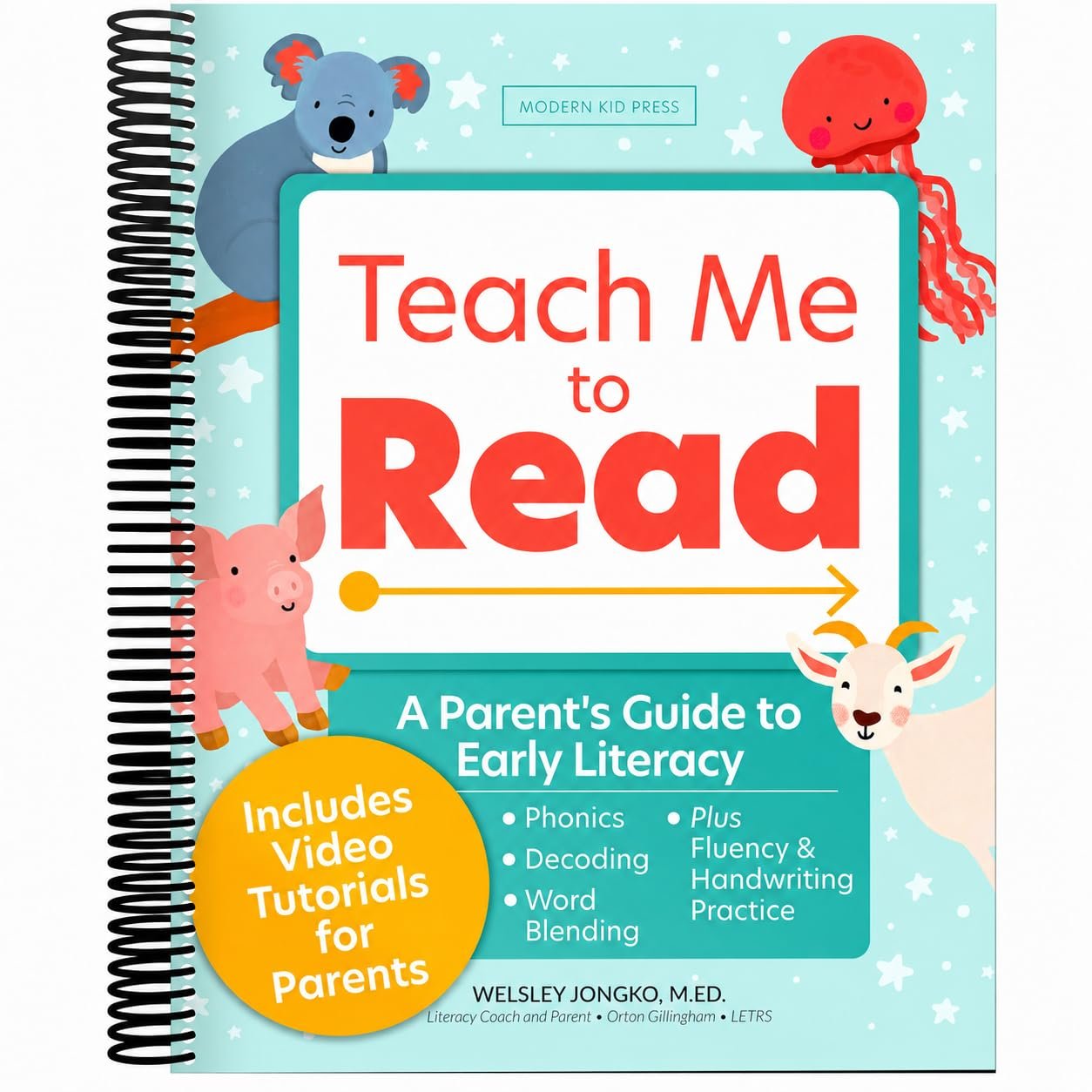
Teach Me to Read: A Parent Guided Student Workbook
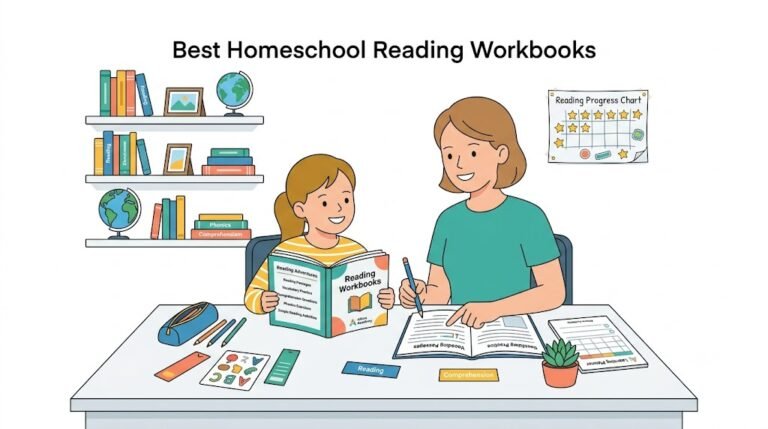
Written by Welsley Jongko, M.Ed., a literacy coach with extensive training in Orton-Gillingham and LETRS, this workbook is a standout for parents who want to take an active role in teaching their child to read. Each lesson is designed for 5–10 minutes a day, side by side with a caregiver, making it manageable even for busy families.
What Sets It Apart: The book includes video tutorials accessible via QR codes, multisensory activities, handwriting practice, fluency grids, and eight decodable stories. It covers all 26 letters, phonological awareness, high-frequency words, and decoding — all organized into five comprehensive units. The built-in review and repetition are ideal for children who need extra reinforcement.
Limitations: This is a beginner-level program focused on letter sounds and CVC words. Children who already have basic phonics but struggle with advanced patterns will need a higher-level resource. Requires consistent parent involvement.
View on Amazon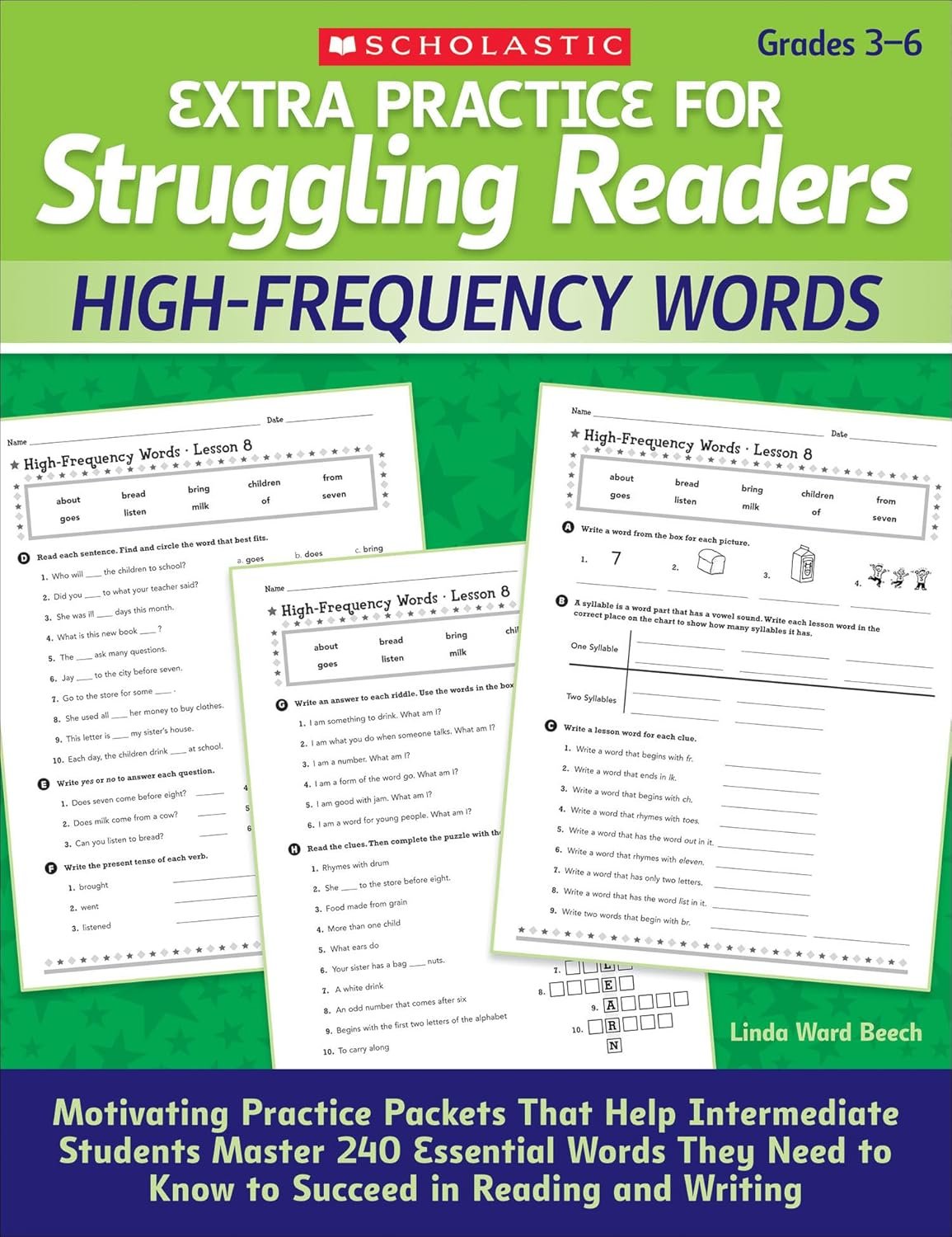
Extra Practice for Struggling Readers: High-Frequency Words
Published by Scholastic Teaching Resources, this workbook targets a common weak spot for intermediate students: high-frequency words that are not easily decodable. Through repeated practice packets, students master 240 essential words while reinforcing phonic elements and word-study skills.
What Sets It Apart: The format is designed specifically for older struggling readers — the content feels age-appropriate, not babyish. Practice pages build automaticity through multiple exposures, and the exercises review basic word-study techniques that boost both fluency and comprehension.
Limitations: This is a supplementary practice book, not a complete phonics curriculum. It works best when paired with direct instruction. Limited to high-frequency word work — does not cover decoding strategies for unfamiliar words.
View on Amazon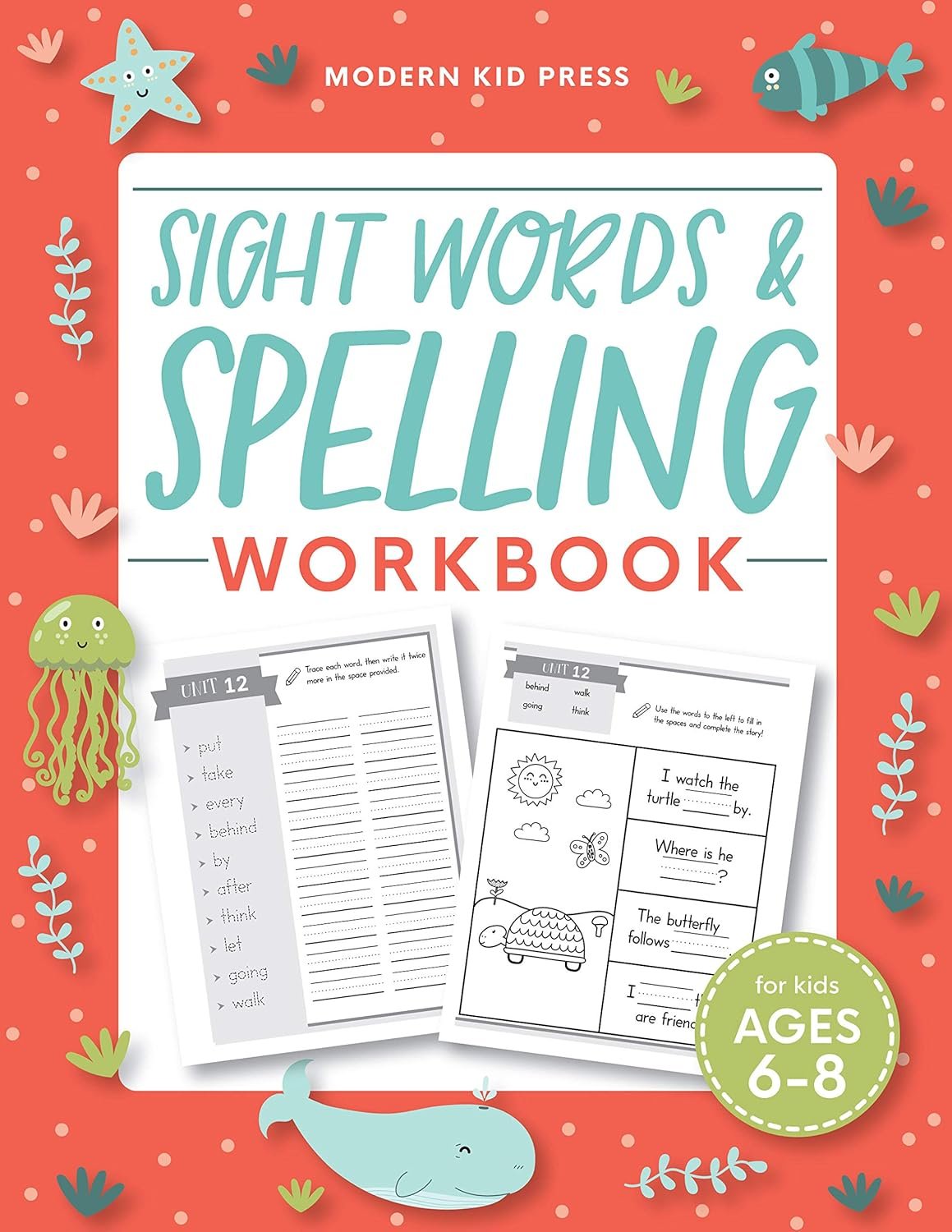
Sight Words and Spelling Workbook for Kids Ages 6–8
From Modern Kid Press, this workbook focuses on the high-frequency words that form the backbone of early reading. Tracing, spelling, and engaging activities help children internalize essential sight words so they can read more fluently without stopping to decode every word.
What Sets It Apart: Cute illustrations, magical creatures, and encouraging characters keep young learners engaged. The 8.5 x 11-inch format gives small hands plenty of room for tracing and writing. It is a strong companion to any phonics program, reinforcing the words children encounter most frequently in books.
Limitations: Focused primarily on sight word recognition and spelling rather than decoding skills. Best for children who already have some phonics knowledge and need additional practice with high-frequency words. Not a standalone phonics curriculum.
View on Amazon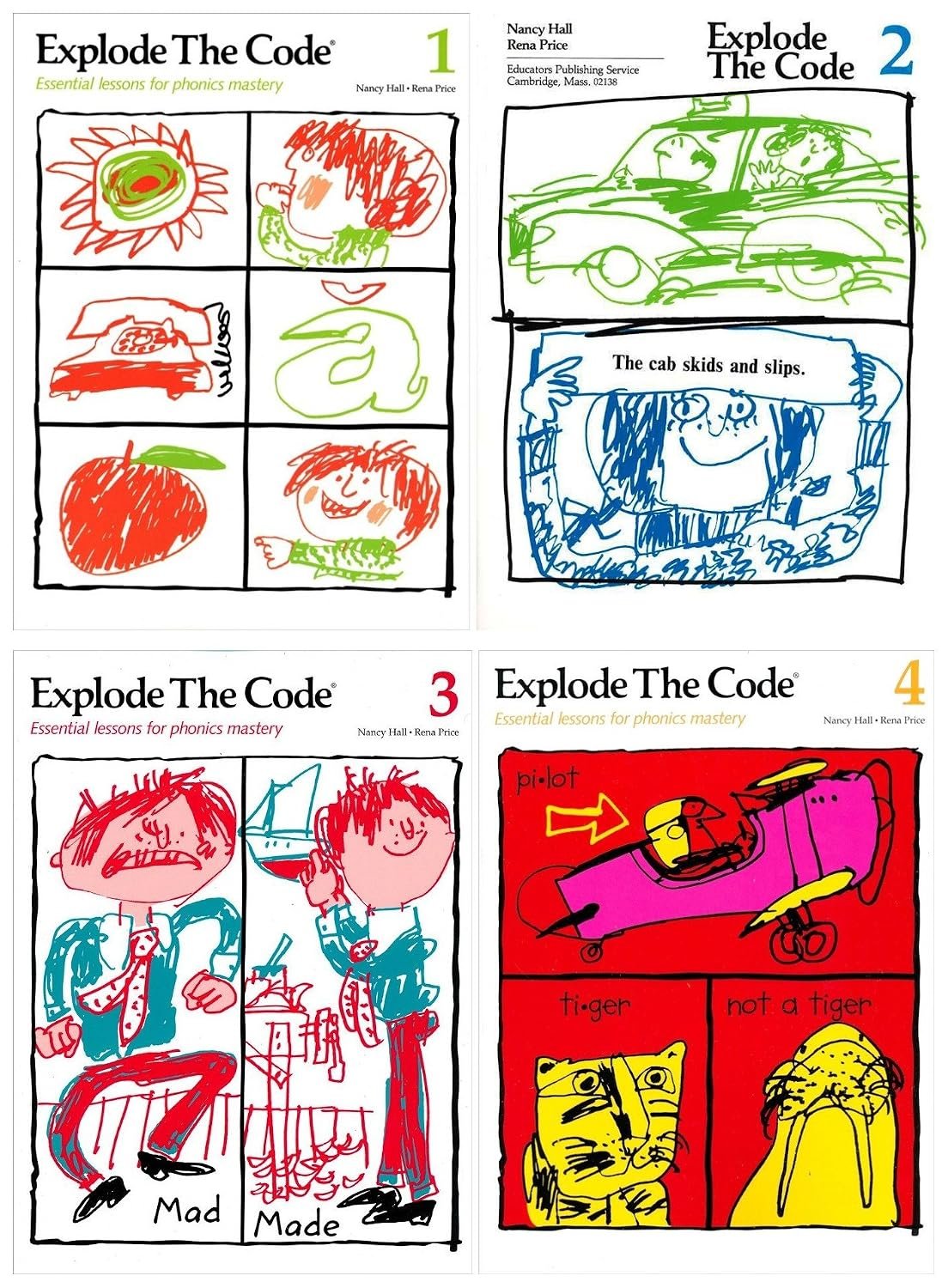
Explode the Code 4 Books SET: Books 1, 2, 3, and 4
Explode the Code is one of the most trusted names in phonics instruction, and this four-book set provides a complete, sequential introduction to essential phonics patterns. Book 1 begins with short vowels, and the series progresses through consonant blends, digraphs, long vowels, and syllable patterns.
What Sets It Apart: The format is simple, predictable, and highly effective. Each lesson follows a consistent pattern of activities — matching, fill-in-the-blank, reading, and writing — so children know what to expect. The repetition builds mastery without feeling tedious. It works beautifully for independent practice after brief instruction.
Limitations: The black-and-white pages and straightforward format may not appeal to children who need bright colors or game-like elements to stay engaged. Requires an adult to introduce each new concept before the child completes the corresponding workbook pages.
View on Amazon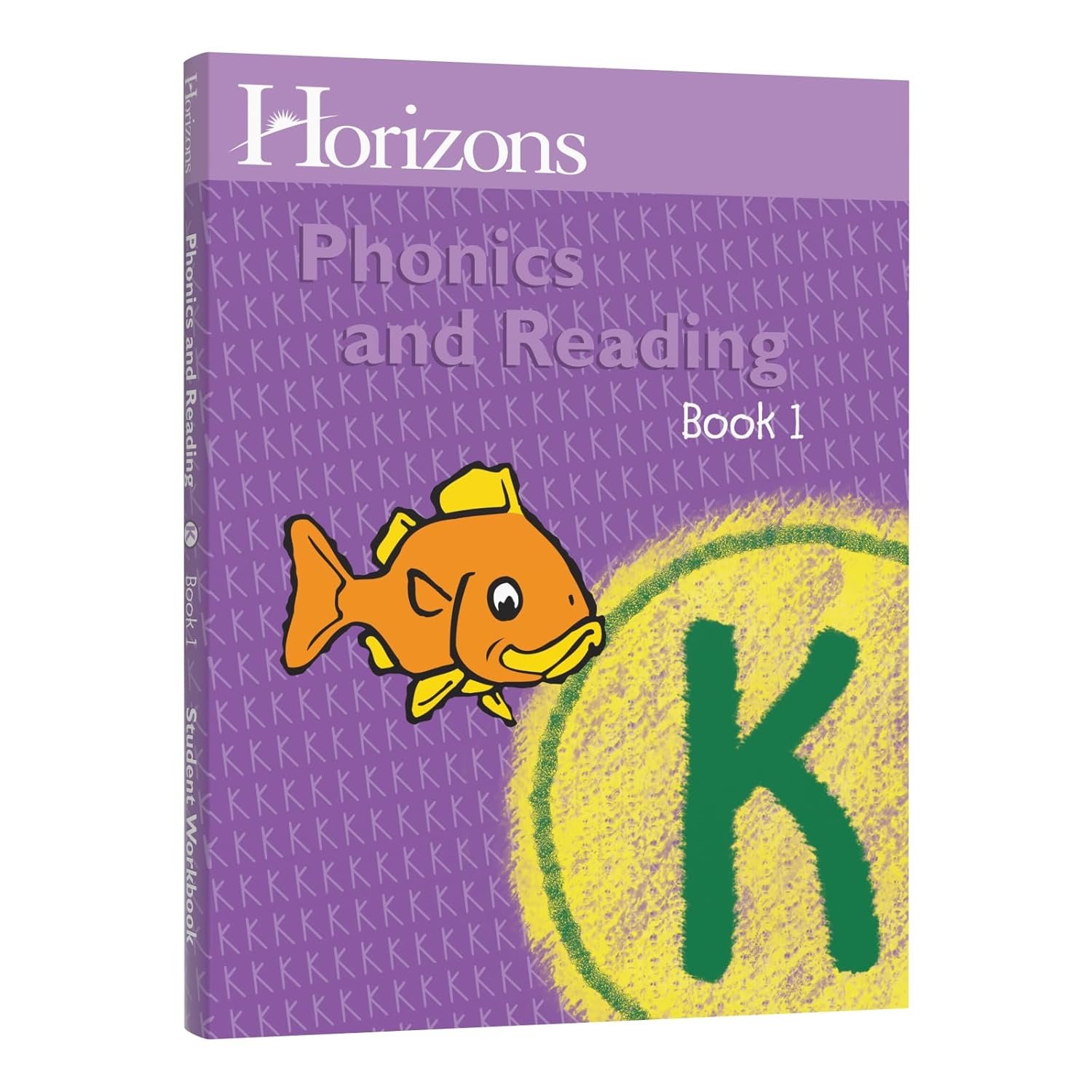
Horizons K Phonics and Reading – Student Book 1
Published by Alpha Omega Publications, Horizons is a colorful, engaging phonics curriculum popular with homeschool families. The Student Book 1 introduces all 26 letters and their phonetic sounds, with vowels taught early so children can begin blending and reading words almost immediately.
What Sets It Apart: Bright, full-color pages and hands-on activities — matching, puzzles, fill-in-the-blank — keep young children motivated. Perforated pages allow children to display finished work proudly. The early introduction of vowels is a smart design choice that accelerates progress toward real reading.
Limitations: This is a kindergarten-level book, so it is best suited for children at the very beginning of their reading journey. Older struggling readers would need a different level or a more mature-looking resource. Requires the teacher's guide (sold separately) for full implementation.
View on Amazon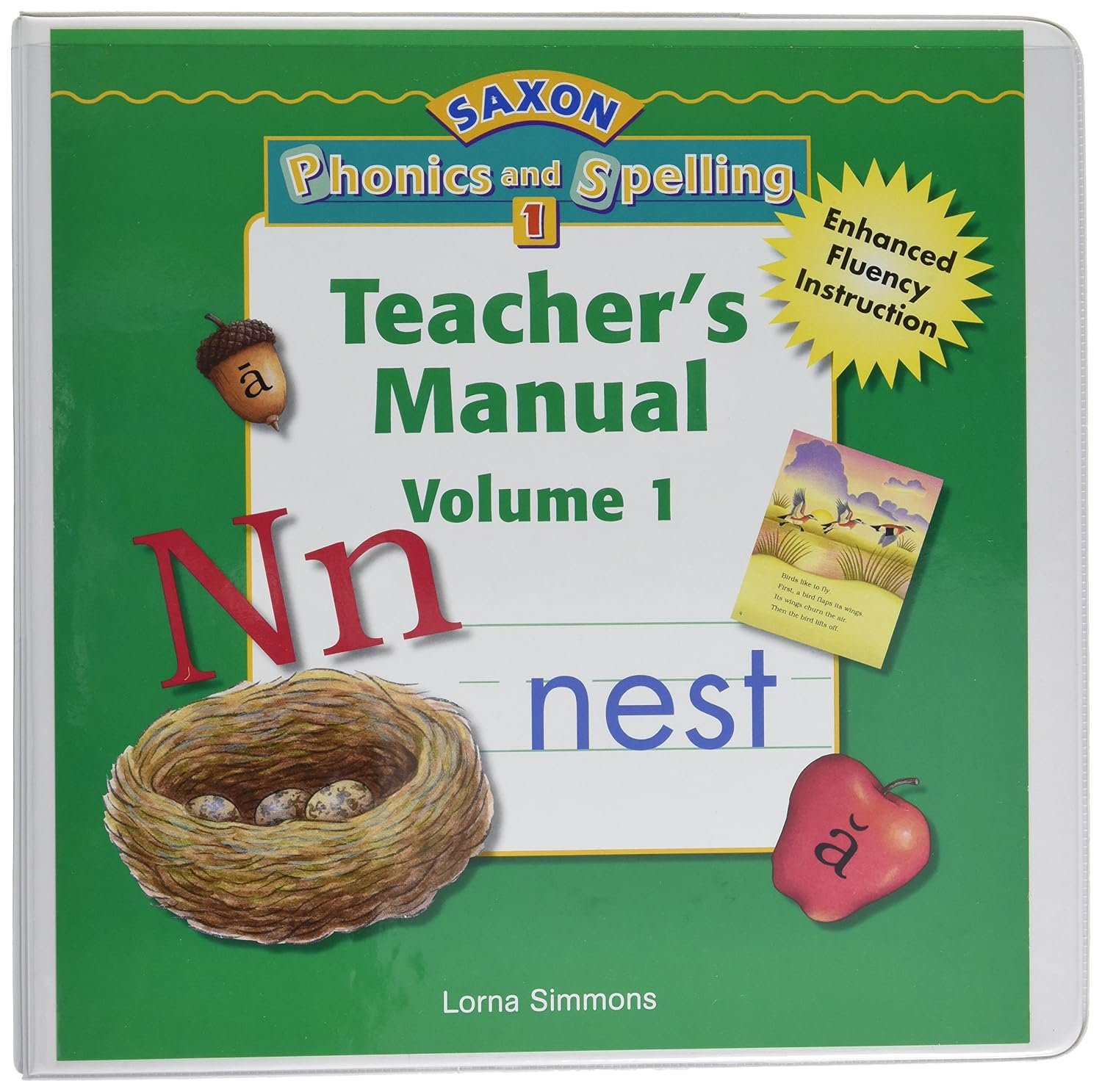
Saxon Phonics & Spelling 1 – Teacher Edition, Grade 1
Saxon is known for its incremental, spiral approach to learning, and the Phonics & Spelling series follows the same philosophy. Each lesson introduces a small, manageable piece of new information while continuously reviewing previously taught skills — an ideal design for children who need repeated exposure to retain learning.
What Sets It Apart: The program is exceptionally thorough. Every lesson is scripted, making it easy for a teacher, tutor, or parent to implement with fidelity — even without prior training in phonics instruction. The daily review cycle ensures skills are not forgotten as new ones are introduced.
Limitations: This is the Teacher Edition only; student materials are sold separately. The 786-page volume can feel daunting at first glance. Best suited for classroom or dedicated one-on-one tutoring settings rather than casual home use.
View on Amazon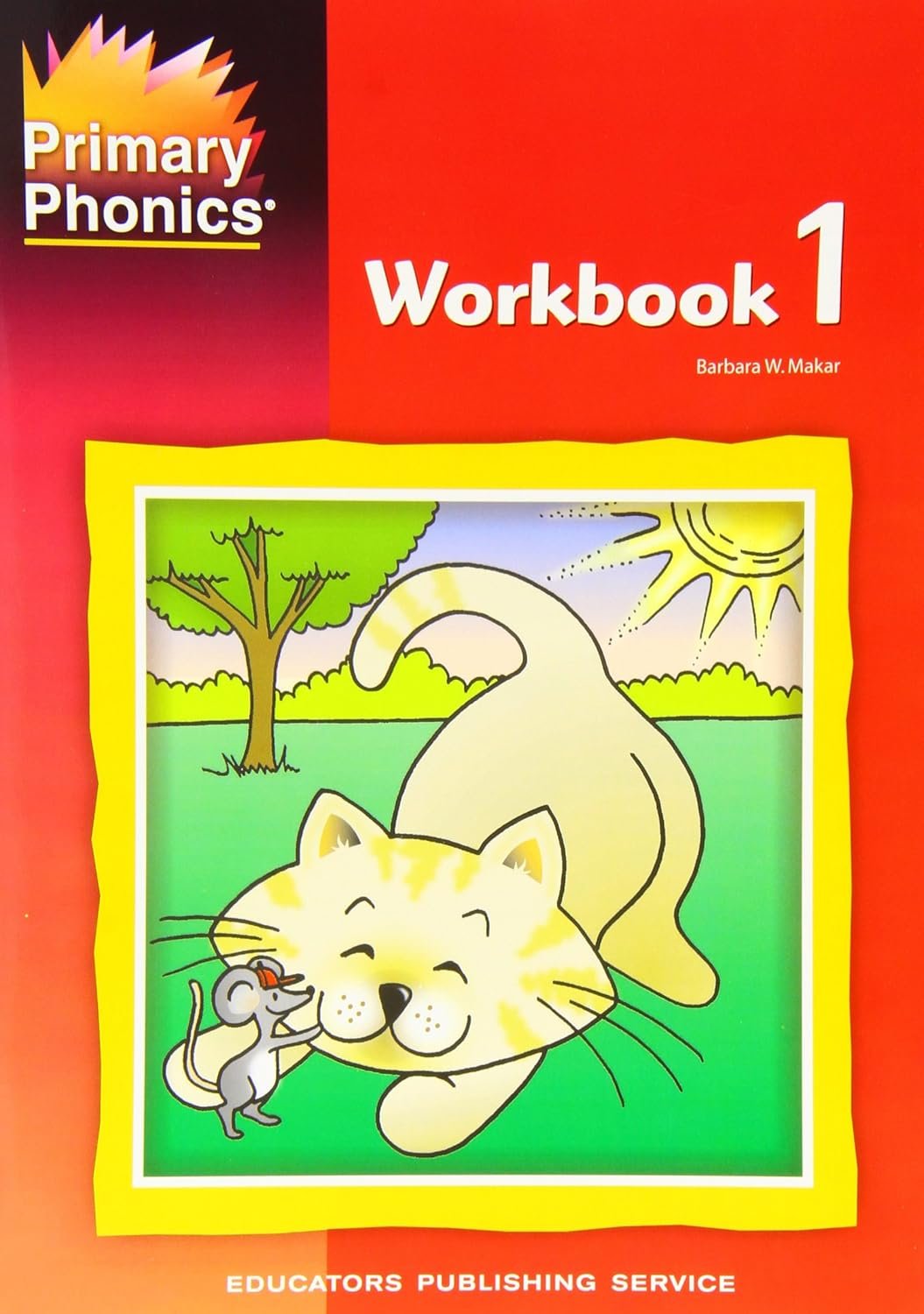
Primary Phonics: Workbook 1
Primary Phonics by Barbara W. Makar, published by Educators Publishing Service, is a classic systematic phonics program that has helped countless beginning and struggling readers. Workbook 1 reviews 17 consonants and introduces short vowels in two- and three-letter words using consistent, patterned exercises.
What Sets It Apart: The simplicity is its greatest strength. Exercises involve yes-or-no questions, coloring, copying words, filling in missing words, and unscrambling — all focused squarely on the target phonics pattern. Coordinating storybooks (sold separately) provide decodable reading practice that matches each workbook level.
Limitations: The black-and-white format and straightforward exercises may not excite every child. Works best when paired with the companion storybooks for reading application. The program spans multiple workbooks, so this is just the starting point.
View on Amazon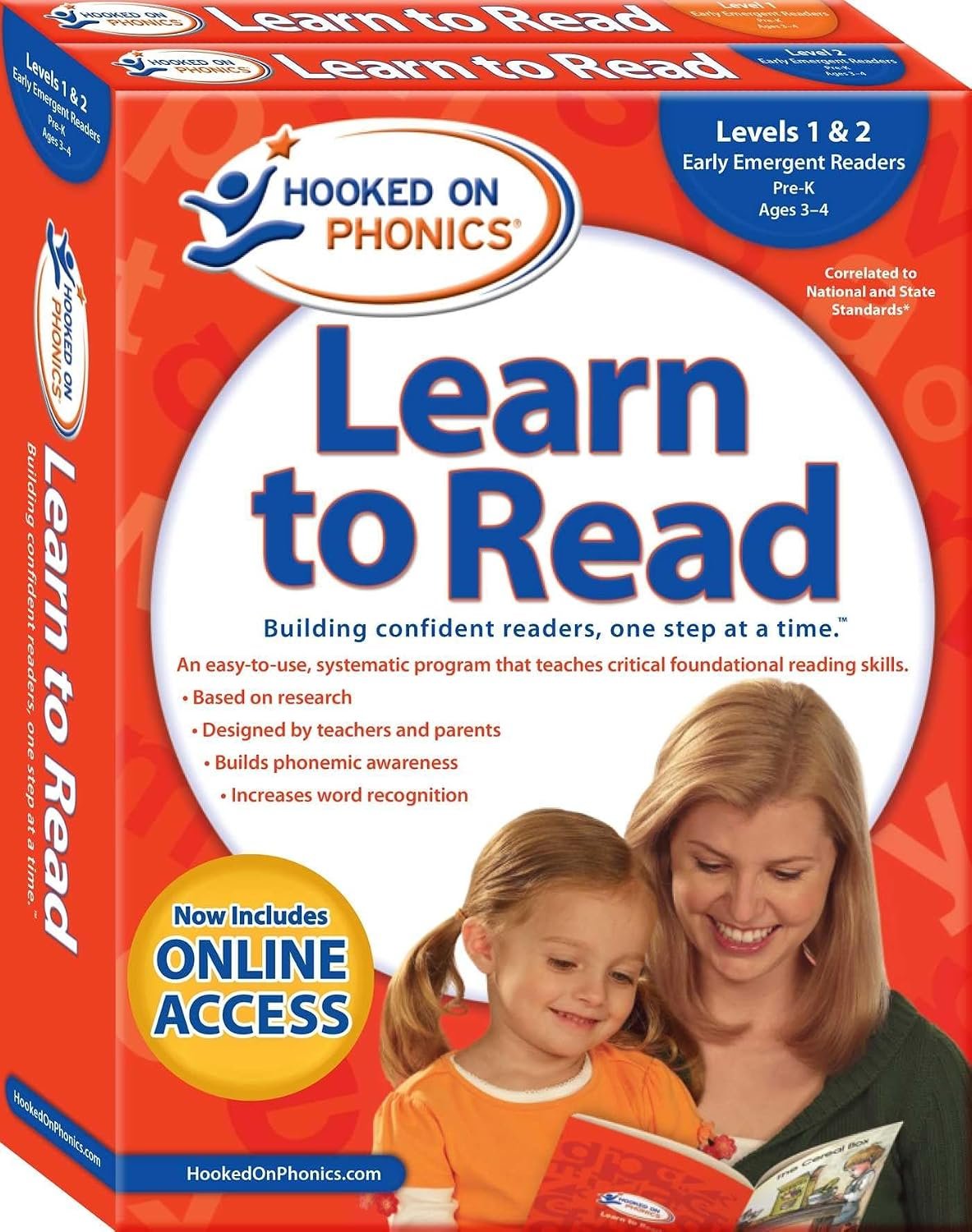
Hooked on Phonics Learn to Read – Levels 1 & 2 Complete
Hooked on Phonics is one of the most recognizable names in learn-to-read programs, and for good reason. This Early Emergent Readers set combines a workbook, storybooks, and access to online content including video lessons and songs — creating a multisensory experience that appeals to young children.
What Sets It Apart: The integration of print, video, and audio materials addresses multiple learning styles simultaneously. The program is designed to be used in short, enjoyable sessions that celebrate every success. It builds confidence as much as skill, which is critical for children who are already feeling discouraged.
Limitations: Levels 1 & 2 are for Pre-K and early emergent readers, so this set is best for very young children or older learners who are at the absolute beginning of phonics. The cost is higher than a standalone workbook due to the multimedia components. Progression through all levels requires additional purchases.
View on AmazonHow Do These Phonics Programs Compare?
With multiple excellent options available, a side-by-side comparison can help narrow your choice. Use the table below to see at a glance which program best matches your child's needs and your instructional setting.
| Program | Best For | Age/Grade | Format | Adult Involvement |
|---|---|---|---|---|
| Teach Me to Read | Parents teaching beginners | Ages 3–8 | Workbook + Videos | High — parent-led lessons |
| Extra Practice: High-Frequency Words | Older students needing sight word mastery | Grades 3–6 | Practice Workbook | Low — independent practice |
| Sight Words & Spelling Workbook | K–2 students reinforcing sight words | Ages 6–8 | Activity Workbook | Low to Moderate |
| Explode the Code (4-Book Set) | Systematic phonics for grades 1–4 | Grades 1–4 | 4 Workbooks | Moderate — intro each concept |
| Horizons K Phonics & Reading | Homeschool kindergarten phonics | Kindergarten | Full-Color Workbook | Moderate to High |
| Saxon Phonics & Spelling 1 | Classroom or dedicated tutoring | Grade 1 | Teacher Edition | High — scripted lessons |
| Primary Phonics Workbook 1 | K–2 systematic phonics foundation | Grades K–2 | Workbook + Storybooks | Moderate |
| Hooked on Phonics Levels 1 & 2 | Pre-K early emergent readers | Ages 3–4 | Kit: Workbook + Video/Audio | Moderate |
The most effective phonics practice happens in a calm, supportive environment where mistakes are treated as learning opportunities.
Common Mistakes When Choosing a Phonics Program
Even with the best intentions, it is easy to make missteps when selecting resources for a struggling reader. Here are the most frequent mistakes — and how to avoid them.
Real-Life Examples of Phonics Intervention Success
Example 1: The Kindergarten Gap
Situation: Ethan, age 5, completed kindergarten but his teacher noted he had not mastered letter sounds and could not blend even simple CVC words like "cat" or "dog."
Challenge: Ethan needed explicit, systematic instruction from the very beginning — but his parents were not trained educators and felt unsure how to help.
Solution: His parents chose Teach Me to Read because of its parent-friendly design and short 5–10 minute lessons. They completed one lesson per day, using the QR code videos to model correct pronunciation and the multisensory activities to keep Ethan engaged.
Learning Outcome: Within three months, Ethan knew all his letter sounds and was confidently reading CVC words. The short, consistent sessions fit easily into the family's routine and removed the pressure that had been building around reading.
Takeaway: A well-designed parent-guided program can be just as effective as professional tutoring — especially when lessons are short, consistent, and positive.
Example 2: The Upper Elementary Decoding Deficit
Situation: Jasmine, age 10, read slowly and laboriously. She guessed at longer words and became exhausted after a single paragraph. Comprehension suffered because all her mental energy went into decoding.
Challenge: Jasmine had gaps in advanced phonics — vowel teams, r-controlled vowels, and multisyllable decoding strategies — but materials for younger children felt babyish and embarrassing.
Solution: Her tutor used Explode the Code Books 3 and 4 alongside the Extra Practice for Struggling Readers: High-Frequency Words workbook. The straightforward, uncluttered format of Explode the Code did not feel juvenile, and the high-frequency word practice built automaticity with common words.
Learning Outcome: After four months, Jasmine's reading rate improved, and she began attempting longer words with strategies instead of guessing. The combination of systematic phonics and sight word automaticity was the key.
Takeaway: Older struggling readers need resources that respect their age while filling foundational gaps. Pairing a systematic phonics workbook with high-frequency word practice often yields faster results than either approach alone.
Example 3: The Homeschool Pivot
Situation: A homeschool family realized their 7-year-old was not progressing with a literature-based reading approach. He needed more explicit, structured phonics instruction.
Challenge: The parent needed a program that was thorough, easy to implement, and provided all the necessary components without requiring multiple supplementary purchases.
Solution: They adopted Horizons K Phonics and Reading Student Book 1 along with the teacher's guide. The colorful pages kept their child engaged, and the early introduction of vowels allowed him to start reading real words within the first few weeks.
Learning Outcome: The child's confidence soared as he experienced success with decodable text. The parent appreciated the structured format and clear progression, which made planning effortless.
Takeaway: A complete, well-structured curriculum can relieve the burden on parents and provide the consistency that struggling readers need. For more homeschool-friendly resources, browse our reading resources collection.
When Should You Seek Additional Professional Support?
While many children make excellent progress with a high-quality phonics program and consistent home support, some need more intensive intervention. Knowing when to seek additional help can prevent years of frustration.
Consider consulting a reading specialist or educational psychologist if:
- Your child has received consistent, targeted phonics instruction for several months and shows minimal progress.
- There is a family history of dyslexia or other language-based learning differences.
- Your child exhibits extreme avoidance, anxiety, or emotional distress around reading.
- A teacher or tutor has recommended further evaluation.
- Your child shows a significant gap between verbal ability and reading skills.
Structured literacy approaches like Orton-Gillingham, Wilson Reading System, or Barton Reading and Spelling are specifically designed for children with persistent reading difficulties, including dyslexia. These programs are intensive and multisensory, and they require trained instructors — but for the right child, they can be life-changing. For guidance on finding the right next step, contact us — we are happy to point you in the right direction.
Practical Tips for Getting the Most Out of Any Phonics Program
Regardless of which program you choose, how you implement it matters just as much as the resource itself. These practical tips will help you maximize progress and keep the experience positive.
Implementation Best Practices
- Keep sessions short and consistent. Ten to fifteen focused minutes per day is far more effective than an hour once a week. Struggling readers tire quickly, and shorter sessions protect their emotional stamina.
- Celebrate effort, not just accuracy. Acknowledge when your child tries a difficult word, even if they get it wrong. The willingness to attempt is a victory worth celebrating.
- Use the program's review cycles. Do not skip review pages or assume your child has mastered a skill after one successful session. Repetition is how struggling readers build lasting neural pathways.
- Pair phonics work with real reading. As soon as your child learns a new pattern, find a decodable book or a print-and-audiobook pairing that lets them apply it in context. The connection between isolated practice and real books is where the magic happens.
- Stay calm and encouraging. Your emotional tone sets the stage. If you feel rushed or frustrated, your child will absorb that energy. Take a deep breath, and remember that reading progress is a marathon, not a sprint.
For additional ideas on keeping reading practice engaging, explore our independent reading activities for elementary kids — perfect for building stamina and enjoyment alongside your phonics work.
Frequently Asked Questions About Phonics Programs for Struggling Readers
How do I know which phonics program is right for my child?
Start by identifying your child's specific skill gaps. Can they identify letter sounds? Blend CVC words? Decode words with vowel teams? Once you know where the gaps are, match them to a program's scope and sequence. A program that starts where your child is — not where their grade level suggests — will always be more effective.
Can a workbook alone teach my child phonics?
Workbooks are excellent for practice and reinforcement, but most struggling readers also need direct instruction — someone to model the skill, explain the pattern, and provide corrective feedback. Pairing a workbook like Explode the Code with brief, focused teaching yields the best results.
How long does it take for a phonics program to show results?
With consistent daily practice, many children show noticeable improvement in decoding accuracy within four to eight weeks. Fluency and comprehension gains typically take longer — often three to six months of steady work. Progress varies widely, so patience is essential.
What if my child resists doing phonics work?
Resistance often signals that the work feels too hard, too boring, or too babyish. Check that the material is at the right instructional level, keep sessions brief, and consider incorporating games or hands-on activities. Sometimes changing the format — switching from a workbook to a digital tool or vice versa — can reignite motivation. Our guided reading activities for grade 3 page includes low-pressure ideas adaptable to various ages.
Should I use a phonics program alongside reading comprehension work?
Yes, but not necessarily at the same moment. Phonics builds decoding skills; comprehension work builds understanding. Both are essential. You might do phonics in the morning and read aloud for comprehension in the afternoon. For comprehension resources, see our guide to the best reading comprehension workbooks for elementary students.
Are digital phonics programs as effective as print workbooks?
Both can be effective, and the best choice depends on your child's learning preferences. Some children engage more deeply with digital interactivity; others focus better with paper and pencil. Many families find that a blended approach — print workbook plus occasional digital practice — offers the best of both worlds.
What if I cannot afford a full curriculum?
A single well-chosen workbook like Teach Me to Read or Primary Phonics Workbook 1 can provide months of solid instruction at a modest cost. Supplement with free decodable texts available online and library books at your child's level. Quality instruction matters far more than how much you spend. Visit our homepage for a curated selection of affordable, high-impact resources.
How is a phonics program different from a full reading intervention program?
A phonics program focuses specifically on decoding and word recognition skills. A reading intervention program typically addresses multiple components — phonics, fluency, vocabulary, and comprehension — in an integrated way. For children whose struggles are primarily decoding-based, a strong phonics program may be sufficient. For broader reading difficulties, an intervention program may be more appropriate.
Choosing the Right Program and Moving Forward with Confidence
Selecting from among the best phonics programs for struggling readers is an important decision — but it is also just the first step. The program you choose provides the roadmap; your consistent, patient support provides the fuel. Together, they can transform a child's reading trajectory.
Remember that every struggling reader is on their own unique journey. Progress may come in fits and starts. Some weeks will feel like breakthroughs; others may feel like standing still. This is normal. What matters most is that you keep showing up, keep the environment positive, and keep believing in your child's capacity to grow.
We hope this guide has given you clarity and confidence. For additional support, explore our full reading resources collection, browse our blog for ongoing tips and strategies, or reach out to us with any questions. You are not navigating this alone — and with the right tools and the right approach, your child can become the confident, capable reader they deserve to be.