Science of Reading Resources for Parents
Understand the research‑backed approach to reading instruction and discover tools that help your child build strong literacy skills at home.
Explore Reading Resources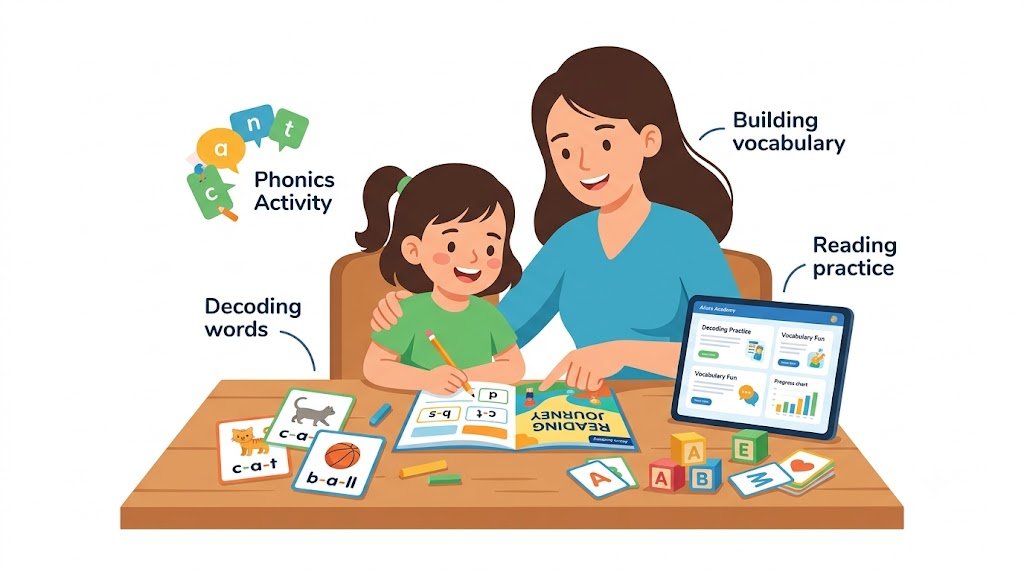
A supportive home reading environment built on explicit, systematic instruction can transform a child’s reading journey.
If you’ve heard the phrase “science of reading” and wondered what it really means—and, more importantly, how you can use it to help your child—you’re in the right place. The science of reading isn’t a single program or a passing trend; it’s a vast body of research from cognitive science, education, and linguistics that explains how the brain learns to read. Knowing what works, and having the right science of reading resources for parents, empowers you to support your child’s literacy growth with confidence.
Many families feel overwhelmed by the sheer number of phonics games, decodable books, and online platforms available. This guide cuts through the confusion. You’ll learn what the science of reading is, the five essential pillars of literacy, how to choose resources that actually align with the research, and common missteps to avoid. Whether your child is just starting out or needs extra practice, you’ll walk away with a clear plan and trusted places to start. For more on related topics, visit our blog.
What Is the Science of Reading and Why Does It Matter?
At its heart, the science of reading is a collection of findings from decades of research into how skilled reading develops. It tells us that reading is not a natural process like learning to speak; it must be taught explicitly and systematically. The brain connects sounds (phonemes) to written symbols (graphemes) and builds neural pathways that eventually make word recognition automatic.
Understanding this matters because it shifts the focus from guessing words based on pictures or context to systematically building the skills children need to decode any word they encounter. When parents have access to materials grounded in this science, they can avoid strategies that may inadvertently cause confusion—and instead use approaches that lead to lasting reading proficiency.
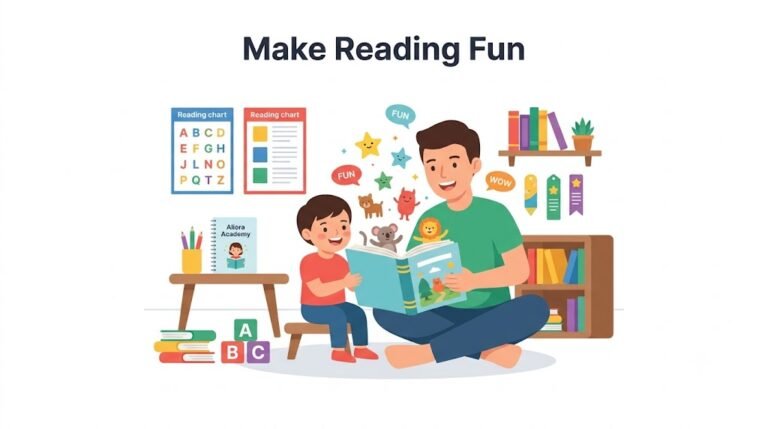
Multisensory activities, such as tracing letters while saying sounds, strengthen the brain connections needed for reading.
What Are the Core Components of Science of Reading Instruction?
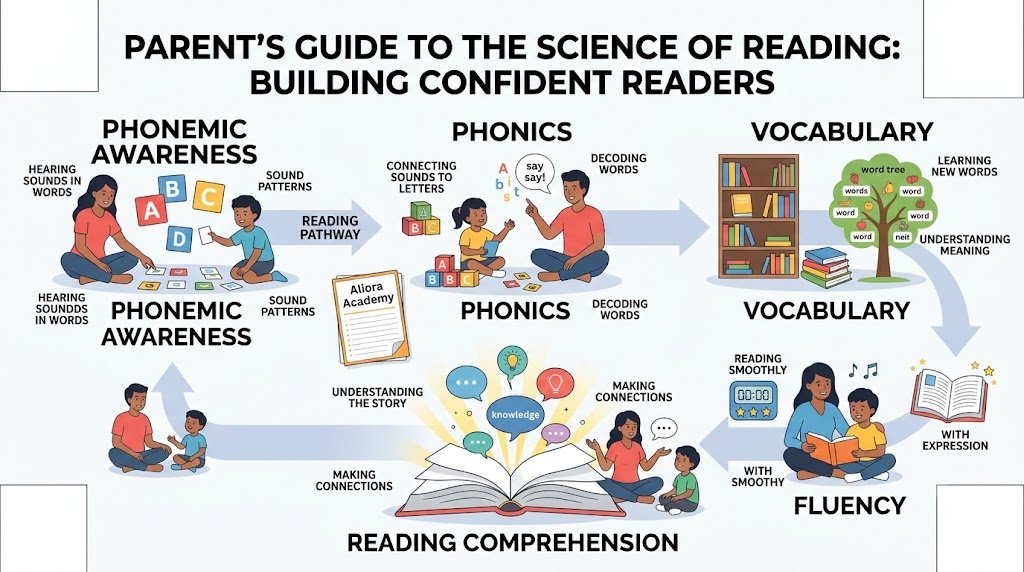
Any truly effective science of reading resource addresses the five foundational pillars. When you know what they are, you can evaluate whether a workbook, game, or app is actually research‑aligned or just uses the label.
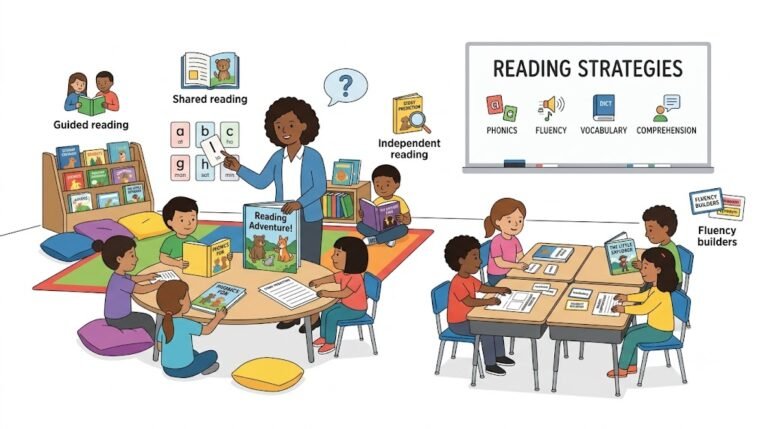
- Phonemic Awareness — The ability to hear, identify, and manipulate individual sounds in spoken words (e.g., recognizing that cat has three sounds: /k/ /a/ /t/).
- Phonics — The knowledge that letters and letter patterns represent these sounds, and the skill to blend them into words.
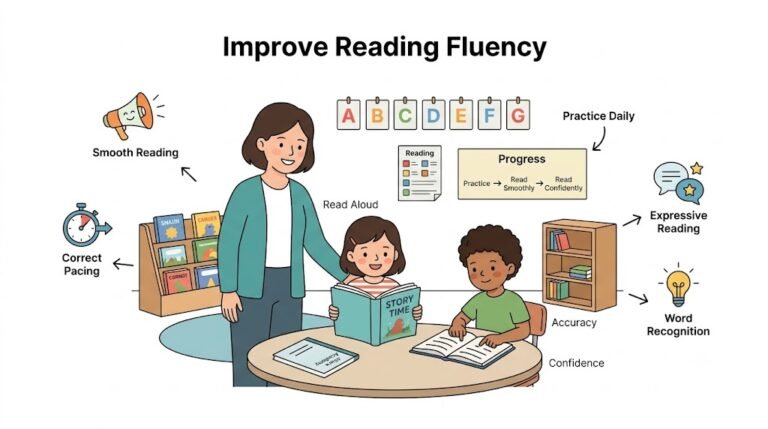
- Fluency — The bridge between word recognition and comprehension; reading with accuracy, appropriate speed, and expression. For practical ways to build this skill, see our reading fluency strategies.
- Vocabulary — Knowing the meaning of words, both in spoken and written language, is essential for understanding text.
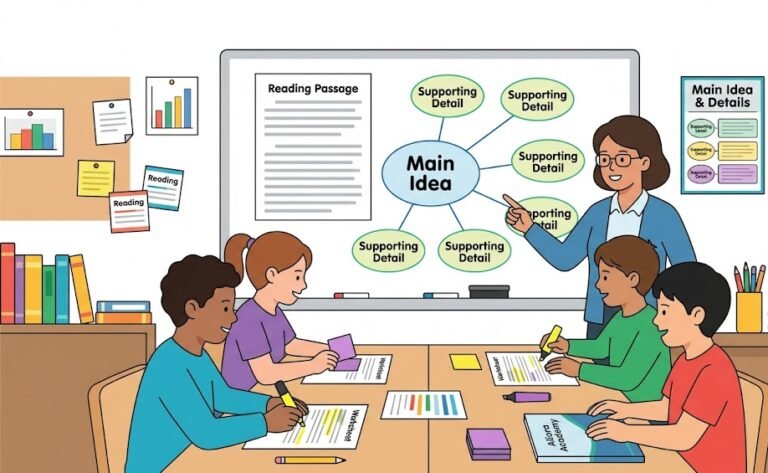
- Comprehension — The ultimate goal: the ability to understand, interpret, and think critically about what is read. Instruction should include skills like identifying the main idea and supporting details, which you can learn about in our guide on how to teach main idea and details.
Resources that skip or underemphasize phonemic awareness and phonics often leave children guessing, which can hinder long‑term reading success. Strong science of reading resources for parents explicitly teach these components in a sequential way.
Why Should Parents Care About the Science of Reading?
You don’t need to be a teacher to use evidence‑based practices at home. When you understand the “why” behind the activities, you can make informed choices instead of relying on trial and error. Research shows that children who receive explicit, systematic instruction at the start of their reading journey are far less likely to fall behind.
Caring about the science of reading also means you can spot resources that promise quick fixes but lack instructional depth. For instance, a workbook that mainly asks children to read and answer comprehension questions may not address the underlying decoding gaps. By contrast, a workbook focused on the best reading comprehension workbooks for elementary students that systematically builds skills can make a real difference.
How Can Parents Apply Science of Reading Principles at Home?
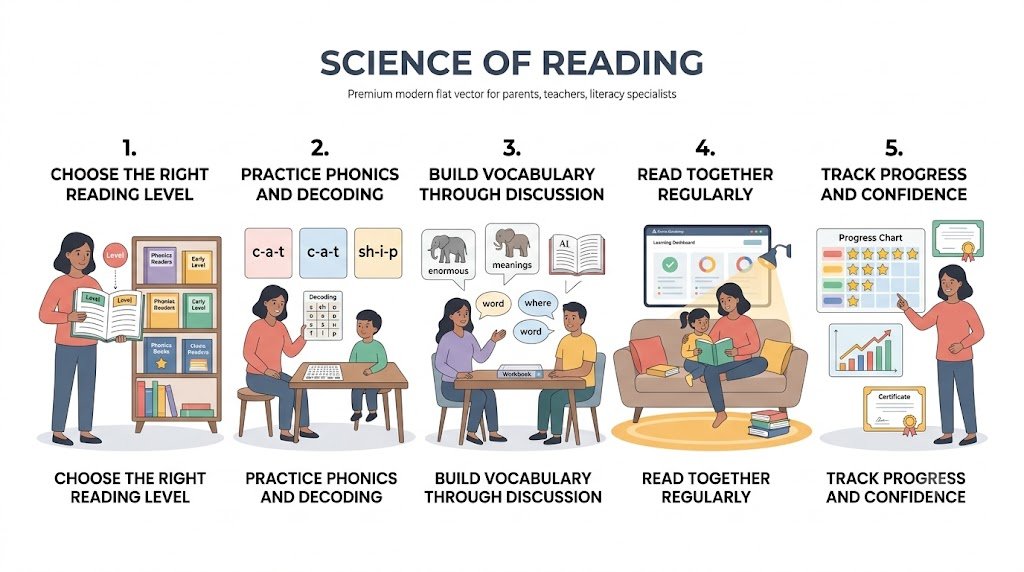
Applying the science of reading doesn’t require a complete curriculum overhaul. Small, intentional shifts in how you read and play with your child can reinforce crucial skills.
Play with Sounds Daily
Before ever opening a book, spend a few minutes playing oral games. Ask, “What sound do you hear at the beginning of moon?” or “Say sun without the /s/.” These activities build phonemic awareness, the bedrock of reading.
Use Decodable Books for Practice
Unlike predictable books that encourage guessing from pictures, decodable texts contain only words with phonics patterns your child has already learned. They build confidence and accuracy. Look for sets that progress in difficulty—exactly the kind of resource you’ll find in our reading collection.
Make Fluency a Game, Not a Race
Repeated reading of short, familiar passages builds automaticity. Time your child as they read a paragraph, then challenge them to beat their own time with expression, not just speed. For step‑by‑step ways to implement this, read our article on elementary reading strategies.
Connect Reading and Writing
Encoding (spelling) reinforces decoding. Have your child write words with the same phonics pattern they are learning. Magnetic letters, chalk, and sand trays make the practice tactile and fun.
Manipulatives like letter tiles turn abstract phonics rules into concrete, hands‑on learning.
How Do You Choose the Right Science of Reading Resources for Your Child?
Not everything labeled “science of reading” actually follows the research. Use the checklist below to evaluate books, apps, and workbooks before you buy.
| Look for | Be cautious of |
|---|---|
| Explicit, sequential phonics instruction | Heavy reliance on guessing from pictures or context |
| Decodable texts that match taught skills | Books that introduce many random sight words too early |
| Activities for phonemic awareness (blending, segmenting) | Only letter‑name drills without sound practice |
| Clear, uncluttered page designs | Overly busy or distracting graphics |
| Built‑in review and cumulative practice | Skills taught once and never revisited |
| Alignment with your child’s specific skill gaps | Generic “grade‑level” labels without diagnostic guidance |
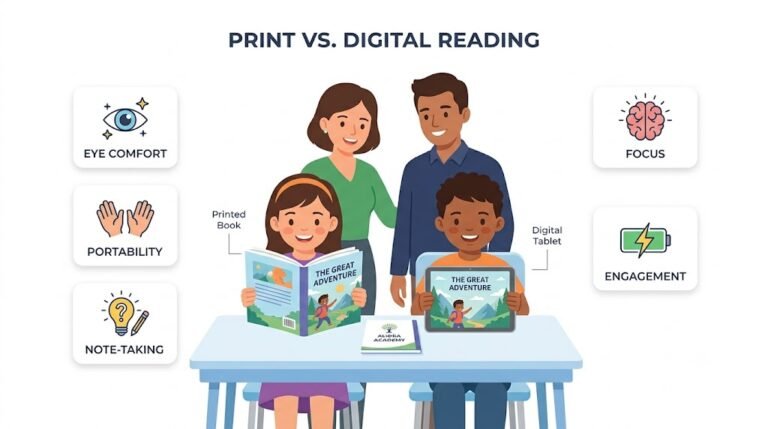
A related decision is whether to use print or digital resources. Both can be effective, but they serve different purposes. For a detailed look at the pros and cons, check out print vs. digital reading for kids to find the best fit for your family.
What Resources Help Parents Teach Each Pillar of Reading?
The most useful science of reading resources for parents target a specific skill area. Below is a practical framework to match resources to the need.
Resource Matching Guide
- Phonemic Awareness: Use sound boxes, rhyming cards, and oral blending games. Many kits designed for parents include step‑by‑step activities.
- Phonics & Decoding: Decodable book sets, magnetic letter boards, and systematic phonics workbooks. Browse our reading resources for curated options.
- Fluency: Timed repeated reading passages, reader’s theater scripts, and echo‑reading routines. For more ideas, see our fluency strategies.
- Vocabulary: Word‑building games, picture dictionaries, and themed read‑alouds. Pre‑teach key words before reading.
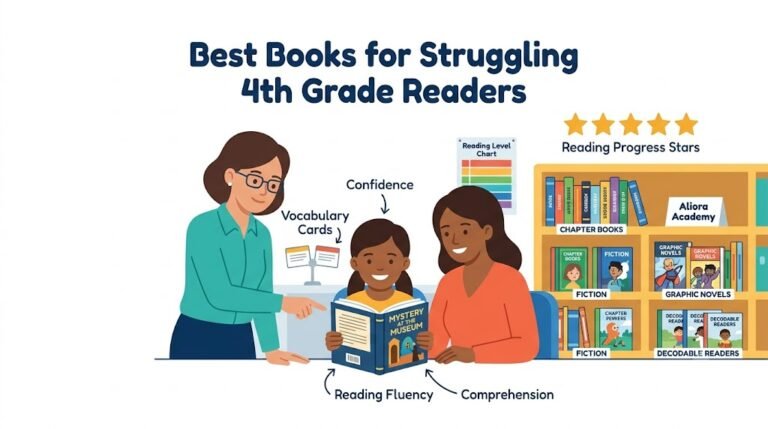
- Comprehension: Workbooks that teach main idea, inferencing, and text structure. Our best reading comprehension workbooks list is a great starting point. For older struggling readers, also explore high‑interest books for struggling 4th grade readers.
What Are Common Mistakes Parents Make When Using Science of Reading Resources?
Even with the best intentions, it’s easy to fall into habits that can slow progress. Recognizing these pitfalls helps you adjust quickly.
What Does Science of Reading Success Look Like at Home?
Example 1: Building Phonemic Awareness in Pre‑K
Situation: Elena, age 4, loves books but can’t hear individual sounds in words.
Challenge: Without phonemic awareness, later phonics instruction would be confusing.
Solution: Her parents used oral sound games—clapping syllables in names, singing rhyming songs, and playing “I spy” with sounds. They incorporated these into car rides and bath time with no pressure.
Learning Outcome: Within two months, Elena could reliably segment three‑sound words. She entered kindergarten ready for formal phonics.
Takeaway: Phonemic awareness can be developed without worksheets—playful, spoken activities are powerful.
Example 2: Filling Phonics Gaps in Second Grade
Situation: Mason, age 7, reads slowly and guesses words based on the first letter.
Challenge: His previous reading instruction relied heavily on context clues, leaving him with weak decoding skills.
Solution: His parents used a sequential decodable book set, paired with a simple phonics workbook. Each evening they reviewed one new pattern and read the matching book. They also used magnetic letters to build and change words.
Learning Outcome: After a few months, Mason stopped guessing and began sounding out unfamiliar words automatically. His reading confidence soared.
Takeaway: Systematic practice with decodable texts can quickly close decoding gaps, even for children who have developed guessing habits.
Example 3: Boosting Comprehension with Workbooks
Situation: Ava, age 9, can read fluently but struggles to explain what she’s read. She often misses the main point.
Challenge: Her reading instruction focused heavily on speed and accuracy, leaving comprehension skills underdeveloped.
Solution: Her parents chose a workbook series that explicitly taught how to find the main idea and supporting details, as recommended in this guide. They completed one short passage together each afternoon, discussing the questions aloud.
Learning Outcome: Over three months, Ava learned to pause and summarize as she read, dramatically improving her book report grades and her enjoyment of stories.
Takeaway: Comprehension is a skill that can be taught directly—using structured resources speeds up progress.
Frequently Asked Questions About Science of Reading Resources for Parents
What makes a reading resource “science of reading aligned”?
It explicitly and systematically teaches phonemic awareness and phonics, uses decodable texts for early practice, and builds fluency, vocabulary, and comprehension in a connected way. It avoids strategies that encourage guessing or memorizing whole words as the primary method of word recognition.
How early should I start using science of reading resources?
You can begin oral phonemic awareness activities (like rhyming and sound games) around age 3 or 4. Formal phonics instruction is typically introduced in kindergarten, but every child is different—follow your child’s readiness and interest rather than a strict age.
Can I use science of reading resources if my child is already in upper elementary?
Absolutely. Older struggling readers benefit from systematic phonics and fluency work just as much as beginners. The key is finding resources with content that respects their age and interests—look for decodable texts written for older students and comprehension materials like those covered in our list for struggling 4th grade readers.
Do I need to buy an expensive program?
No. Many effective resources are affordable or even free. A set of decodable books, a simple phonics workbook, and homemade phonemic awareness games can go a long way. The most important factors are consistency and using research‑backed methods, not the price tag.
How do I keep my child motivated during phonics practice?
Keep sessions short (10–15 minutes) and varied. Mix in hands‑on materials like letter magnets, sand trays, and word‑building games. Celebrate small wins and always end on a positive note. For more ideas, explore our article on reading motivation for kids.
Are digital reading apps compatible with the science of reading?
Some are. Look for apps that provide systematic, explicit phonics instruction, offer decodable texts, and adjust to your child’s skill level. However, even the best app works best when paired with real‑world discussion and guidance from an adult. For a complete comparison, see our print vs. digital reading guide.
What if my child’s teacher uses a different approach?
Many schools are in transition. You can respectfully share what you’re doing at home and offer to support classroom learning. What matters most is that your child receives consistent, research‑based practice. Feel free to contact us if you need help navigating these conversations or finding the right tools.
Empowering Your Child with Research‑Backed Reading Support
The science of reading demystifies what it takes to become a skilled reader. With the right science of reading resources for parents, you can transform anxiety‑filled reading time into focused, effective practice that builds real skill. It isn’t about being perfect—it’s about being intentional.
Whether you start with phonemic awareness games, invest in a set of decodable books, or work through a comprehension workbook together, every step rooted in the research moves your child closer to reading confidence. Visit our reading resources to find materials that match your child’s current stage, check our homepage for new arrivals, or reach out with your questions. Your partnership with the science of reading can make all the difference.