Best Reading Comprehension Workbooks for Elementary Students
An expert guide to choosing the right reading comprehension workbook for your elementary learner—whether for classroom, homeschool, or at-home practice.
Browse Reading Resources
Choosing the right reading comprehension workbook can make all the difference in building your child's confidence and understanding.
Reading comprehension is the cornerstone of academic success. When a child understands what they read, every subject becomes more accessible—from science and social studies to math word problems. Yet finding the best reading comprehension workbook for elementary students can feel overwhelming. With so many publishers, grade levels, and teaching approaches available, how do you know which one will actually work for your child?
This guide is designed to answer that question thoroughly. We've researched and reviewed nine outstanding workbooks from trusted educational publishers—examining their strengths, limitations, and ideal use cases. Whether you're a parent supporting a child at home, a teacher stocking a classroom, or a homeschool educator building a curriculum, you'll find clear, balanced information to help you make a confident decision.
Before diving into the recommendations, we encourage you to explore our blog for additional guidance on reading development and literacy instruction. Understanding the broader context of how children learn to read will help you get the most out of any workbook you choose.
Quick Comparison of Recommended Workbooks
| Workbook | Best For | Grade | Pages | Main Strength |
|---|---|---|---|---|
| Evan-Moor Daily Reading Comprehension | Daily structured practice | 1 | Reproducible | Science of Reading aligned; 30 weeks of lessons |
| Spectrum Reading Workbook | Comprehensive grade-level coverage | 4 | 192 | Parent support pages and IXL online practice |
| Evan-Moor Reading Fundamentals | Deep skill instruction | 4 | 176 | 35 skill-based units with assessments |
| Scholastic Success Reading | Quick supplemental practice | 4 | 48 | High-interest stories; easy directions |
| Evan-Moor Skill Sharpeners | Integrated skills practice | 3 | Full-color | Combines comprehension with vocab and grammar |
| Carson Dellosa Skill Builders | Upper elementary & middle school | 6 | 80 | Compact size; 30+ engaging passages |
| Kumon Grade 4 Reading | Incremental confidence building | 4 | 80 | Step-by-step progression; colorful exercises |
| Teacher Created Resources | Test prep & targeted practice | 3 | 48 | Focused question formats for assessments |
| Flash Skills Reading | Motivational learning | 4–5 | 64 | Flash cards and completion certificate |
What Should You Look for Before Buying a Reading Comprehension Workbook?
Not all workbooks are created equal. Before purchasing, it's important to understand the features that separate an effective resource from a mediocre one. Here are the key factors to consider.
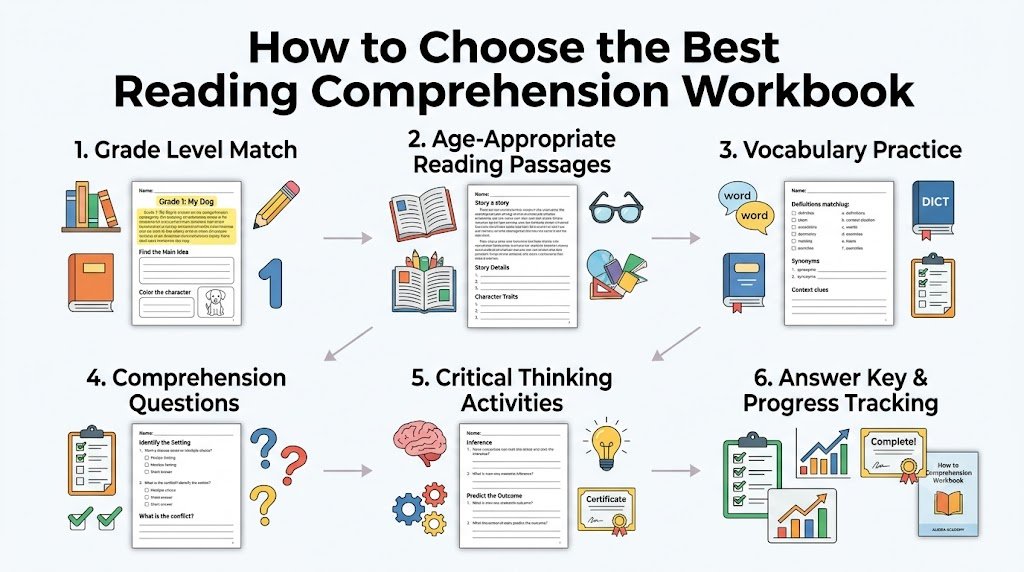
Essential Buying Considerations
- Variety of passage types — The workbook should include both fiction and nonfiction texts across multiple genres, exposing children to different text structures and purposes.
- Clear skill progression — Lessons should move from simpler tasks like literal recall to more complex skills like making inferences and drawing conclusions.
- Age-appropriate content and design — Passages should match the interests and reading level of the target grade. Layouts should be clean, fonts readable, and illustrations supportive rather than distracting.
- Answer key with explanations — A complete answer key helps adults check work and, ideally, explain why an answer is correct—turning mistakes into learning opportunities.
- Parent or teacher support pages — Guidance on how to use the workbook effectively can be invaluable, especially for parents who may not have formal teaching backgrounds.
- Alignment with educational standards — Workbooks correlated to state or national standards ensure the skills practiced are grade-appropriate and relevant to classroom expectations.
- Reproducibility for classrooms — For teachers, workbooks that allow copying can significantly extend the value of a single purchase across multiple students.
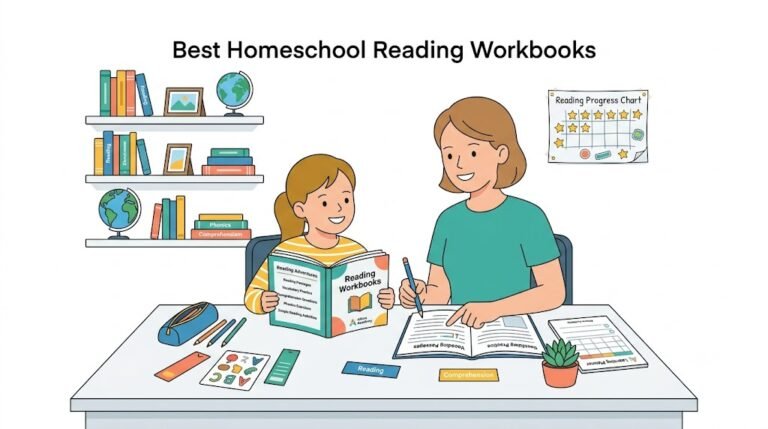
Consistent, focused workbook practice helps elementary students build the comprehension skills essential for lifelong learning.
Top 9 Reading Comprehension Workbooks for Elementary Students
After careful research and analysis of educator feedback, parent reviews, and curriculum alignment, here are nine outstanding workbooks—ordered from strongest recommendation to more specialized options. Each review is original and balanced, highlighting both strengths and limitations.
Evan-Moor Daily Reading Comprehension, Grade 1
by Evan-Moor Educational Publishers
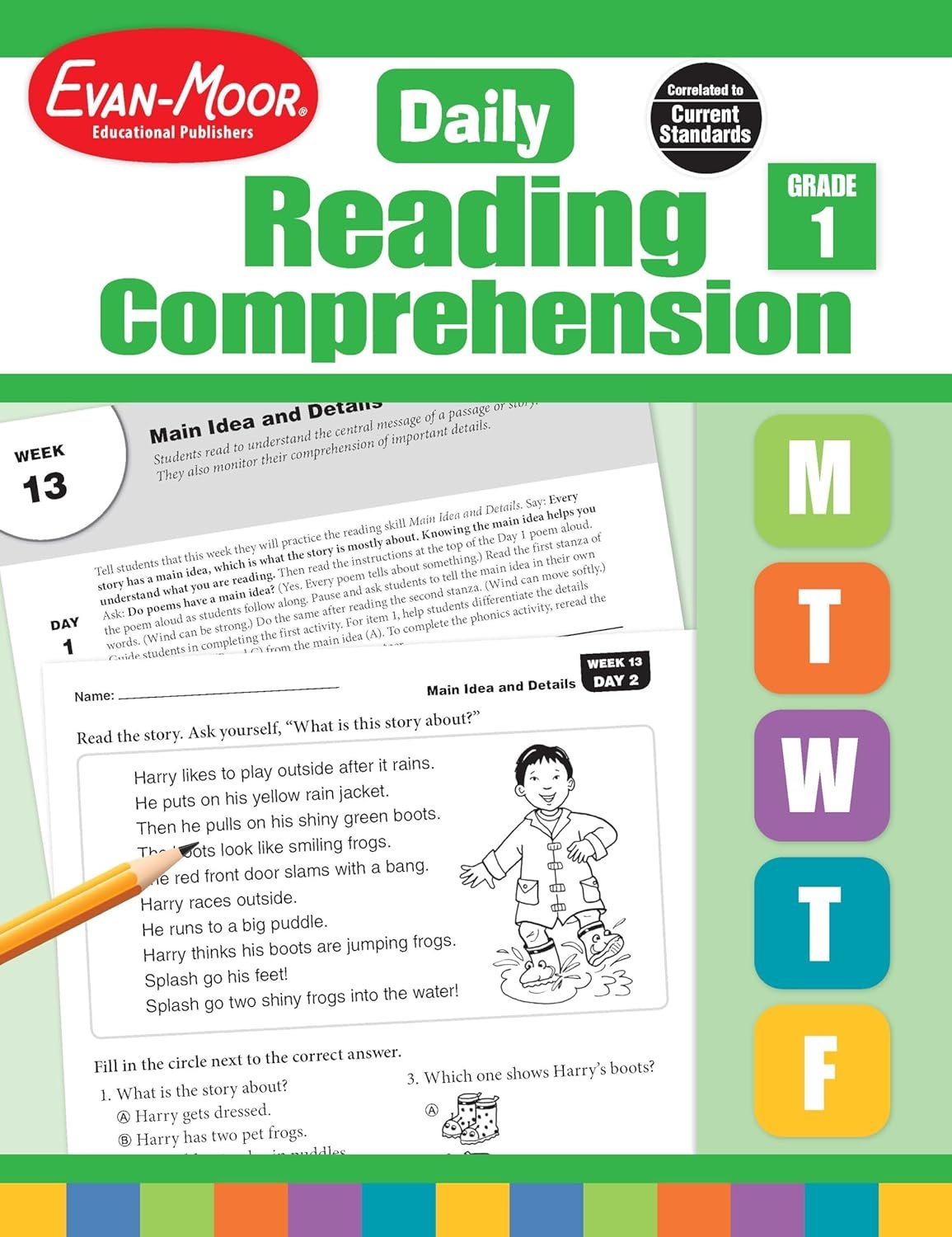
This teacher-favorite resource offers 30 weeks of direct instruction covering main idea and details, sequencing, compare and contrast, making predictions, and author's purpose. With 150 original fiction and nonfiction passages, it combines comprehension practice with phonics, sight word, and vocabulary development—all aligned with Science of Reading pillars.
- 30 weeks of structured daily lessons
- Science of Reading aligned
- Reproducible pages for classroom use
- Visual aid pages for metacognition
- Multiple-choice format prepares for assessments
- Primarily multiple-choice format
- Teacher's edition may require copying
- Best for grade 1; not suitable for older students
Why we recommend it: This is our top pick for first-grade comprehension because it combines daily structure with research-backed instruction. The 30-week format takes the guesswork out of lesson planning, and the reproducible pages make it a cost-effective choice for classrooms and homeschool co-ops. It's rare to find a workbook that addresses both comprehension and foundational phonics so effectively in one resource. For additional early reading support, explore our reading resources collection.
Best use cases: Daily morning work in classrooms, structured homeschool routines, and intervention for first graders who need systematic comprehension practice.
View on Amazon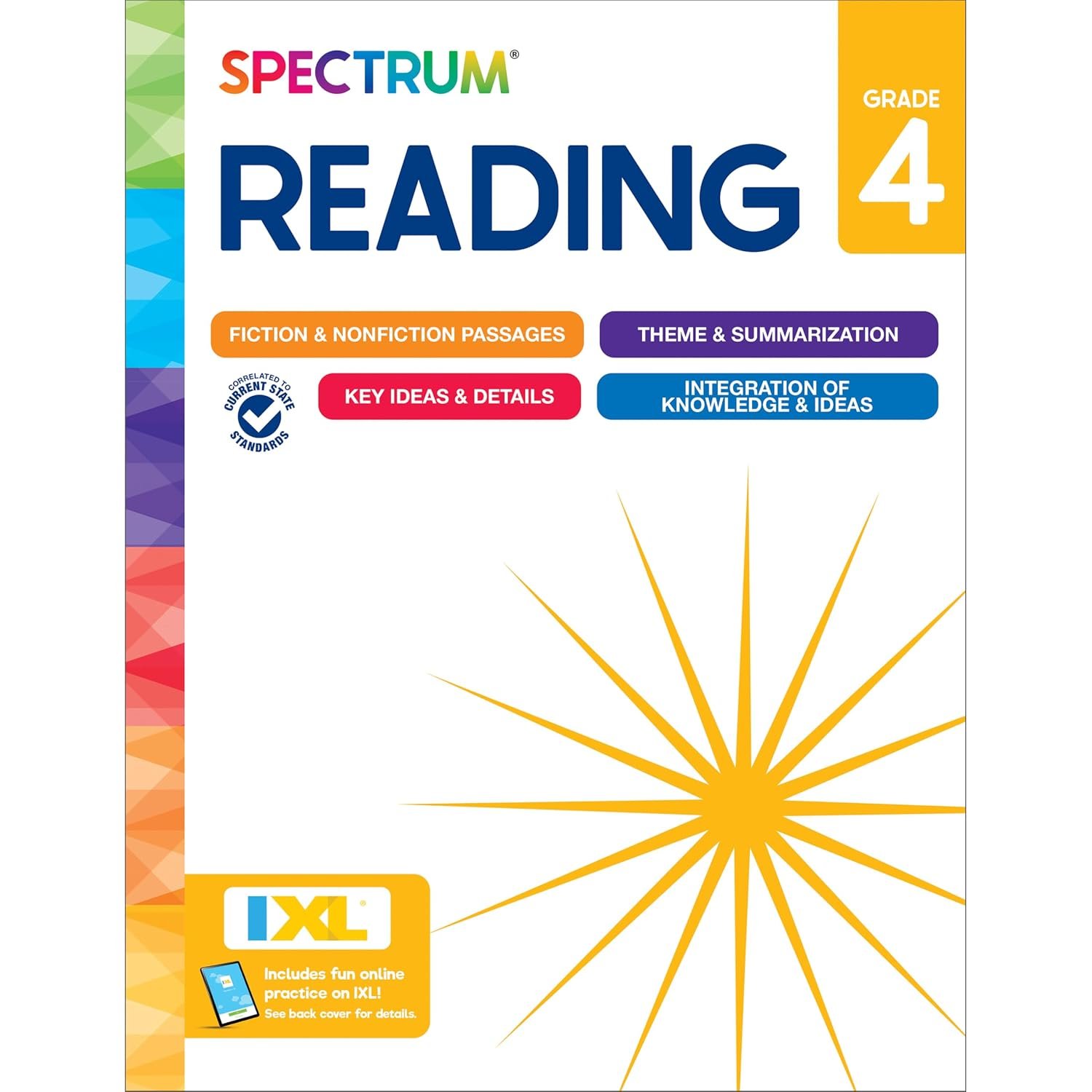
Spectrum Reading 4th Grade Workbook
by Spectrum & Carson Dellosa Education
This comprehensive workbook covers fiction and nonfiction passages with activities focused on identifying themes, summarizing text, and critical thinking. Parent support pages at the beginning of each chapter provide helpful definitions, tools, and tips. The book also includes access to online practice through IXL, extending learning beyond the printed page.
- 192 pages of comprehensive practice
- Parent support pages with tips and definitions
- Includes IXL online practice access
- Lesson reviews and answer key included
- Correlated to state standards
- Focused primarily on grade 4
- May be lengthy for reluctant readers
- Online practice requires internet access
Why we recommend it: Spectrum has been a trusted name in educational workbooks for over 20 years, and this edition shows why. The combination of robust parent support, standards alignment, and digital practice through IXL makes it an excellent value. For parents who want to be actively involved in their child's learning, the chapter-by-chapter guidance is particularly helpful. Our guide on improving 3rd grade reading comprehension offers complementary strategies that pair well with this workbook.
Best use cases: Homeschool curriculum supplementation, after-school practice for fourth graders, and summer learning to prevent skill regression.
View on Amazon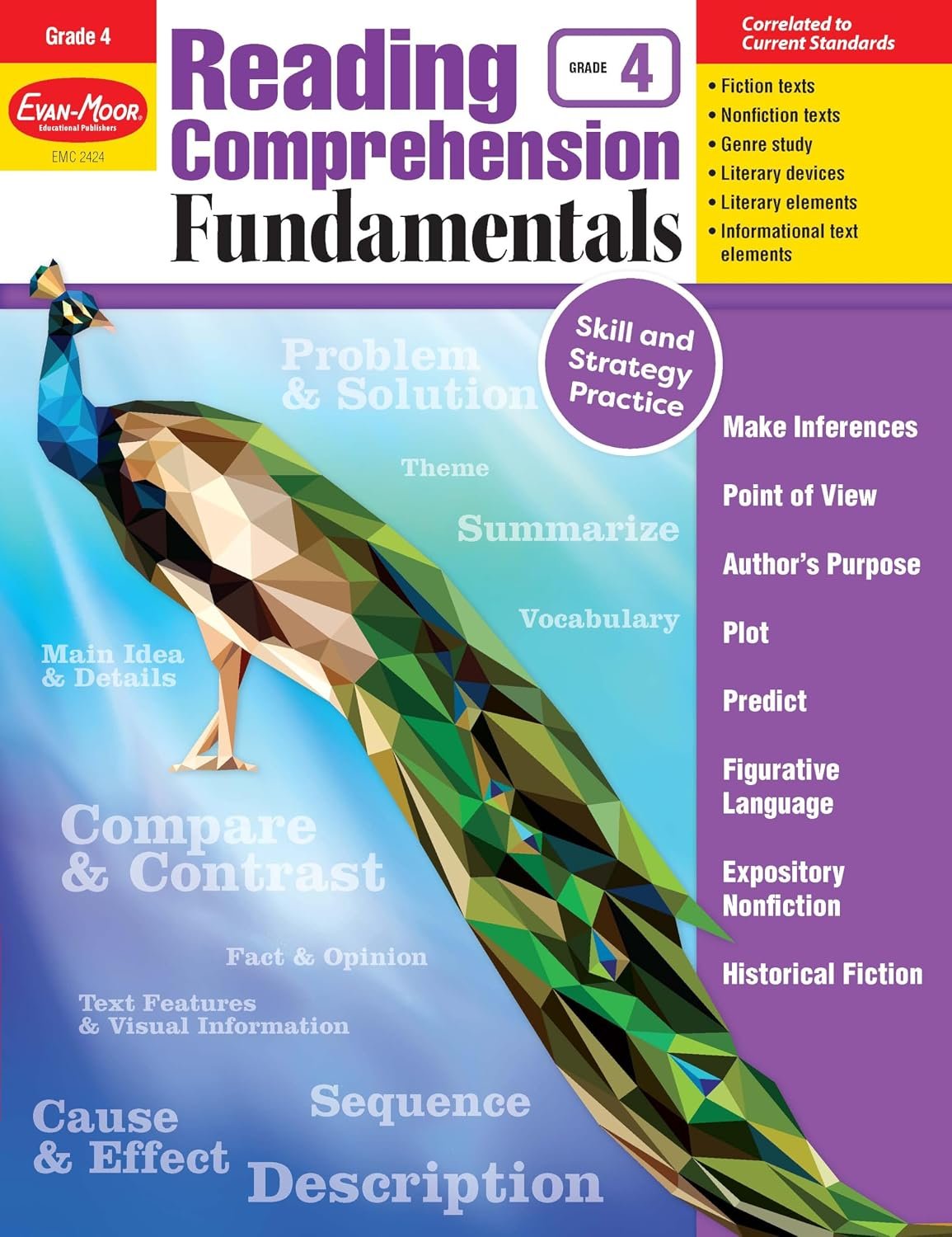
Evan-Moor Reading Comprehension Fundamentals, Grade 4
by Evan-Moor Educational Publishers
This teacher's edition includes 35 skill-based units covering nonfiction and fiction comprehension. Topics include text features, cause and effect, character analysis, theme, point of view, figurative language, and more. The "teach, practice, and assess" structure makes it easy to integrate into any curriculum, with ample reading experiences and varied response formats.
- 35 comprehensive skill-based units
- Teaches, practices, and assesses each skill
- Correlated to state and IB standards
- Varied response formats build test-taking skills
- Covers both fiction and nonfiction deeply
- Teacher's edition format may feel institutional
- Requires more adult guidance than independent workbooks
- Fewer consumer reviews available
Why we recommend it: For educators and parents who want a genuinely thorough approach, this workbook stands out. Rather than just providing practice, it teaches each skill explicitly before giving students a chance to apply it. The 35-unit structure allows for deep, focused work on specific comprehension strategies, making it ideal for students who need more than surface-level practice. Explore our guide to improving reading fluency to understand how fluency and comprehension work together.
Best use cases: Classroom literacy centers, homeschool curriculum spine, and targeted intervention for students struggling with specific comprehension skills.
View on Amazon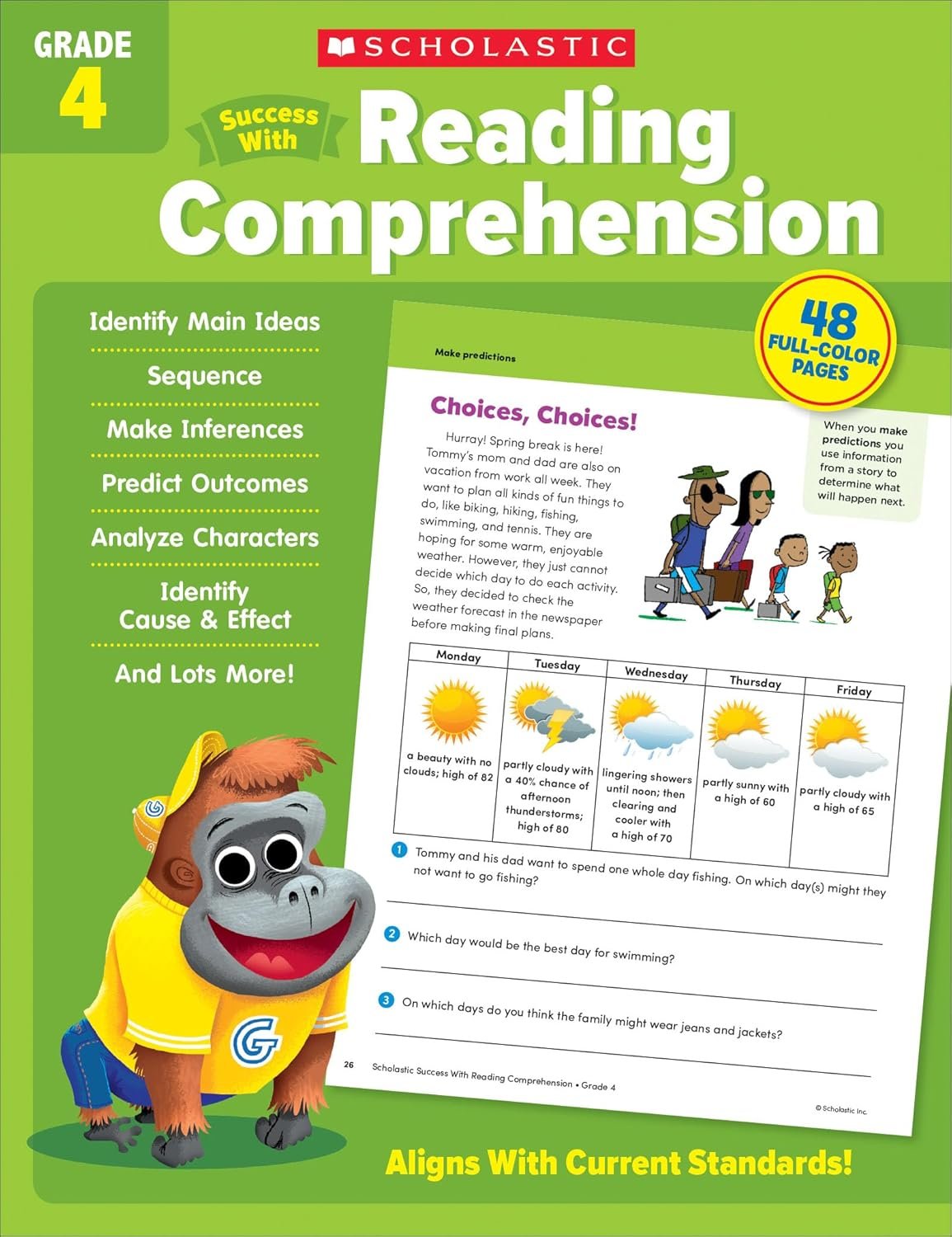
Scholastic Success with Reading Comprehension Grade 4
by Scholastic Teaching Resources
With more than 40 ready-to-use skill-building practice pages, this compact workbook focuses on main idea and details, following directions, and drawing conclusions. The exercises are engaging, easy to follow, and perfect for reinforcing classroom learning or providing extra practice at home without overwhelming the student.
- High-interest stories keep children engaged
- Easy-to-follow directions
- Compact and unintimidating length
- Affordable and accessible
- Strong brand reputation from Scholastic
- Only 48 pages—limited practice depth
- No parent or teacher support pages
- May not be sufficient as a standalone resource
Why we recommend it: Sometimes less is more. For busy families or teachers who need focused, no-frills practice, Scholastic Success delivers exactly what's needed without overwhelming the child. The high-interest stories and clear directions make it especially suitable for reluctant readers who might balk at thicker workbooks. It's an excellent supplement to a broader reading program. For ideas on keeping reading enjoyable, check out our fun kids reading activities.
Best use cases: After-school reinforcement, summer bridge practice, and quick skill checks before assessments.
View on Amazon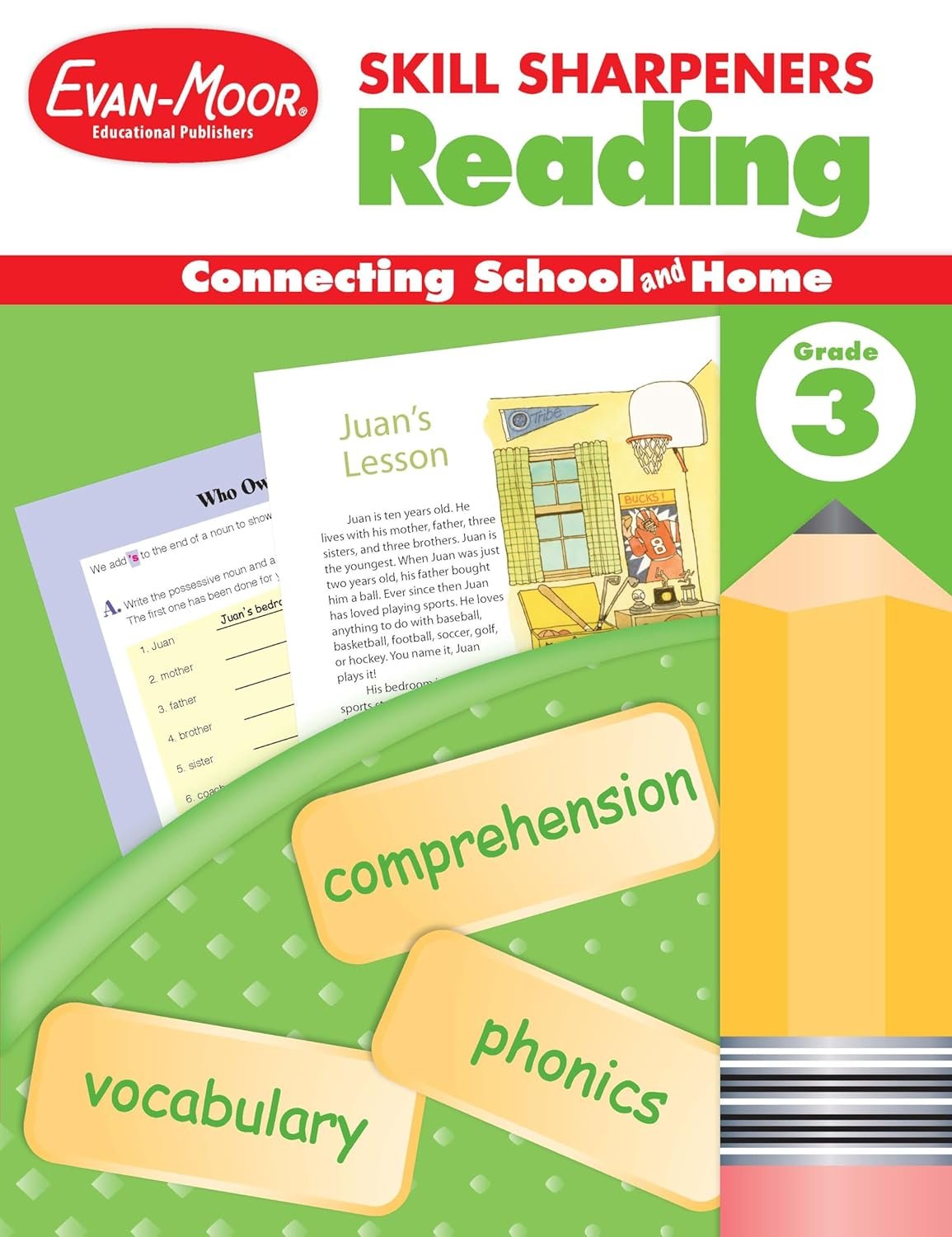
Evan-Moor Skill Sharpeners Reading Workbook, Grade 3
by Evan-Moor Educational Publishers
Featuring 17 motivating fiction and nonfiction stories, this workbook provides comprehension questions, vocabulary exercises, and sequencing activities for every story. Additional skills addressed include main idea, parts of speech, synonyms and antonyms, alphabetical order, and contractions. A free downloadable teaching guide is included.
- Integrates comprehension with vocabulary and grammar
- Full-color, visually engaging design
- Free downloadable teaching guide
- 17 high-interest fiction and nonfiction stories
- Sequencing activity for every story
- Grade 3 only—limited range
- May not provide enough depth for struggling readers
- Fewer stories than some competitors
Why we recommend it: This workbook excels at combining multiple literacy skills into one engaging package. For homeschool families wanting an all-in-one resource or teachers looking for integrated practice, Skill Sharpeners delivers. The full-color design and diverse story topics—from leprechauns to Harriet Tubman—keep children interested while they build essential skills. Visit our homepage to explore more integrated learning resources.
Best use cases: Homeschool language arts supplementation, classroom literacy centers, and integrated reading-vocabulary-grammar practice.
View on Amazon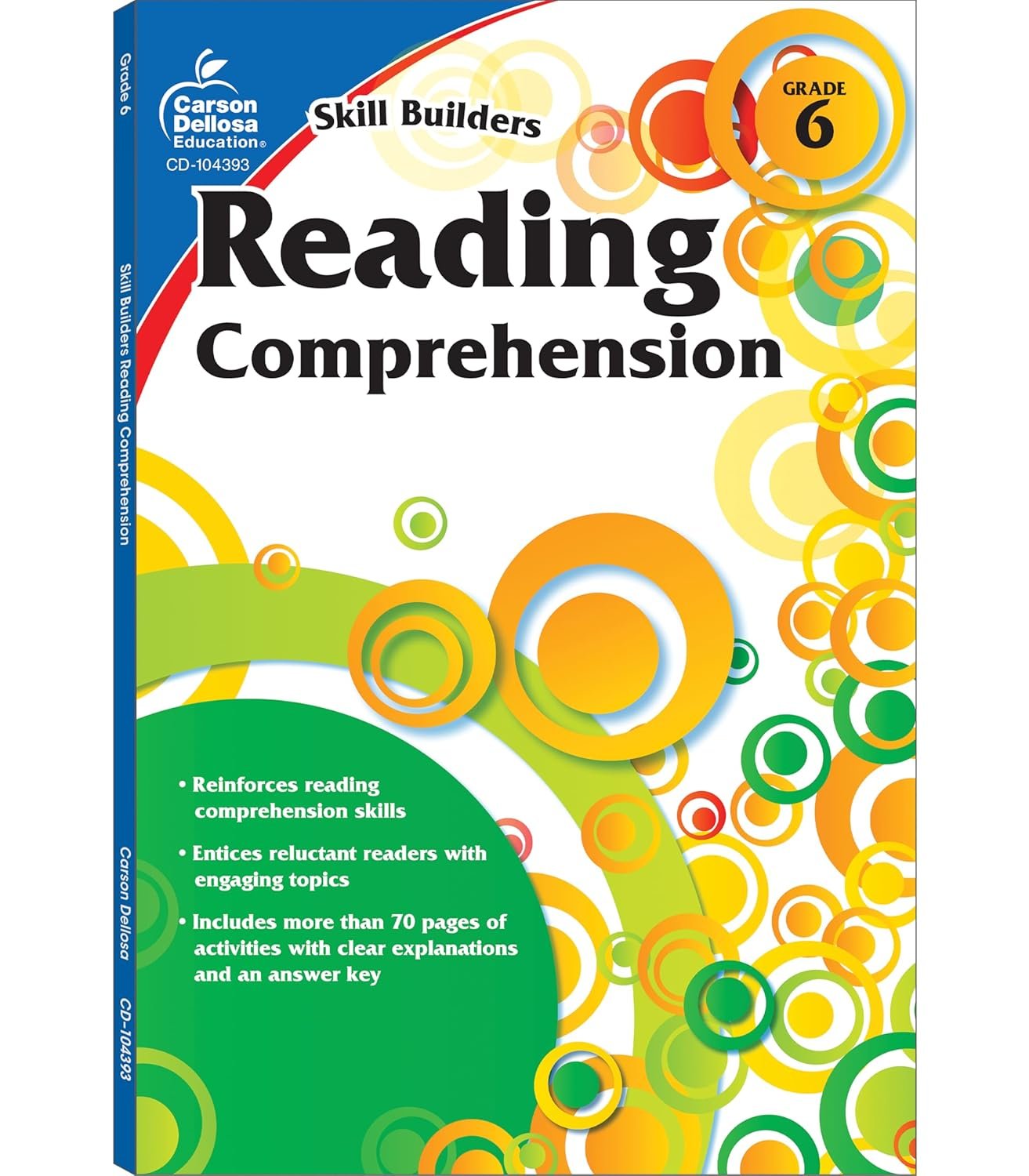
Carson Dellosa Skill Builders Reading Comprehension 6th Grade
by Carson Dellosa Education
Designed for upper elementary and middle school students, this compact 6" x 9" workbook includes over 70 pages of reading activities and 30+ reading passages targeting vocabulary, inference, main idea, and more. The smaller trim size makes it portable and approachable for older students who may resist traditional workbook formats.
- 30+ engaging reading passages
- Compact size appeals to older students
- Targets vocabulary, inference, and main idea
- Answer key included
- Strong brand with 45+ years of experience
- Small trim size means less writing space
- Grade 6 focus limits younger student applicability
- No parent support pages
Why we recommend it: For sixth graders—and advanced fifth graders ready for more challenge—this workbook hits the sweet spot between rigor and accessibility. The compact size reduces the intimidation factor for older struggling readers, while the passage variety keeps practice fresh. With over 4,000 ratings, it's one of the most reviewed comprehension workbooks available, reflecting consistent customer satisfaction. For more upper-elementary resources, browse our reading resources collection.
Best use cases: Middle school preparation, advanced fifth-grade practice, and portable learning for travel or tutoring sessions.
View on Amazon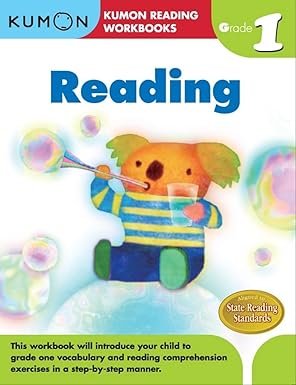
Kumon Grade 4 Reading
by Kumon Publishing
Kumon's signature step-by-step approach helps children gain confidence through incremental progression. This workbook combines phonics and whole-language instruction with colorful, engaging exercises. The manageable 80-page length makes it less intimidating for reluctant readers while still providing meaningful practice with grade-appropriate vocabulary and comprehension activities.
- Incremental, confidence-building approach
- Combines phonics and whole-language methods
- Colorful, engaging exercises
- Small business brand
- Strong reputation in supplemental education
- 80 pages—less comprehensive than some alternatives
- Kumon method may feel repetitive to some learners
- Primarily independent work with limited adult guidance
Why we recommend it: Kumon's methodology has helped millions of children worldwide, and this reading workbook embodies their philosophy of small, achievable steps. For children who feel overwhelmed by larger workbooks or who need to rebuild confidence after struggling, the gentle progression and colorful presentation make practice feel manageable. It's an excellent choice for building momentum. Learn more about supporting struggling readers in our guide to helping a child who struggles with reading.
Best use cases: Confidence building for reluctant readers, summer learning, and supplemental practice in a Kumon-style incremental approach.
View on Amazon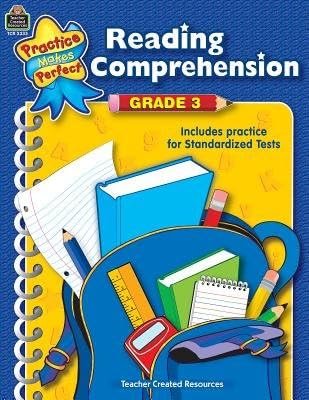
Teacher Created Resources Practice Makes Perfect: Reading Comprehension Grade 3
by Teacher Created Resources Staff
This focused workbook targets essential skills including reading for understanding, answering who-what-when-where-why-how questions, identifying main idea and supporting details, and making inferences and predictions. Test practice pages and answer keys are included, making it a practical choice for assessment preparation and targeted skill reinforcement.
- Targeted test-prep format
- Practice with fiction, nonfiction, and informational text
- Answer keys included
- Great for independent work or homework
- Affordable and focused
- Only 48 pages
- Heavily focused on test-style questions
- Less emphasis on creative or critical thinking
Why we recommend it: When assessment season approaches, having a workbook specifically designed for test preparation can reduce anxiety and improve performance. This resource from Teacher Created Resources does exactly that—familiarizing students with common question formats while reinforcing core comprehension skills. It's not designed to be a complete curriculum, but as targeted test prep, it excels. Visit our blog for more test-preparation strategies and tips.
Best use cases: Standardized test preparation, homework assignments, and focused practice on question-answering strategies.
View on Amazon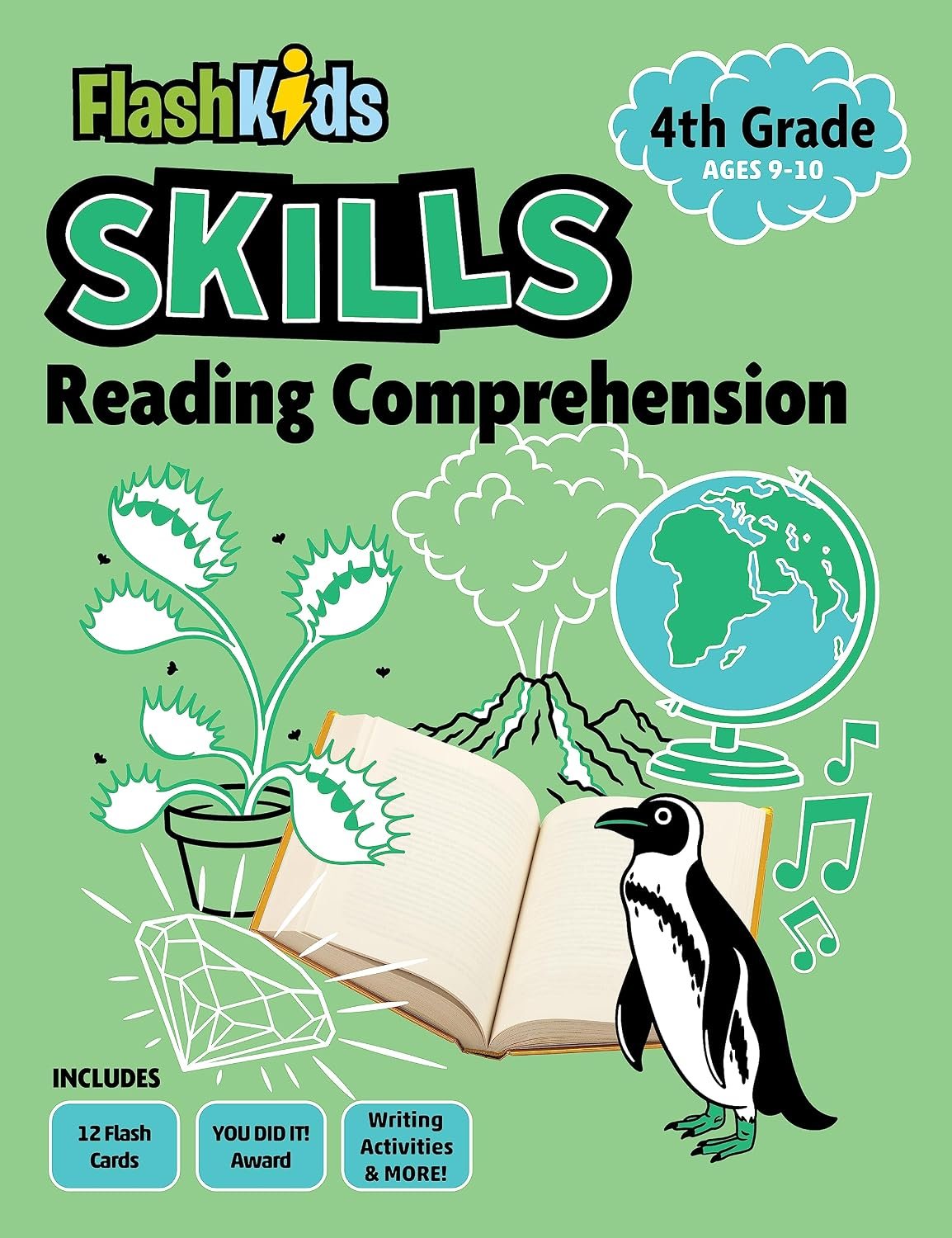
Reading Comprehension: Grade 4 (Flash Skills)
by Flash Kids Editors
This colorful workbook includes 28 different passages and activities, plus 12 vocabulary flash cards and a completion certificate. The full-color illustrations and lighthearted approach make reading practice feel fun rather than tedious. A letter to parents and caregivers provides helpful guidance for supporting learning at home.
- Full-color illustrations throughout
- Includes 12 vocabulary flash cards
- Completion certificate motivates children
- Lighthearted, approachable tone
- Parent letter with guidance included
- Lower bestseller rank than competitors
- 64 pages—moderate depth
- Flash cards may be lost over time
Why we recommend it: For children who view reading as a chore, the Flash Skills workbook offers a refreshing change of pace. The gamified elements—flash cards, certificates, colorful illustrations—lower emotional barriers and make practice feel rewarding. While it may not be the most academically rigorous option, its motivational design can be exactly what a reluctant reader needs to re-engage with comprehension practice. For more engaging reading ideas, explore our fun kids reading activities.
Best use cases: Motivating reluctant readers, summer learning with a lighter touch, and supplementary practice that feels like a treat rather than homework.
View on Amazon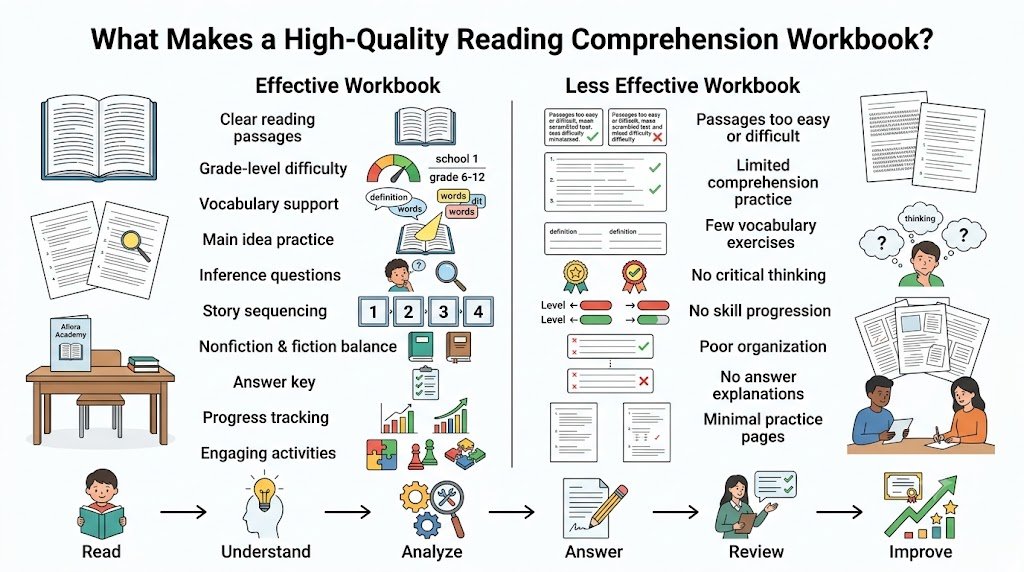
Building a small collection of trusted workbooks gives you flexibility to address different skills as your child's needs evolve throughout the school year.
Real-Life Examples of Workbook Success
Example 1: The Daily Practice Routine
Situation: Emma, age 6, is in first grade. Her teacher mentioned she needs more practice with sequencing and retelling stories after read-alouds.
Challenge: Emma can read simple sentences but often cannot explain what happened in the story afterward. Her parents want a structured resource they can use at home without overwhelming her after a full school day.
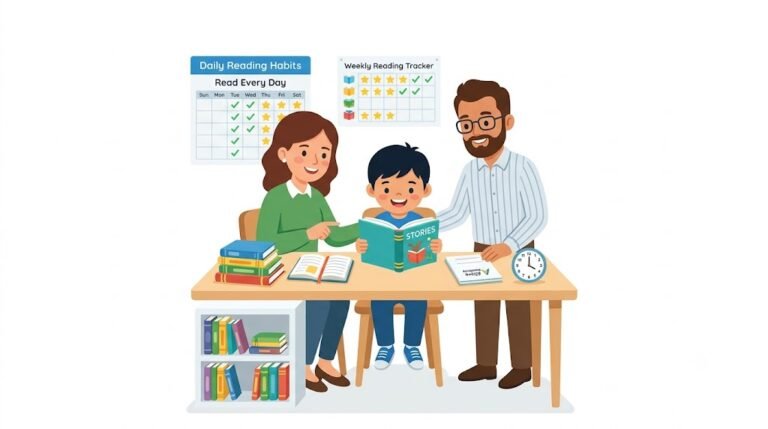
Solution: Her parents chose the Evan-Moor Daily Reading Comprehension Grade 1 workbook. They committed to one short lesson each morning before school—just ten minutes of focused practice. The consistent routine helped Emma know what to expect, and the variety of passages kept her interested without fatigue.
Learning Outcome: After eight weeks, Emma's teacher reported noticeable improvement in her ability to retell stories in sequence. The daily, bite-sized practice had built her comprehension stamina without causing frustration or resistance.
Takeaway: Short, consistent sessions with a well-structured workbook often outperform longer, irregular study sessions—especially for younger elementary students who have limited attention spans.
Example 2: Bridging the Gap in Upper Elementary
Situation: Marcus, age 10, is in fourth grade. His reading comprehension scores are below benchmark, and he avoids reading whenever possible, calling books boring.
Challenge: Marcus can decode words at grade level but struggles to understand what he reads, particularly with nonfiction passages. He needs to build inferential thinking skills and learn to identify main ideas in informational texts—skills that affect his performance in science and social studies too.
Solution: His parents selected the Spectrum Reading 4th Grade Workbook for daily practice and paired it with Evan-Moor Reading Comprehension Fundamentals for deeper weekend instruction. They also incorporated high-interest topics Marcus already enjoyed—animals and space—by finding supplementary articles online that aligned with the workbook skills.
Learning Outcome: Over four months, Marcus's comprehension scores improved by a full grade level. More importantly, he began to approach nonfiction texts with strategies rather than avoidance. The combination of daily practice and deeper weekend instruction gave him both repetition and depth.
Takeaway: Sometimes one workbook isn't enough. Pairing a comprehensive practice workbook with a skill-focused instructional resource can address multiple layers of need simultaneously—especially for students with significant gaps.
Example 3: The Reluctant Reader Who Needed Confidence
Situation: Ava, age 8, is in third grade and has decided she hates reading. She's capable but lacks confidence and resists any activity that feels like schoolwork.
Challenge: Ava's parents need a workbook that doesn't feel like a workbook—something visually appealing with a sense of fun and accomplishment built in. Pushing a traditional, text-heavy resource would likely increase her resistance.
Solution: They chose the Flash Skills Reading Comprehension Grade 4 workbook for its full-color illustrations, engaging passages, and motivational features like the completion certificate and vocabulary flash cards. They framed it as a "reading challenge" rather than homework, and Ava responded to the gamified elements with genuine enthusiasm.
Learning Outcome: Ava completed the entire workbook over two months, proudly displaying her certificate on the refrigerator. Her attitude toward reading shifted from resistance to cautious willingness, and she began picking up books independently for the first time in over a year.
Takeaway: For reluctant readers, the format and presentation of a workbook can matter as much as its content. Motivational elements like certificates, flash cards, and colorful illustrations can lower emotional barriers and create positive reading associations.
Common Mistakes to Avoid When Using Reading Comprehension Workbooks
Frequently Asked Questions About Reading Comprehension Workbooks
How do I know which grade-level workbook to buy for my child?
Start by understanding your child's instructional reading level, not just their enrolled grade. Many children work comfortably at a level slightly below or above their grade placement. If possible, review sample pages online or consult with your child's teacher. When uncertain, choosing a workbook at the lower end of the range and moving up is safer than starting too high and causing discouragement.
Can a workbook replace reading real books?
No. Workbooks provide structured skill practice, but they are a supplement—not a substitute—for reading authentic, full-length books. The goal of comprehension practice is to equip children with strategies they can apply to real reading experiences. A balanced literacy approach includes both workbook exercises and plenty of time with actual books that spark curiosity and joy.
How often should my child use a reading comprehension workbook?
For most elementary students, three to five short sessions per week work well. Each session might be ten to twenty minutes depending on the child's age and stamina. Consistency matters more than duration. A daily ten-minute routine often yields better results than an hour-long session once a week, especially for younger learners.
What if my child finds the workbook boring or resists using it?
First, check whether the content is appropriately challenging—boredom can signal that the material is either too easy or too hard. If the level is right, try varying the approach: let your child choose which page to complete, use colorful pens, or turn it into a gentle competition against their own previous performance. The fun kids reading ideas on our site can also help spark engagement and make practice feel less like work.
Are these workbooks aligned with the Science of Reading?
Several of the recommended workbooks explicitly support Science of Reading principles, particularly the Evan-Moor Daily Reading Comprehension series, which incorporates phonics, vocabulary, and comprehension instruction grounded in evidence-based practices. When selecting a workbook, look for language about structured literacy, explicit instruction, and systematic skill progression—all hallmarks of Science of Reading alignment.
What's the difference between a reading comprehension workbook and a general reading skills workbook?
A reading comprehension workbook focuses specifically on understanding and interpreting text—main idea, inference, sequencing, summarizing, and critical analysis. A general reading skills workbook may include comprehension but often covers a broader range of literacy skills, such as phonics, vocabulary, grammar, and writing. Some workbooks, like Evan-Moor Skill Sharpeners, blend both approaches effectively. For focused comprehension support, choose a dedicated comprehension workbook; for general literacy development, a skills workbook may be more appropriate.
Should I buy multiple workbooks at once?
It can be helpful to have two complementary workbooks—one for daily practice and one for deeper skill instruction—but avoid stockpiling too many at once. Having too many unfinished workbooks can feel overwhelming for both you and your child. Start with one, complete it, and then assess what's needed next. Browse our reading resources to compare options before purchasing multiple titles.
Making the Right Choice for Your Young Reader
Choosing the best reading comprehension workbook for elementary students is ultimately a personal decision shaped by your child's unique needs, your educational context, and your goals. The nine workbooks reviewed in this guide represent some of the most trusted, well-reviewed options available—each with distinct strengths that suit different learners and situations.
For a structured daily routine, Evan-Moor Daily Reading Comprehension is our top pick for first grade. For comprehensive fourth-grade coverage with excellent parent support, the Spectrum Reading Workbook stands out. If you need deep skill instruction with assessments, Evan-Moor Reading Comprehension Fundamentals delivers. For quick, focused practice without overwhelming the child, Scholastic Success is an excellent choice. And for reluctant readers who need motivation, the Flash Skills workbook with its certificates and flash cards can be a game-changer.
Remember that a workbook is most effective when it's part of a broader reading culture. Children who see adults reading, who have access to books they love, and who experience reading as a source of connection rather than pressure are far more likely to develop strong comprehension skills. A workbook provides the structure; your encouragement and the reading environment you create provide the heart.
For more guidance on supporting your child's reading journey, visit our homepage to explore our full range of educational resources, browse our blog for in-depth articles, or contact us if you have questions about finding the right tools for your learner. Every child can grow as a reader with the right support—and the right resources.