How to Improve 3rd Grade Reading Comprehension
Practical strategies and trusted resources to help third graders move from learning to read into reading to learn with confidence.
Explore Reading Resources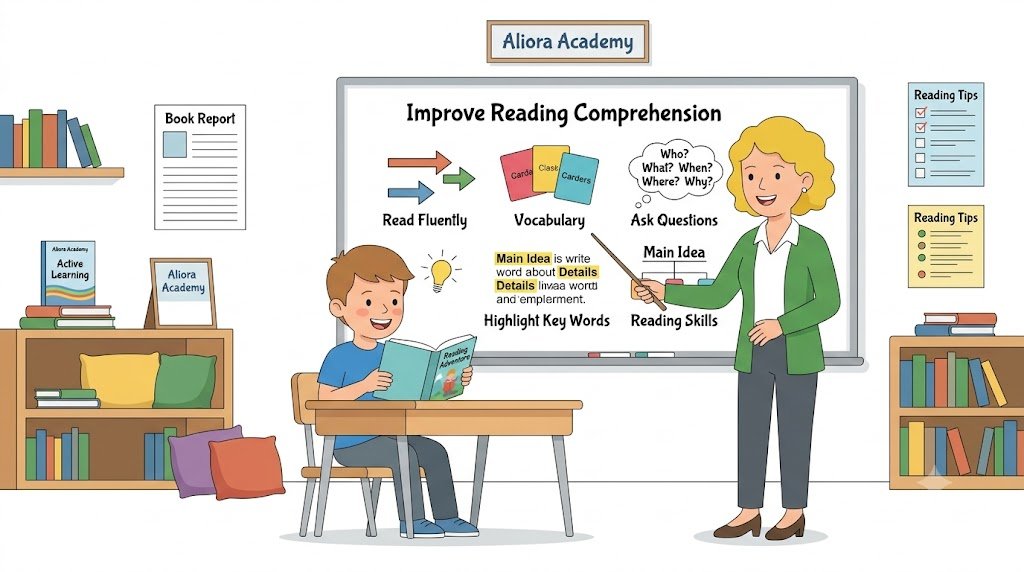
Building strong comprehension skills in third grade opens the door to independent learning across all subjects.
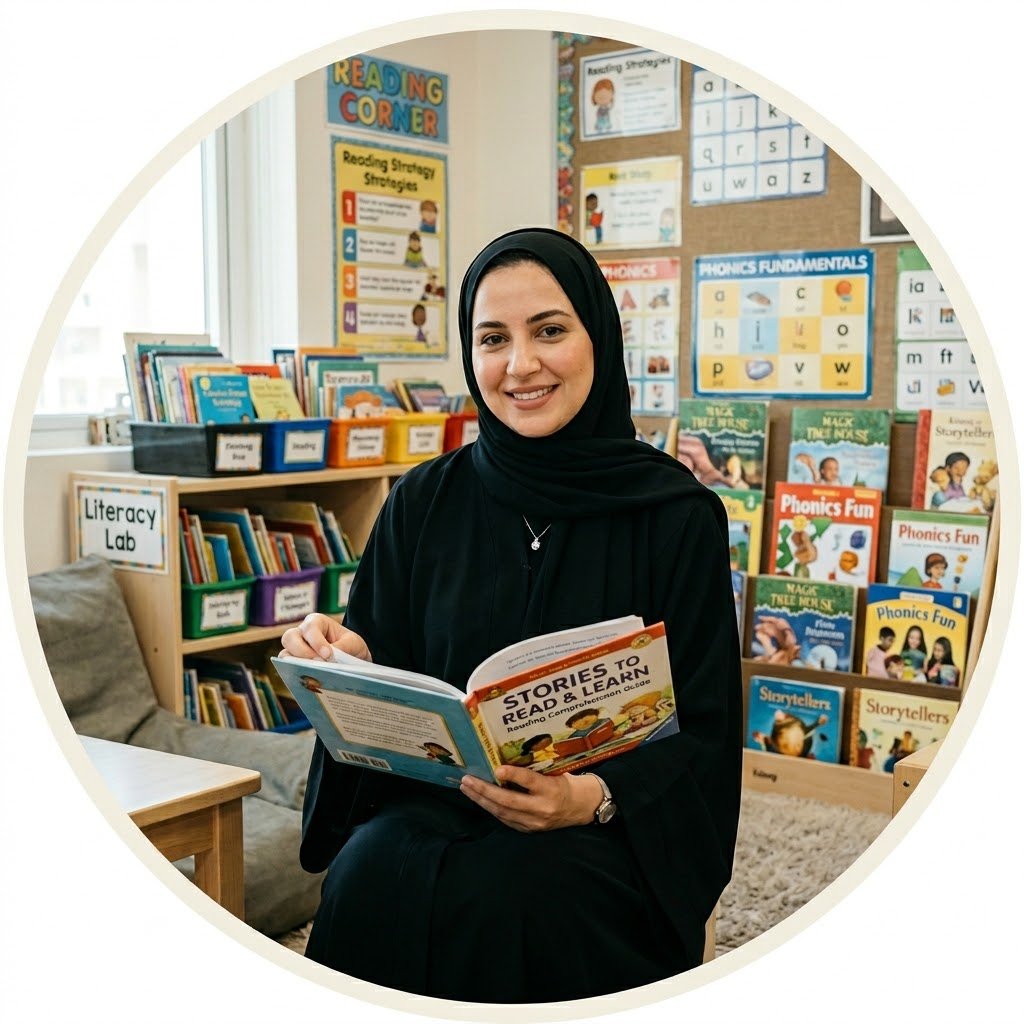
Third grade is a turning point in a child's reading journey. Up until now, much of the focus has been on decoding words and building fluency. But in third grade, the expectation shifts dramatically: children are expected to not just read the words on the page, but to understand, interpret, and think critically about what they have read. This is the heart of 3rd grade reading comprehension — and it's a skill that will affect every other subject, from science to social studies.
If your child or students are struggling to move beyond word recognition, this guide is for you. We'll break down what comprehension really means at this level, share strategies that work both at home and in the classroom, and point you toward practical resources that make a real difference.
Why Is 3rd Grade Reading Comprehension So Important?
By third grade, the curriculum pivots. Instead of learning to read, children are now reading to learn. Textbooks, word problems, and assignments all assume a foundational ability to grasp meaning from text. A child who cannot comprehend what they read falls behind not just in reading, but across the entire school day.
Strong comprehension skills allow a student to connect new information to what they already know, ask meaningful questions, and develop a genuine love for stories and learning. When comprehension lags, however, children often become frustrated, lose confidence, and may start to avoid reading altogether — a cycle that can be hard to break.
The good news is that with the right approach, comprehension can improve steadily. It's not about drilling or pressure; it's about building thinking habits that stick.
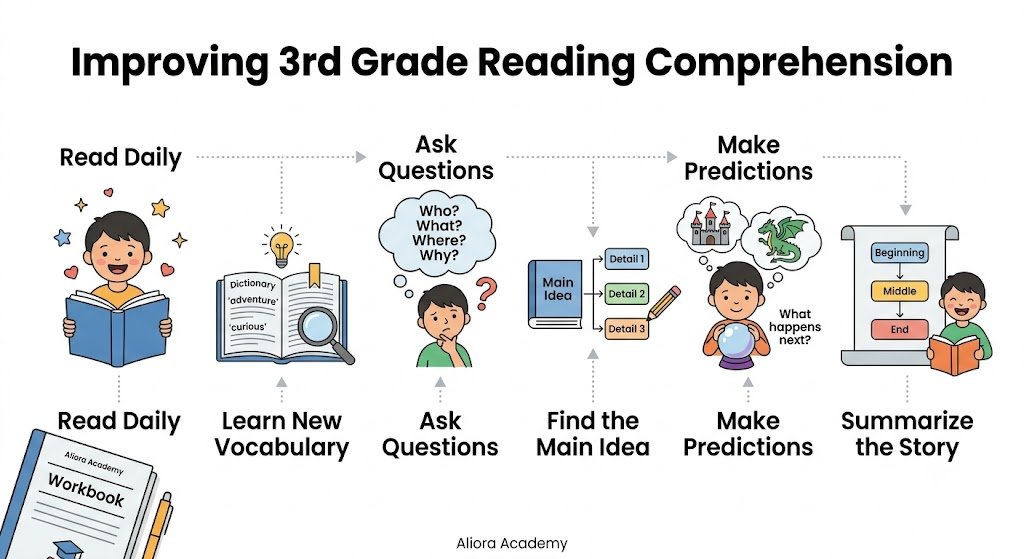
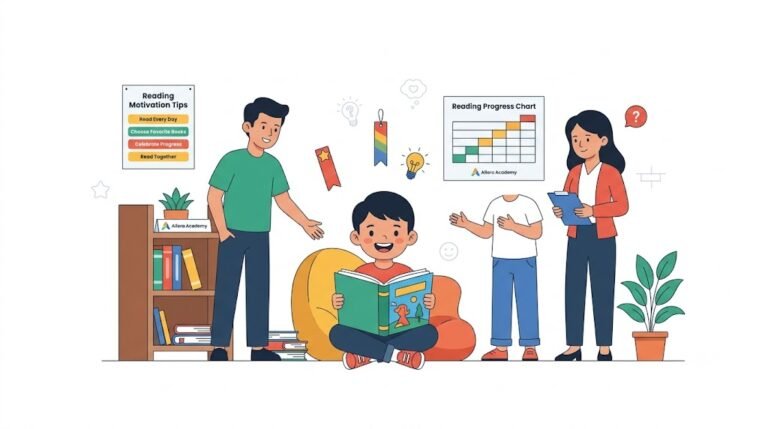
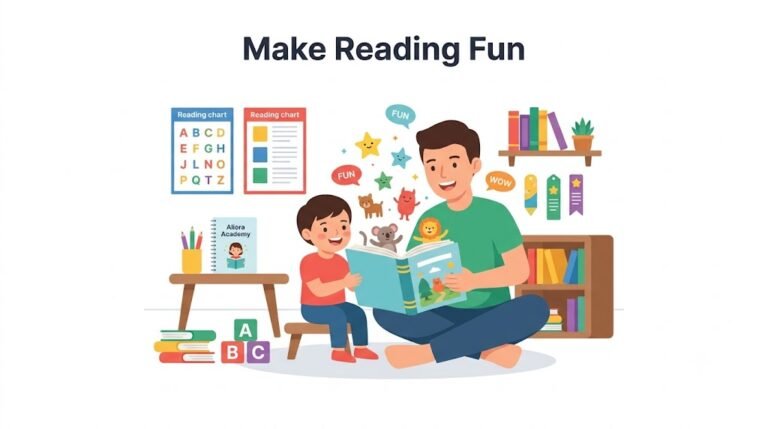
Asking questions while reading together is one of the most effective ways to strengthen comprehension.
What Are the Key Comprehension Skills for Third Graders?
To help a child improve, it helps to know exactly what skills are expected. Third grade comprehension typically includes:
- Identifying the main idea — What is the text mostly about?
- Recalling key details — Who, what, where, when, why?
- Making inferences — Reading between the lines to understand what is not directly stated.
- Understanding vocabulary in context — Figuring out unfamiliar words using the surrounding text.
- Sequencing events — Putting story events in order.
- Comparing and contrasting — Noticing similarities and differences between characters, settings, or ideas.
- Drawing conclusions — Using evidence from the text to form a judgment.
These skills don't develop in isolation. A child who struggles with vocabulary will find it harder to make inferences. A child who has difficulty sequencing may miss the overall arc of a story. That's why a balanced approach that touches on multiple skills works best.
How Can Parents Help at Home?
You don't need a teaching degree to make a big impact on your child's comprehension. Simple, consistent habits can go a long way.
Read Together and Talk About It
Shared reading is powerful. As you read, pause to ask open-ended questions: "What do you think will happen next?" "Why did that character do that?" "What would you do in that situation?" These conversations train the brain to think actively while reading.
Use Real-Life Situations
Comprehension isn't just for books. When you cook together, follow a recipe and discuss the steps. When you watch a movie, talk about the plot and the characters' motivations. These everyday interactions build the same thinking muscles.
Keep It Interesting
Let your child choose what to read. Comic books, magazines, graphic novels — they all count. The goal is to make reading a desirable activity, not a chore. Check out our reading resources hub for book lists and activity ideas that spark curiosity.
What Classroom Strategies Work Best?
Teachers have a toolbox of proven techniques to strengthen comprehension. These can be adapted for small groups or whole-class instruction.
Graphic Organizers
Tools like story maps, Venn diagrams, and KWL charts help children visually organize their thinking. A third grader who struggles to summarize can often do it easily after filling in a simple graphic organizer. They externalize the mental work until it becomes automatic.
Reciprocal Teaching
This method involves four strategies: predicting, questioning, clarifying, and summarizing. Students take turns leading a discussion in a small group. It's highly collaborative and encourages children to monitor their own understanding.
Guided Reading with Purposeful Questions
Instead of asking generic recall questions, target higher-level thinking. "What evidence supports your answer?" "How does this connect to something else we've read?" This pushes beyond surface comprehension. For more classroom-ready ideas, visit our teacher resources page.
Choosing the Right Resources and Activities
The market is filled with workbooks and digital tools that promise to boost comprehension. But not all are created equal. Look for resources that emphasize thinking over memorization. A good reading resource will include:
- Age-appropriate, high-interest passages
- Questions that require inference, not just fact recall
- Opportunities for discussion or written response
- Gradual progression from simpler to more complex texts
Browse our reading resources collection for recommended workbooks and activity sets that align with these criteria.
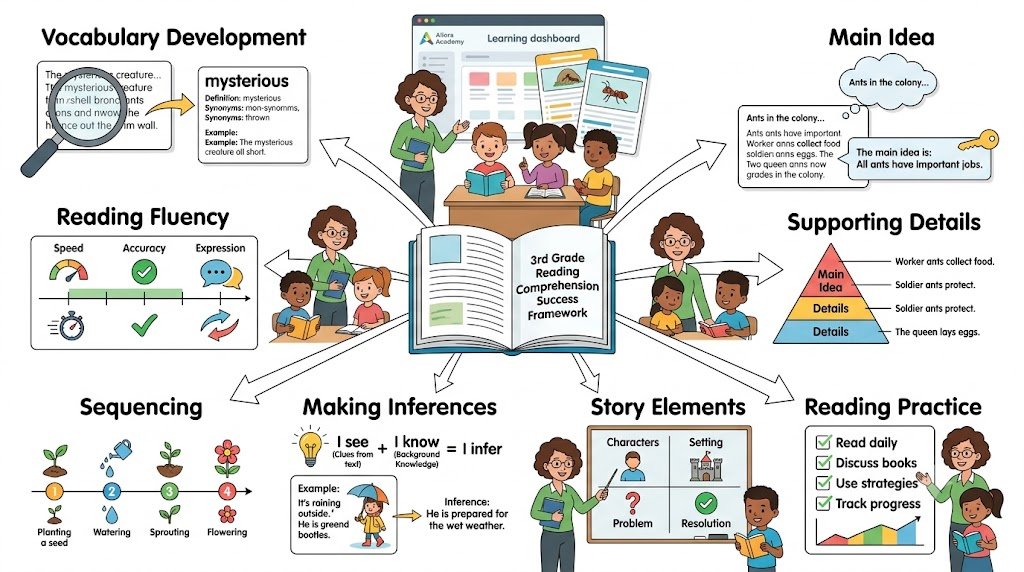
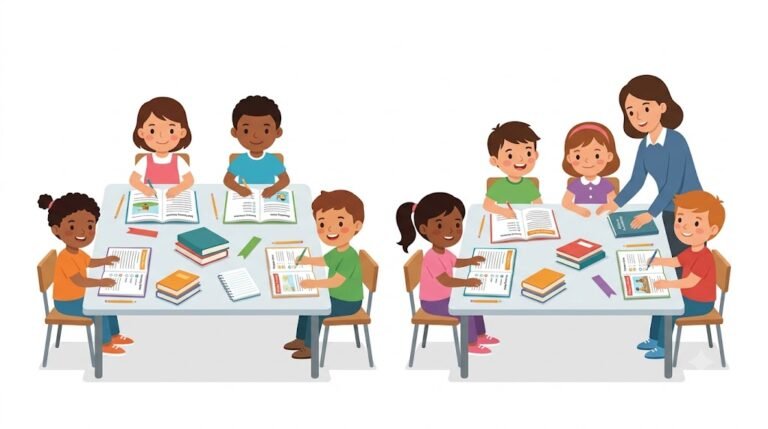
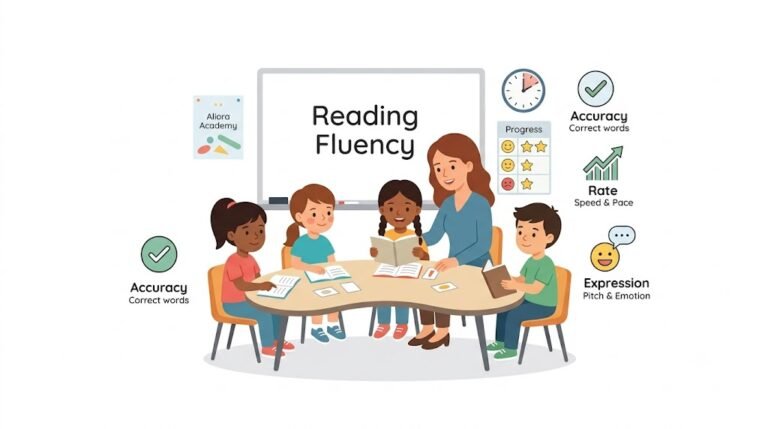
Graphic organizers give young learners a concrete way to structure their thinking about a text.
Common Challenges and How to Overcome Them
Challenge: My child can read the words but doesn't understand.
This often means they are decoding automatically but not engaging with meaning. Try having them read aloud to you and pause after each paragraph to tell you what happened in their own words. Start with very short texts and build up.
Challenge: My child hates reading.
Avoid turning reading into a punishment or a high-pressure task. Connect reading to their existing interests — video game guides, sports articles, how-to books for hobbies. The format matters less than the act of reading and thinking. Sometimes a reluctant reader just hasn't found the right book yet.
Challenge: Vocabulary is limited.
A small vocabulary directly hinders comprehension. Read aloud to your child even if they can read on their own — this exposes them to richer language. Play word games, keep a "new word" jar, and talk about interesting words you encounter in daily life.
Practical Examples of How to Improve 3rd Grade Reading Comprehension
Example 1: The Reluctant Reader
Situation: Marcus, age 8, avoids reading at home. He reads haltingly and cannot answer questions afterward.
Challenge: He sees reading as a test, not a source of enjoyment. His fluency is shaky, so all his mental energy goes into decoding.
Solution: His parents started reading graphic novels together, taking turns reading character dialogue. They focused on enjoying the story first, then gradually introduced comprehension talk naturally. Within a few months, Marcus began picking up books on his own.
Learning Outcome: When reading felt safe and social, comprehension followed naturally.
Takeaway: Lower the stakes. Comprehension improves when a child's emotional connection to reading is positive.
Example 2: The Word-Caller
Situation: Emma, a third grader, reads fluently but retains very little. Her teacher notices she races through passages without thinking.
Challenge: Emma hasn't developed the habit of active reading. She treats reading as a performance rather than a meaning-making process.
Solution: Her teacher introduced sticky-note thinking: Emma places a sticky note with a question or a thought after each page. This physical act forces her to pause, reflect, and engage. After a few weeks, the sticky notes became fewer as internal monitoring took over.
Learning Outcome: Emma now automatically asks herself, "What just happened?" as she reads.
Takeaway: A tangible tool like sticky notes can bridge the gap between passive and active reading.
Example 3: The Vocabulary Gapper
Situation: James, age 9, struggles with science texts even though he enjoys the topics. He often stops reading because he doesn't know a word.
Challenge: Limited vocabulary in a specific domain prevents him from understanding the overall meaning.
Solution: His parents began pre-teaching key vocabulary before he tackled a new science chapter. They looked at pictures, talked about the words in sentences, and created a personal picture dictionary. Over time, James learned to use context clues more confidently.
Learning Outcome: James now approaches unknown words with strategies instead of giving up.
Takeaway: Front-loading vocabulary builds a bridge to comprehension in content-heavy reading.
Frequently Asked Questions
What is the average reading level for 3rd grade?
Third graders typically read books designated for levels N through P (Fountas & Pinnell) or around a Lexile range of 520L to 820L. However, every child develops at their own pace, and these are benchmarks, not hard rules.
How much should a third grader read each day?
Experts often recommend 20 to 30 minutes of daily reading. The quality of engagement matters more than the exact number of minutes. Discussing what they've read for even five minutes can dramatically boost comprehension.
What are some good books for 3rd grade reading comprehension?
Look for books with strong narrative structure and rich but accessible vocabulary. Series like "Magic Tree House", "Judy Moody", "Stink", and "Who Was?" biographies are popular choices that support comprehension growth. Our blog regularly features book recommendations and reading lists.
Can reading comprehension be improved quickly?
Improvement is usually gradual. Some children show noticeable gains within a few weeks of focused practice, while others need consistent support over several months. The key is to maintain a low-pressure environment and celebrate small wins.
Should I be concerned if my child is slightly behind?
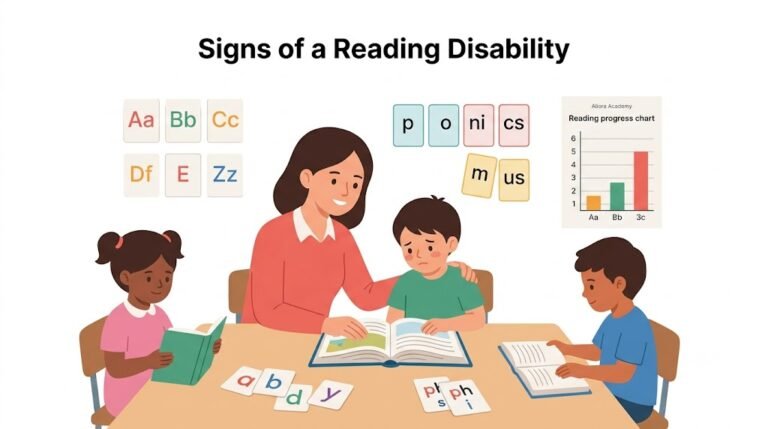
Many children experience temporary lags. If the difficulty persists or your child shows signs of extreme frustration, it may be worth discussing with their teacher. Early intervention with a few targeted strategies often closes the gap quickly.
How do I know if a workbook is effective for comprehension?
A quality workbook will ask your child to explain their thinking, not just circle a multiple-choice answer. Look for open-ended questions, short writing tasks, and passages that build in complexity. For more guidance, browse our homepage to see how we evaluate learning resources.
Building a Strong Foundation for Lifelong Learning
Helping a third grader develop strong reading comprehension is one of the most valuable gifts you can give. It's not about reaching a certain test score — it's about opening a door to worlds of knowledge, imagination, and confidence. By combining thoughtful conversation, consistent practice, and the right tools, you can support your child through this pivotal year.
Remember, you are not alone in this journey. Whether you're a parent trying to find the right book or a teacher looking for new strategies, small, deliberate actions add up. Explore our reading resources for more ideas, and don't hesitate to contact us if you have a question or want a specific recommendation.